
Sponsored by

Made In Cookware® - The Cookware Chefs Actually Use

Plenty of cookware brands will pay a famous chef to hold a pan and smile. Made In doesn't do that. Their cookware is used in 4,000+ professional kitchens and has been adopted by millions of home cooks.
Now you can cook with the exact pieces from your favorite restaurant at home. Every piece of cookware is built by craftsmen in the USA and Europe, using performance materials and construction that hold up to the rigors of the world’s most demanding kitchens. There’s a reason why it’s the cookware with the most 5-star reviews on the internet.
Most people who need a full kitchen replacement start with their Cookware Sets, where you’ll find their best deals. Pasta lovers need the 3 QT Saucier, the piece chefs call their most-reached-for pan and is the pan that powers world-famous Italian joints like Mother Wolf in L.A.

⚡ Quick Hits
🕺 steal claus thylstrup's funky chop for your practice loop
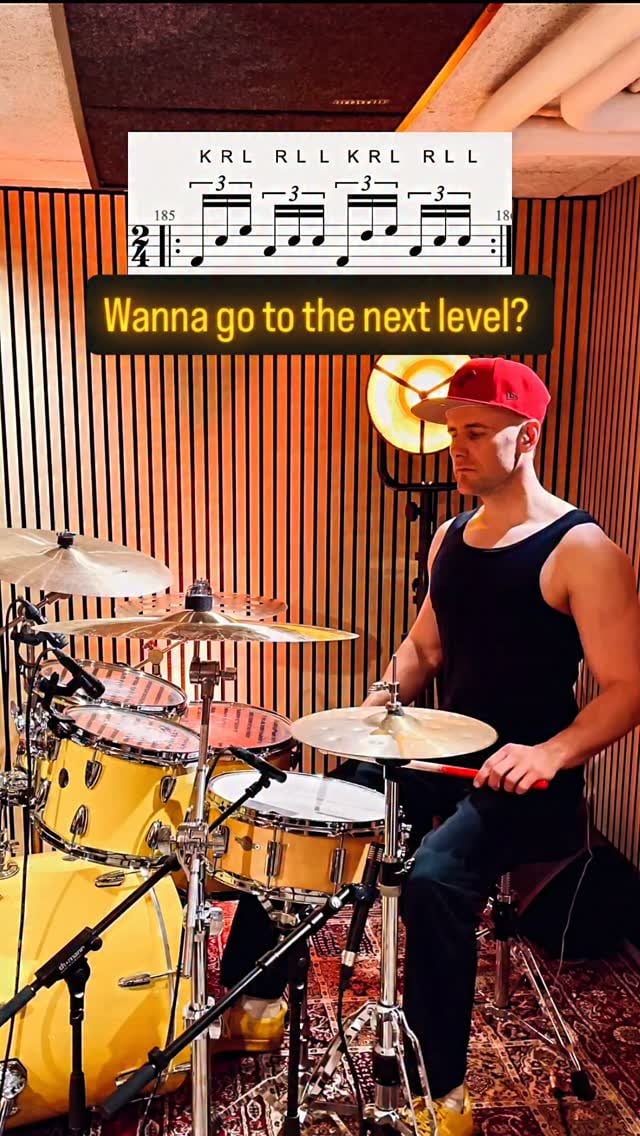
@• CLAUS ~ THYLSTRUP •
Claus Thylstrup drops a funky chop clip on his Drum Limousine custom kit in Agathis and Cherry, the kind of quick vocabulary lesson that fits neatly into a practice loop. Short, groove-first, and worth a few passes on the pad. Steal the phrasing, plug it into your own time feel, and see what sticks.
🌼 matt mcguire turns bieber's daisies into pocket-forward pop
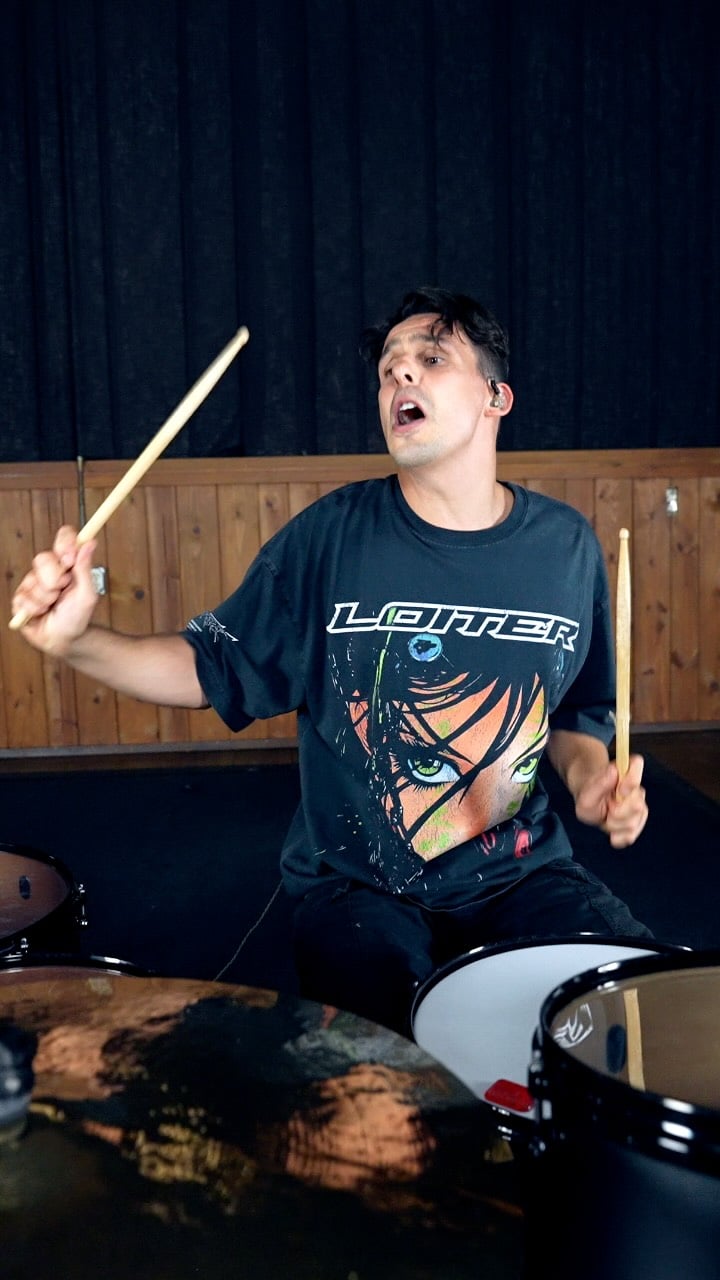
@Matt McGuire
Matt McGuire flips Justin Bieber's "Daisies" into a clean pop drum cover on his Instagram reel, trading the track's airy bounce for a pocket-forward groove. He keeps it tight, letting the hook breathe while his fills punctuate the top line. A quick watch that shows how much personality a pop tune can carry with the right hands behind the kit.
🌊 Deep Dives
🎯 the 7 grooves that keep working drummers on call
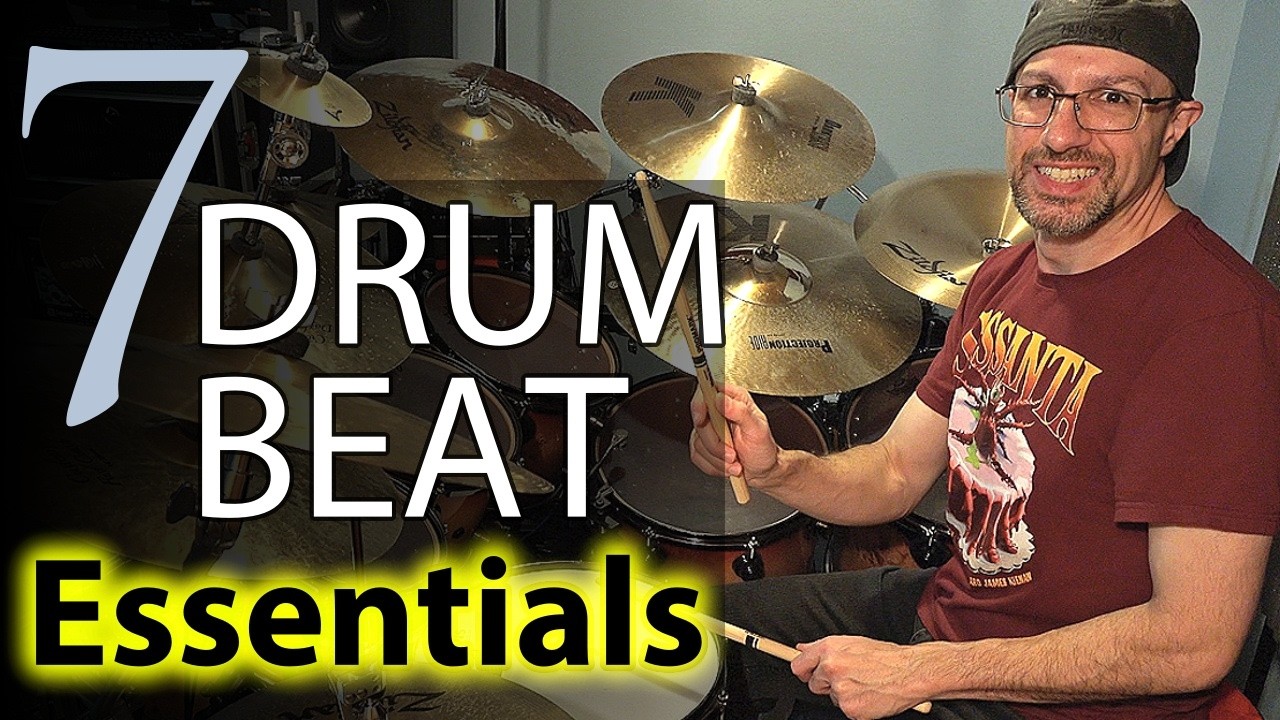
Drum Drum Drum lays out seven grooves that keep working drummers on call: back beat, four on the floor, straight double bass, tom groove, 6/8, shuffle, and upbeat rock. It's a quick tour, but the framing matters. Each pattern gets a tasteful embellishment demo, with the emphasis on staying supportive rather than showing off.
If you're past the beginner stage but still leaning on one or two default feels, this is a useful audit of your vocabulary. Cue it up, play along with each section, and notice which grooves feel automatic and which ones expose weak spots. The shuffle and 6/8 sections in particular tend to be where rusty spots show up fastest.
🎓 Practice & Skills
🦶 sam mackenzie's singles-and-kick drill to unlock cleaner fills
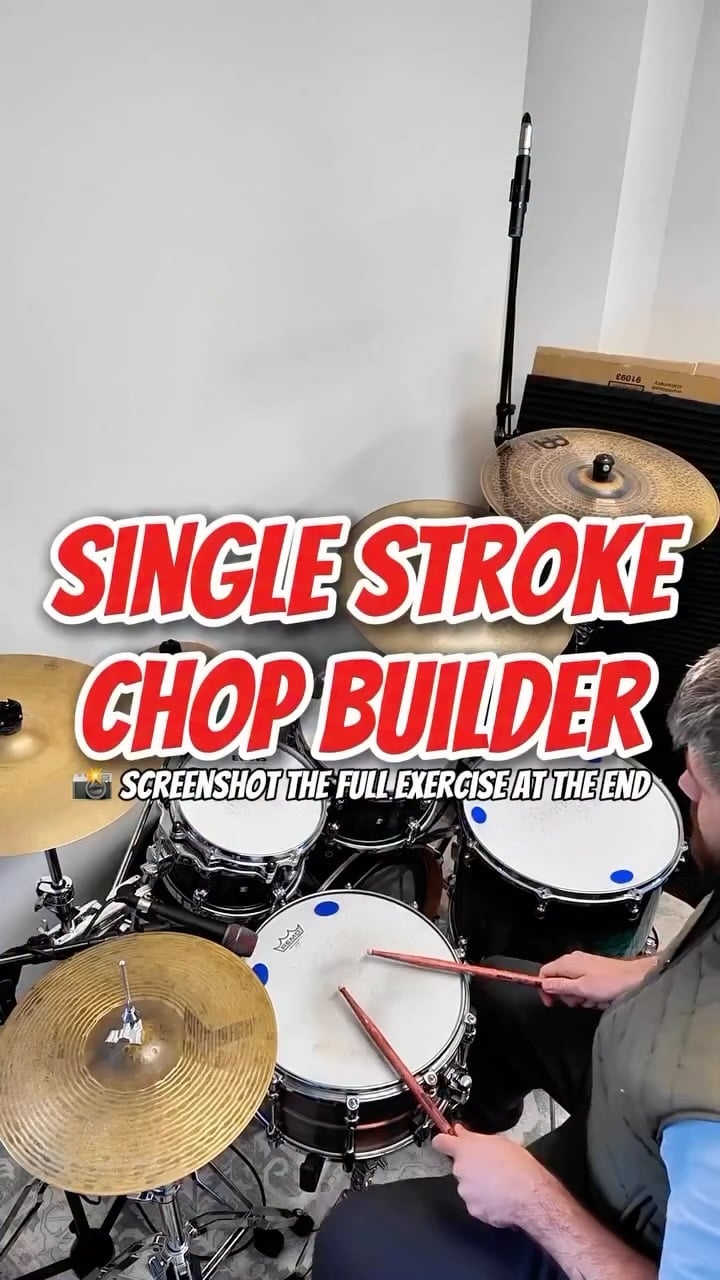
@Sam MacKenzie - Session Drummer 🥁
Sam MacKenzie has a short exercise floating around Instagram right now that pairs single strokes with kick drum interjections, and it's the kind of thing that fixes two problems at once: hand consistency and foot independence under pressure. Screenshot the notation at the end of his reel and you've got a practice room tool for the week.
The idea is simple in concept and brutal in execution. You're running clean single strokes between the hands while dropping the kick into specific slots, so the foot has to fire without disturbing the flow of the hands. Start slow. Really slow. Set the metronome around 60 to 70 bpm and prioritise even spacing between every stroke before you chase tempo. The classic mistake here is letting the hand that lands with the kick get louder, or letting the opposite hand flam against it. Isolate the kick pattern first with just the feet and a click, then layer the hands on top once the foot placement feels automatic. Once it's locked, push the tempo up in five bpm increments and try orchestrating the singles around the kit as a fill, moving from snare to toms without breaking the sticking. Apply it to a tune you're already playing: drop a two beat version into the last bar before a chorus and see how it sits.
The takeaway: clean singles plus a confident kick unlock most of the fills you actually want to play.
🧠 vinnie colaiuta's "9" lick decoded: count 9, feel 4
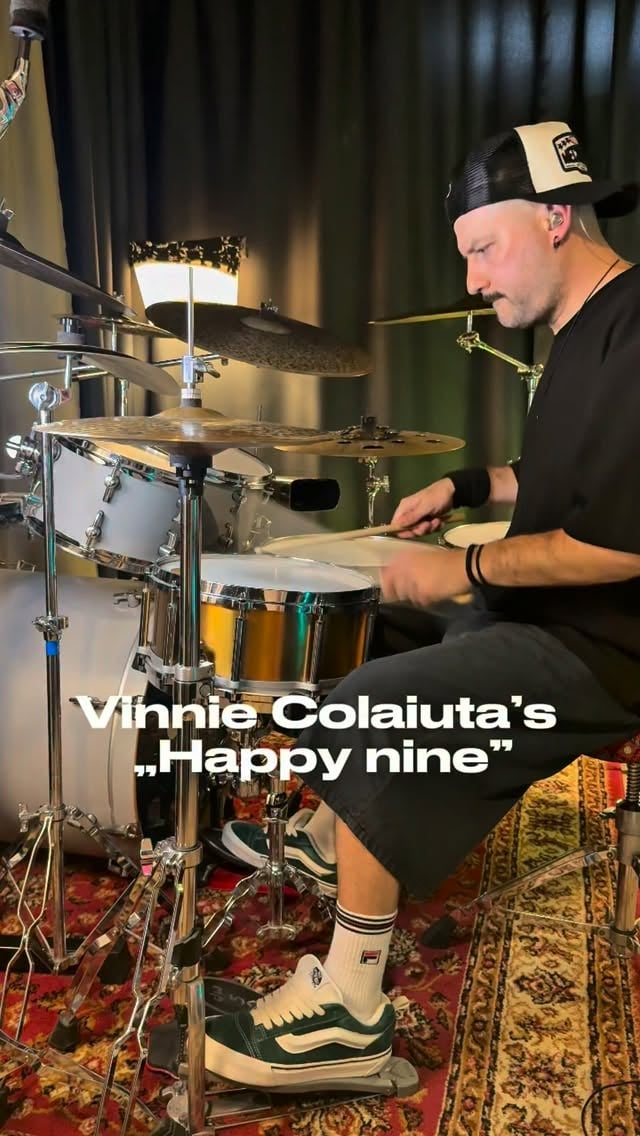
@Pavel Mamonau
Vinnie Colaiuta's "9" is one of those phrases that sounds impossibly slick until you see the math, and Pavel Mamonau lays it out cleanly: an 18-note lick that folds itself into a group of 9 with four accents. Walk away from this one knowing how to build it, why it flows, and how to count something odd while still feeling it in 4.
Here's the shape. Three single paradiddles starting with the right hand (RLRR LRLL, three times), straight into one paradiddle-diddle (RLRRLL). That's the first half, nine notes. Then mirror it, exact same phrase, starting with the left hand. Eighteen notes total, but at tempo the accents fall on a 9 grid, which is why it lands as an odd grouping over a straight pulse. Count it in 9. Feel it in 4. Start painfully slow, metronome on quarters, and lock the accents where the paradiddles restart. Common trap: rushing the paradiddle-diddle at the end of each half because those doubles want to compress. Keep the stroke lengths even and let the accents do the phrasing, not your arm. Once it's clean on a pad, move it around the kit: accents to toms, unaccented notes on snare, kick under the downbeat of the 4.
Odd grouping, smooth flow. Learn the sticking, then chase the pocket.
🎷 stop faking swing — it lives between the notes
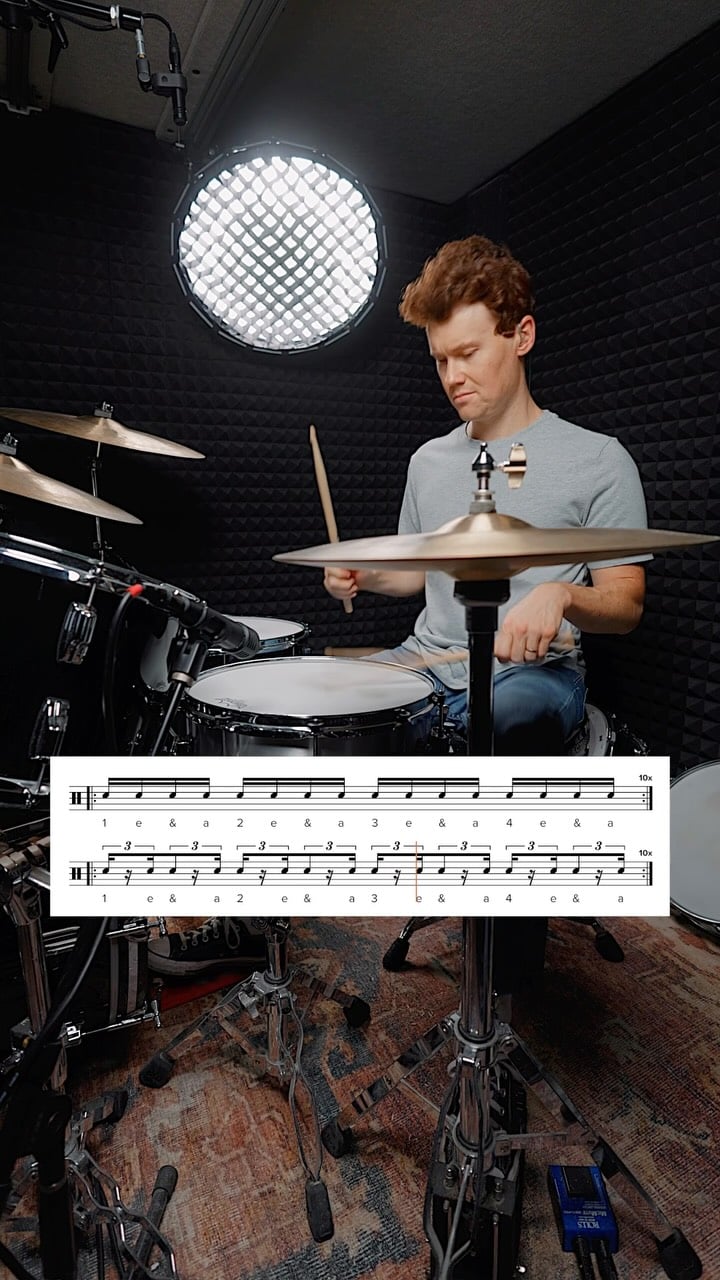
@Jeff Randall
Jeff Randall's short lesson on Instagram tackles one of the trickier feels to fake your way through: swing. If you've ever played a shuffle or a jazz ride pattern and felt like it sat stiff and mechanical, this is the angle worth sitting with today. The takeaway is simple: swing lives in the space between the notes, not in the notes themselves.
Think of the ride pattern as a triplet with the middle note dropped. The "spang-a-lang" is really quarter, triplet-and, quarter, and how wide you stretch that triplet-and is the whole game. At slower tempos, open it up toward a hard shuffle. As you push the tempo up, the feel naturally flattens toward straight eighths. Start on the ride around 100 bpm. Play quarters with the hi-hat foot on 2 and 4. Now sing the triplet out loud while you play so your hand and your ear line up. The most common mistake is locking the ride into a rigid dotted-eighth-sixteenth, which kills the bounce. Keep it loose and let it breathe. Once the ride feels honest, add soft left-hand comping on the snare, ghosted, reacting rather than leading. Try it over a mid-tempo standard where you can hear the bass walking clearly — something like "Freddie Freeloader" works well.
Swing is a conversation with time, not a subdivision you nail. Get the ride talking first, everything else follows.
🦶 jp bouvet's fix for sloppy kick doubles at speed
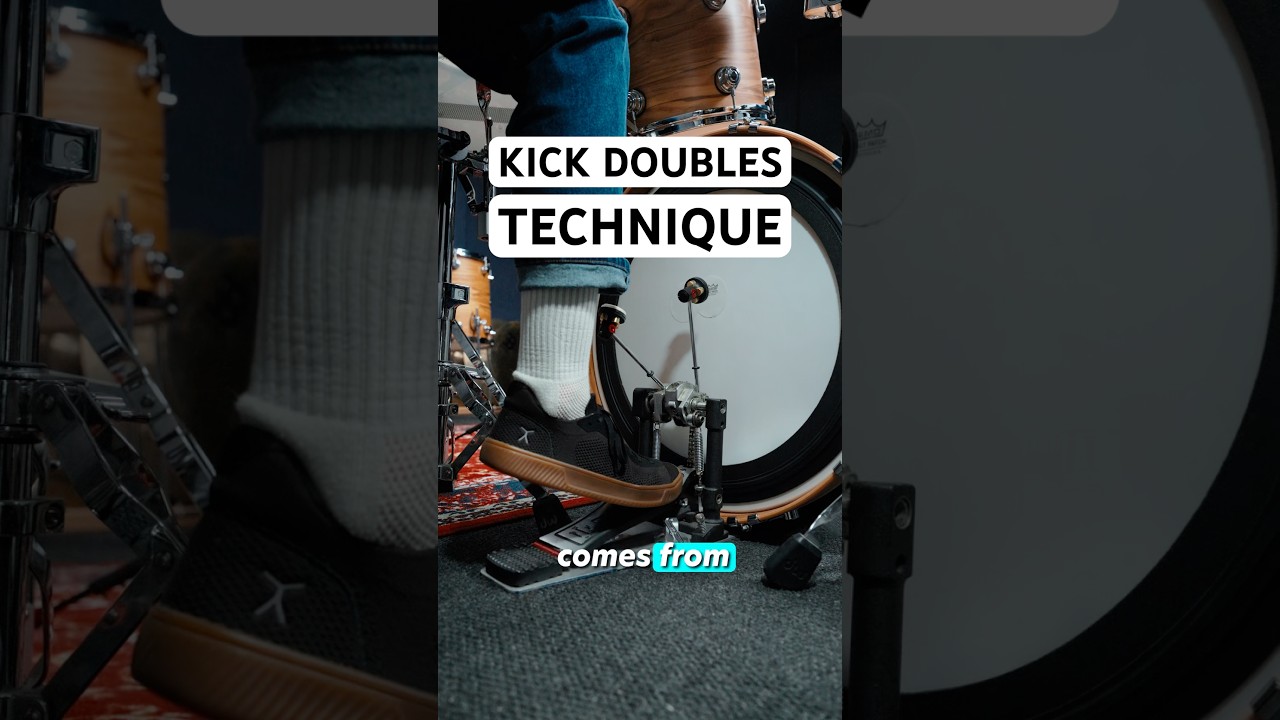
JP Bouvet has a fresh short up on getting fast, consistent kick drum doubles, and it's worth a minute of your morning if your right foot goes sloppy the moment you push past a comfortable tempo. Walk away knowing that clean doubles are less about power and more about a repeatable motion you can actually control at speed.
Kick doubles live or die on two things: heel position and rebound. Whether you're playing heel up, heel down, or a slide/swivel technique, the second stroke has to feel automatic, not muscled. Start slower than you think you need to. Set a metronome around 80 bpm and play steady 16th note doubles (R R rest rest) on the kick, focusing on making the two strokes sound identical in volume and spacing. If the second note is quieter or late, that's your tell. Once they match, creep the tempo up in 4 bpm steps. A common mistake is chasing tempo before the motion is even; you'll build in a limp that's hard to unlearn later. Isolate the foot with hands off the kit if you have to. Then apply it: work the doubles into a straight rock groove, then into a linear fill, then into whatever double-kick tune is sitting in your practice queue.
Consistency first, speed second. Your feet will catch up.
That's it for today! Thank you for carving out time to read! I'm grateful you're here. 🙏 If you'd like to support the newsletter, consider joining our premium tier.
If you have feedback, a story, or something you'd love to see in the newsletter, just reply to this email. I read every message and respond to each one.
Happy drumming,
Matteo