
Together with
You know that moment when you sit down to practice and end up doodling the same three rudiments you already know? I made The Drummer's Rudiment Reference to fix exactly that — it's a 4-page printable cheat sheet with the 30 rudiments I think every drummer should have in their back pocket, plus stickings, BPM targets, and skill tags so you actually know where to start and where you're heading.
I keep mine taped inside my practice pad case. Pick a tag, pick a tempo, work the sticking — done. No more staring at the pad wondering what to play.
If you've been meaning to get your rudiments in order, grab a copy here. It's a small buy that punches well above its weight, and it directly supports the newsletter you're reading right now.

⚡ Quick Hits
🎷 greyson nekrutman swings the cuphead theme, 1930s style
@Greyson Nekrutman
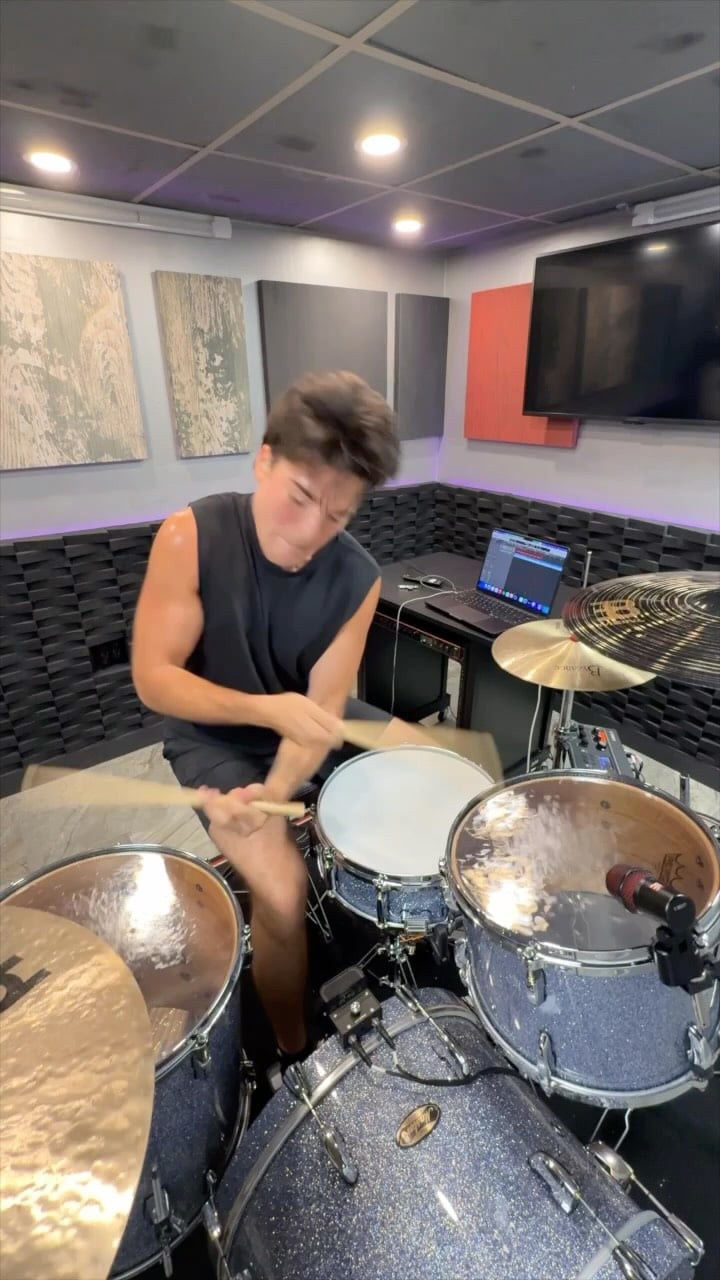
Greyson Nekrutman locks into the Cuphead theme with the big band swagger the tune demands, trading his Sepultura chair for shuffle patterns, hi-hat barks, and rimshot punctuation straight out of a 1930s cartoon orchestra. His grip and posture stay old-school throughout, which is half the fun. Watch for the way he leans into the snare comping.
🛒 Gear Picks
🖌️ vic firth's mix-and-match brushes for quiet gigs

Vic Firth's RE MIX brushes let you build your own hybrid by combining sticks made from different natural materials, and this quick demo pairs the RM1 and RM2 to show what that mashup sounds like on the kit. The pitch is modular attack and volume, swap one hand, change the whole feel.
The appeal for brush players is obvious. Instead of choosing between a soft wire sweep and a sharper rod bite, you mix the two in real time and land somewhere in between. Worth a look if you spend time on quiet gigs, acoustic sessions, or anything where you're chasing a specific texture the standard wire brush won't give you.
🚨 sale: ZXT cymbal that refuses to choke

The Zildjian ZXT Trashformer is a cast bronze effects cymbal with a color-tinted brilliant finish and a voice that lives up to its name. The 10" sits in a useful middle ground, dark enough to bark like a small china, quick enough to work as a splash accent, and warped by design so it doesn't choke when you stack it.
Play it on its own for trashy hits and short decay, or stack it on a splash or larger crash for a sharper bite. It pairs well under other small effects cymbals for a mini stack, or under a spiral trash for extended noise. A cheap way to add a genuinely unusual voice to your setup.
🌊 Deep Dives
🎬 neil peart maps out taking center stage's opening

Neil Peart and producer Rob Wallis sit down to map out the opening of Taking Center Stage, walking through programmed textures like tabla and djembe and how they'd fold into the live drum parts. Hudson Music unearthed this footage from the planning sessions, so you get Neil thinking out loud about arrangement choices rather than performing them.
The full Taking Center Stage project pulled from across Neil's career with Rush, with him breaking down and demonstrating parts from the catalog. This behind the scenes clip is the setup work, the conversations about what to include and how to frame it. Worth sitting with if you've studied the finished piece and want to hear how Neil approached the meta task of teaching his own body of work.
🎓 Practice & Skills
⚡ how darren got 4x faster in 30 days
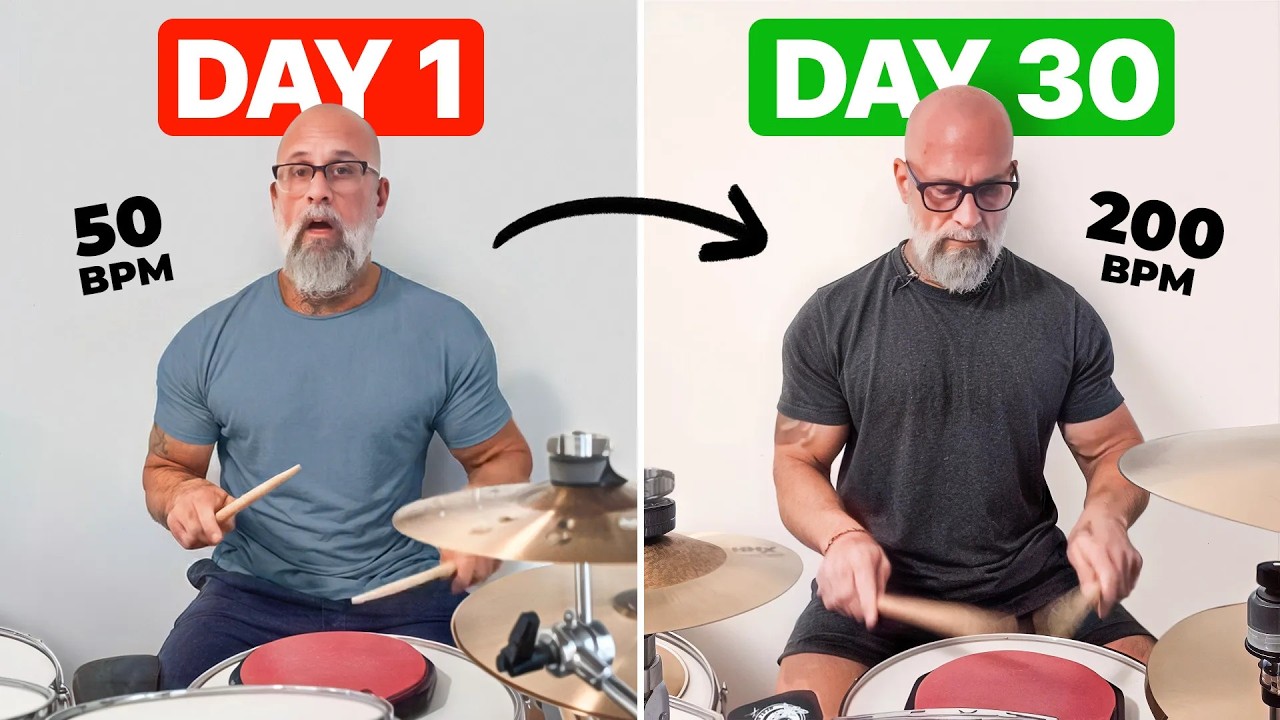
Dimitri Fantini walks through a student named Darren's progress over a month of focused work, and the case study is worth watching if your hands have plateaued. The lesson underneath is simple: speed problems are almost never speed problems. They're technique problems hiding behind a metronome.
If your single strokes stall out around a certain tempo, the fix usually lives in what your fingers, wrist, and forearm are doing when you're not paying attention. Film yourself from the side at a tempo where you feel clean, then push it up ten bpm and film again. Watch for the moment your stroke shape collapses. That's your ceiling, and it's where the real work starts. Isolate one hand at a time. Rebuild the motion slowly with a rebound-focused stroke before you chase tempo. A common trap is gripping harder as the click speeds up. You want the opposite. Looser fingers, lighter fulcrum, let the stick do the work. Pick one groove or fill you've been trying to nail, something like a fast single-stroke roll around the kit, and run it at 60 percent of your target for a full week before you touch the goal tempo.
The takeaway: fix the mechanics first, and the speed shows up on its own.
🌊 elvin jones fill decoded: triplets that bend the barline
@Quincy Davis
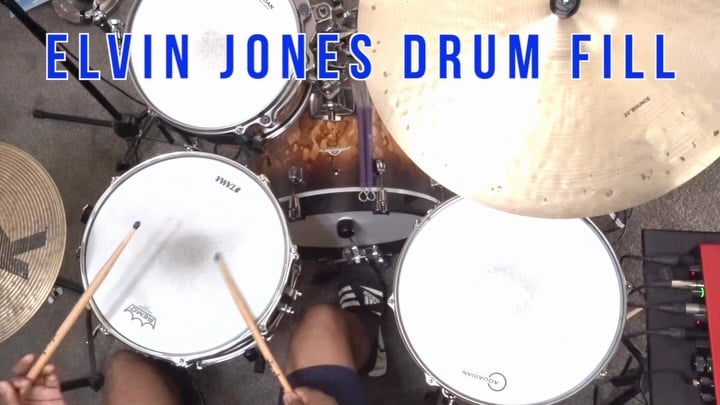
Elvin Jones built fills that felt like waves crashing sideways, and Quincy Davis has picked one apart for Fill Good Friday. Watch this clip and you walk away with a window into how Elvin phrased around the barline, the exact thing that made his playing with Coltrane feel so loose and so locked at once.
The lesson here is triplet vocabulary. Elvin's fills lived in triplet space, orchestrated across the kit so the downbeats blur and the pulse breathes. Davis demonstrates the phrase at a manageable tempo before opening it up, which is the right way to approach anything from the Elvin book. Start by singing the fill before you play it. Then work it hands only on a single surface so the sticking sits in your body. Once the rhythm is clean, move it around the toms and let the bass drum answer underneath. Common mistake to dodge: rushing the last partial of the triplet as you land back on beat one. Keep your foot steady and let the hands float over it. Apply it to a medium swing tune, something in the 140 to 160 range, and drop it into a four bar trading section rather than forcing it into a groove.
Follow Davis into his full lesson if you want the sticking spelled out. The takeaway: Elvin's fills are triplet phrases first, orchestration second.
That's it for today! Thank you for carving out time to read! I'm grateful you're here. 🙏 If you'd like to support the newsletter, consider joining our premium tier.
If you have feedback, a story, or something you'd love to see in the newsletter, just reply to this email. I read every message and respond to each one.
Happy drumming,
Matteo