
In partnership with

Trade What Happens Next

From elections and inflation to sports, tech, and more, Kalshi lets you trade on the real-world events you already follow. Buy “Yes” or “No” contracts based on what you think will happen, then earn returns if you’re right.
Pick a market, make your prediction, and put your knowledge to work.
Bonus credit varies from $15 to $500. Terms apply.
⚡ Quick Hits
🎻 unlocking carter beauford's groove architecture on grey street
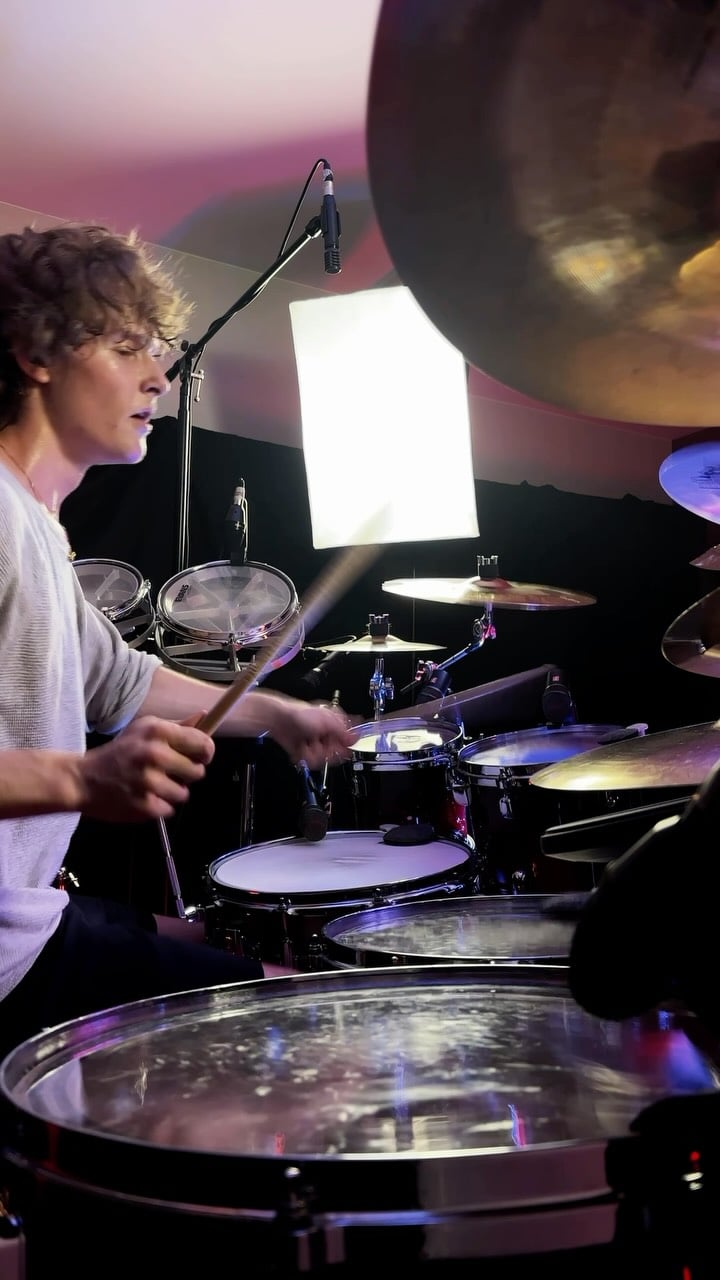
@Tyler Visser
Tyler Visser locks into Carter Beauford's parts on Dave Matthews Band's "Grey Street," and it's a good excuse to revisit what Beauford actually does back there. The ride patterns, hi-hat work, and open-handed voicings are all on display, and Visser captures the feel without flattening the nuance.
⚓ kristina schiano's foo fighters cover — filmed with the us navy [Message content over character limit]
![⚓ kristina schiano's foo fighters cover — filmed with the us navy
[Message content over character limit]](https://i.ytimg.com/vi/ZcmsWfL7qIY/maxresdefault.jpg)
Kristina Schiano rips through a Foo Fighters cover tied to a partnership with the US Navy. The Shorts clip is a quick showcase of her rock chops in a decidedly unexpected setting. Worth a look if you want to see how a drummer turns a military collaboration into something that still hits like a proper cover.
🌊 Deep Dives
🦶 meshuggah's tomas haake on the injury that changed his right foot

Tomas Haake sits down with Stan Bicknell for a candid conversation Meshuggah fans rarely get to hear. The heaviest thread: a back injury has changed how Haake's right foot works, and he talks openly about what that means for a drummer whose feet built so much of the band's vocabulary. Gear, health, career, and the mechanics of adapting all come up, without the usual press-cycle polish.
If you've ever tried to reverse-engineer Haake's foot patterns or wondered how a career built on precision holds up over decades, sit with this one. It's a rare look at the human side behind the playing.
🛒 Gear Picks
🖌️ every vic firth brush, from warm swirls to bright snaps

Vic Firth walks through the full brush lineup in a quick clip, and the takeaway is that each pair has its own character. Some pull darker, warmer swirls out of the snare. Others push brighter, more articulate textures with tighter definition. The fan spread, wire gauge, and handle material each shape how the brush lands and drags across the head.
Worth a look if you've been reaching for the same pair out of habit. Matching the brush to the tune, whether it's a whispered ballad wash or a crisp, cutting sweep, is a smaller decision that shows up bigger than you'd think.
🔊 Charlie Benante on filling Pantera's throne
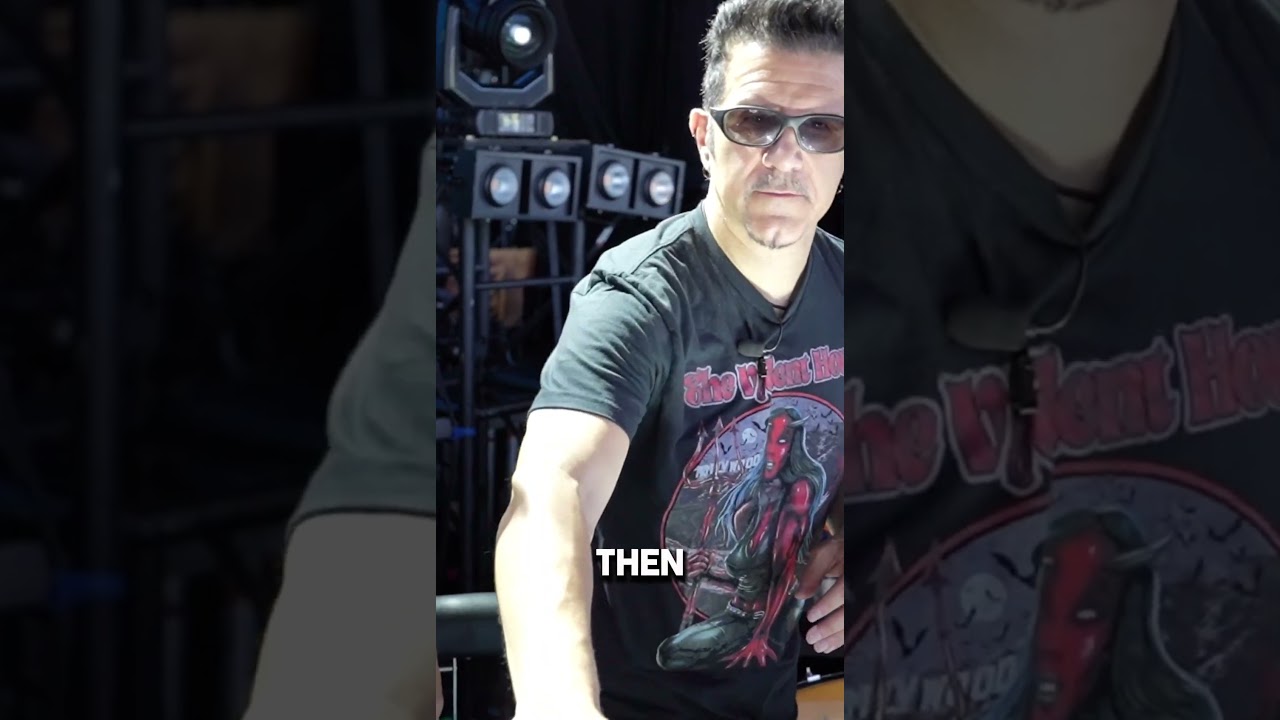
Charlie Benante steps behind the Pantera kit for a Modern Drummer short, offering a quick look at the setup powering his run with the band. Benante, best known for his long tenure in Anthrax, brings his own feel to what was Vinnie Paul's chair, and the clip walks through the kit he's using to do it. Worth a look if you're curious how he's approaching the gig without trying to be a Vinnie impersonator.
🎓 Practice & Skills
🧠 triplet fills that finally sit in the pocket

Jeff Randall breaks down triplet fills in a quick lesson worth stealing for your next practice session. Triplet fills are the fastest way to add momentum around the kit without needing blazing hand speed, and they sit inside almost every rock, funk, and blues tune you already play.
The core idea: three evenly spaced notes per beat. Count "trip-uh-let, trip-uh-let" out loud while you play, so your ear locks onto the pulse instead of rushing. Start with a single stroke roll (RLR LRL) at a slow tempo, around 60 BPM, and move each triplet to a new voice: hats, snare, high tom, floor tom. Once the orchestration feels natural, try alternating the lead hand so you start some triplets with your left. That small shift opens up smoother sweeps across the toms and stops your fills from sounding like the same lick every time.
Common mistake to avoid: crushing the third note of each triplet. Keep the spacing even, especially when you cross from snare to toms. Apply it tonight to something like "Rosanna" or any shuffle you have in rotation, dropping a one-beat triplet fill at the end of every fourth bar. Practice until the fill lands without you thinking about the sticking. Triplets are the vocabulary. Fluency comes from putting them in every song you play.
🔥 half a paradiddle plus one kick equals a killer fill
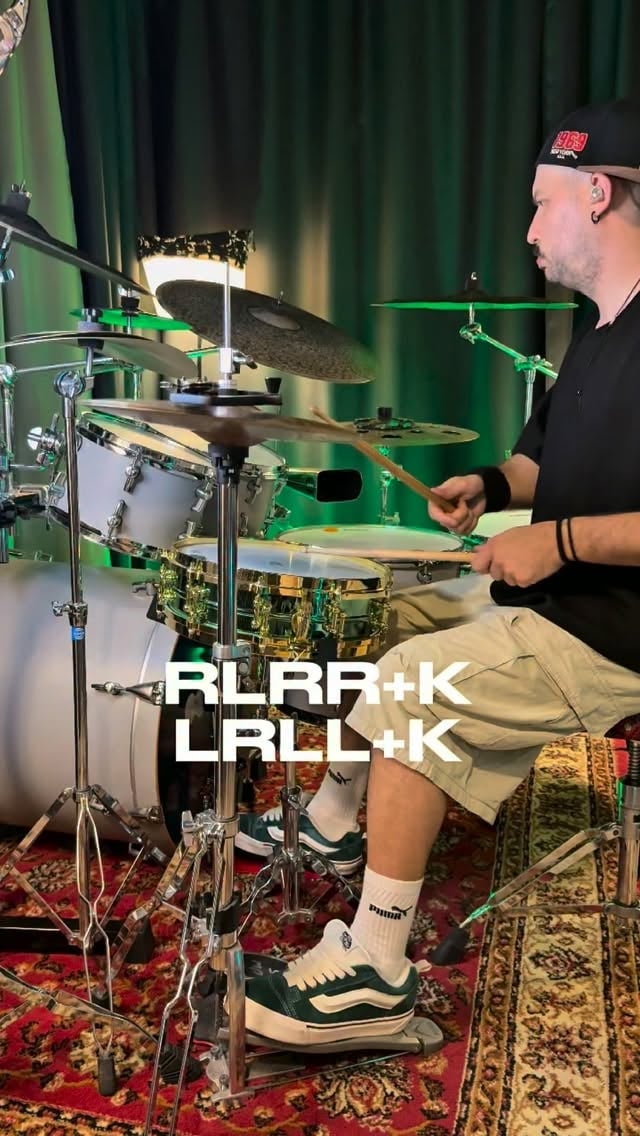
@Pavel Mamonau
Pavel Mamonau splits a single paradiddle in half, drops a kick between the fragments, and turns a rudimental scrap into a fill you'll want to steal. Walk away knowing how one small sticking shift opens up a whole family of grooves and fills.
The pattern is R L RR K, then L R LL K, repeated four times, resolving with R L. Half a paradiddle (single, single, double) followed by a bass drum, then the mirrored half with the opposite lead. Because the doubles alternate hands each time through, your leading hand flips every bar, which sets you up to move around the kit without thinking about it. Start slow on a pad or snare and lock the kick placement first, right after each double. Once the sticking feels automatic, move the doubles to toms, keep the singles on snare, and let the kick anchor the phrase. Try it as a one bar fill going into the "and" of four, or loop it as a groove with the singles on hats and doubles on snare.
Common mistake: rushing the doubles so the kick clips them. Keep the doubles even and let the bass drum breathe on its own sixteenth. Apply it to a straight eighth rock groove first, then a shuffle to hear how the phrasing bends. Small idea, big vocabulary. One rudiment fragment, endless fills.
⚡ mike johnston's flam trick for lightning-fast fingers

Mike Johnston has a flam grouping exercise built to sharpen your finger speed and control, and it's the kind of short drill you can loop for weeks before it stops teaching you something. Walk away knowing how to use flams as a finger technique builder, not just a rudimental ornament.
The concept is simple. Take a flam grouping and layer it over an ostinato so your hands stay honest while your feet or opposite limb hold time. That pressure is what forces the fingers to do the work instead of the wrist or arm. Start slow enough that both the grace note and the primary note sound distinct. If the flam is collapsing into a flat "blat," you're moving too fast or gripping too tight. Loosen the back fingers, let the stick rebound, and let the fulcrum do more of the lifting. Once the grouping feels clean, add a quarter note bass ostinato underneath, then a hi hat foot on the upbeats. Only push tempo when the flams stay crisp against that foundation.
Apply it in real music by dropping the grouping into a fill or using it as a linear phrase around the kit. The takeaway: flams are a finger workout in disguise, and pairing them with an ostinato is how you turn a warmup into actual independence practice.
That's it for today! Thank you for carving out time to read! I'm grateful you're here. 🙏 If you'd like to support the newsletter, consider joining our premium tier.
If you have feedback, a story, or something you'd love to see in the newsletter, just reply to this email. I read every message and respond to each one.
Happy drumming,
Matteo