
Sponsored by

Bet Smarter on America’s Sports Exchange

Novig is redefining sports betting by putting you in control. As America’s sports exchange, it lets you trade directly with other users for better prices, tighter spreads, and lower fees than traditional sportsbooks. There are no hidden margins—just a transparent marketplace built for smarter decisions and bigger potential returns.
Whether you're a casual fan or a seasoned bettor, Novig gives you the edge you’ve been missing. Sign up now and get $50 in Novig Coins for your first deposit of $5, and experience a better way to bet on sports today.
⚡ Quick Hits
🎛️ virgil donati's raw drum cam on evan marien's 'renaissance'
@Virgil Donati
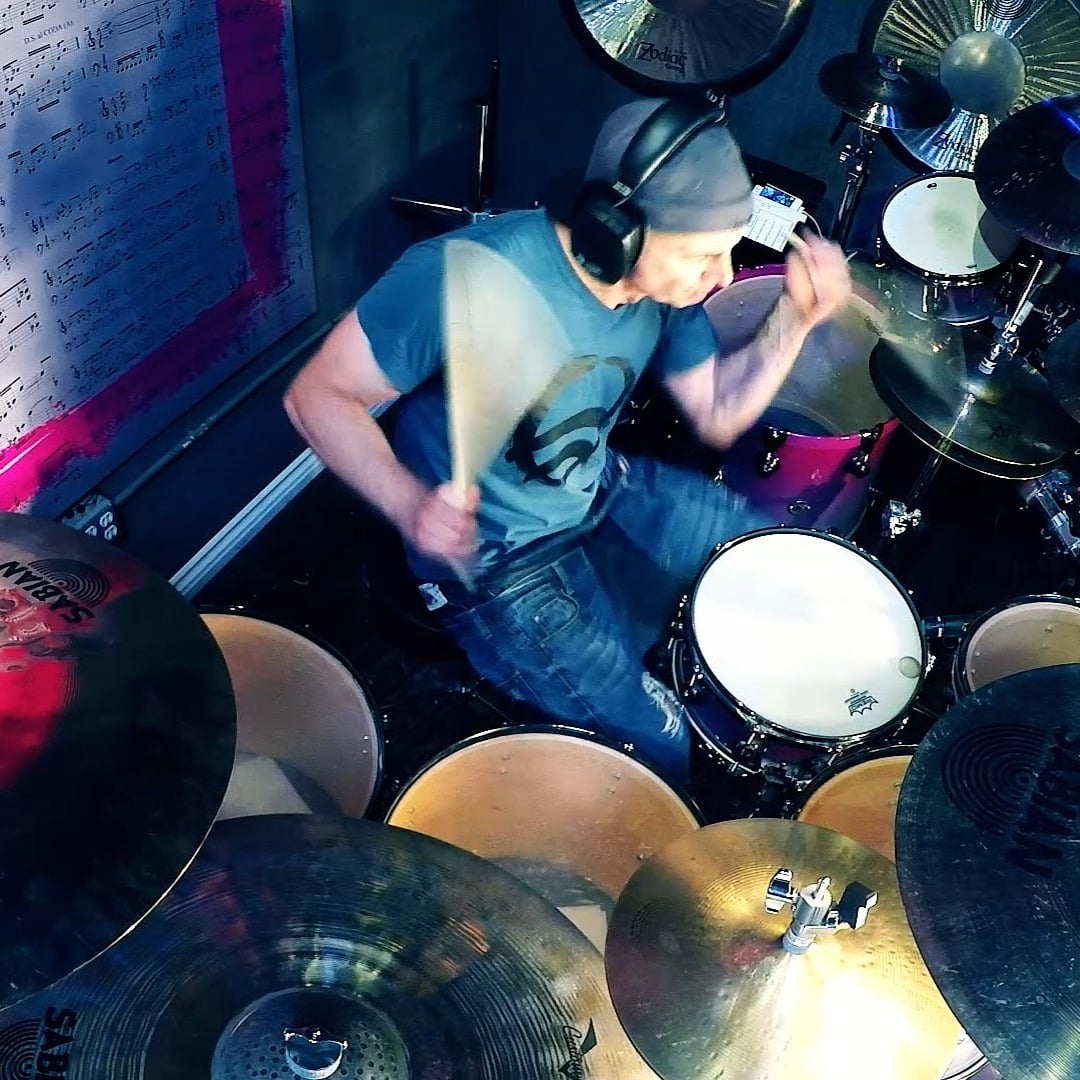
Virgil Donati dusts off a May 2016 session inspired by Evan Marien's "Renaissance," pairing the raw production guide track with raw drum cam footage. No polish, no overdubs, just a decade-old take that still showcases the polyrhythmic firepower his name carries. Worth the two minutes for anyone who studies how Donati threads odd groupings through a fusion pocket.
👮 why every drummer owes stewart copeland a debt

Stewart Copeland's fingerprint on modern drumming gets a quick salute from Stan Bicknell in this 60-second short, framing why The Police's engine room still shapes how players approach hi-hat splashes and reggae-tinged backbeats. Bicknell keeps it punchy and reverent, the kind of clip that sends you straight back to the Synchronicity records. Worth a minute of your scroll.
You can practice Every Little Thing She Does Is Magic using this drumless track here.
🛒 Gear Picks
🔧 chad smith puts dw's new 9000x hardware through its paces

Chad Smith puts DW's new 9000X hardware through its paces in the company's official launch video, and the pairing alone tells you who this line is aimed at: working pros who beat the hell out of their stands. DW is positioning the 9000X as its most advanced hardware to date, leaning on durability and stage-ready engineering as the headline pitch.
The clip itself is short on deep technical breakdown and long on Smith doing what Smith does, but if you've been eyeing an upgrade from the 9000 series or shopping flagship hardware against Tama's Star or Pearl's Masters lines, it's worth a look before the full spec sheet starts circulating.
🦶 on sale: the dw 9000 bass drum pedal
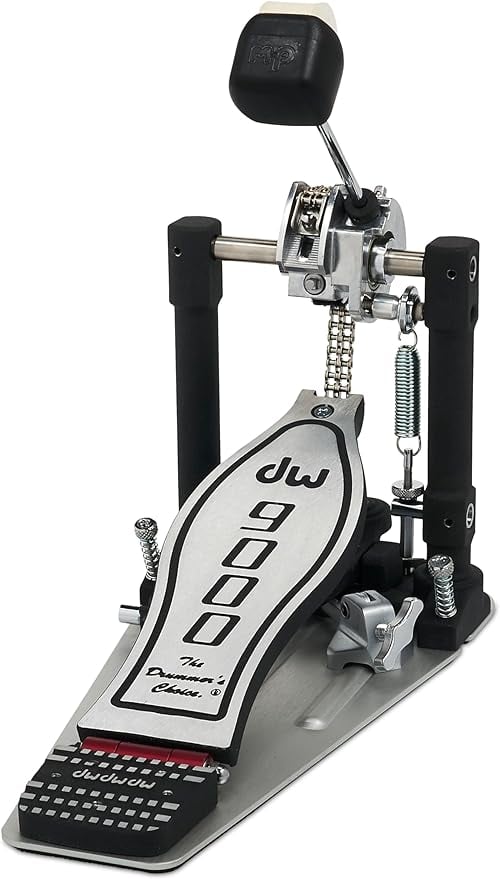
The DW 9000 single bass pedal is the one a lot of touring pros reach for when they want a kick action they can dial in obsessively. Its EZ Infinite Adjustable Cam lets you slide between Accelerator and Turbo sprocket feels without swapping parts, while the Floating Swivel Spring, Delta II ball bearing hinge, and Tri-Pivot Toe Clamp keep the motion smooth and the whole unit locked to your kick.
It is not the cheapest way into a serious pedal, but the engineering is the point. If you have been grinding on a 5000 or a Pearl Eliminator and want more range under your foot, the 9000 gives you a deeper menu of feel without losing the heavy, planted response DW is known for.
🌊 Deep Dives
🚲 inside heart's tour kit — and the bicycle sean lane invented

Sean T. Lane walks Modern Drummer's David Frangioni through the Ludwig and Paiste hybrid kit he's currently touring with Heart, and the conversation goes well past the usual gear inventory. The standout moment is Lane breaking down a self invented instrument he calls the "bicycle," explaining how he built it and where he actually deploys it inside the Heart set.
At roughly 28 minutes, it's the kind of rundown worth sitting with rather than scrubbing through. You get the logic behind a classic rock touring rig, the small choices that make a big stage kit feel personal, and a working drummer's case for inventing your own voice on the bandstand when the standard pieces don't quite get you there.
🔥 dave dicenso's 2006 md fest solo and warmup secrets

Dave DiCenso's 2006 MD Festival set, now resurfaced from the Hudson Music archives, is the kind of clip that rewards a full sit-down. Sixteen minutes of groove that breathes between pyrotechnic flurries, plus an interview where DiCenso walks through the warmup concepts and routine he actually uses to get the hands moving. It is half clinic, half performance, and the balance is what makes it worth returning to.
If you have only ever caught DiCenso in passing as a sideman or educator, this is the long-form context that ties the playing to the practice. Cue it up when you have the time to watch the solo and then actually listen to him explain how he built the vocabulary behind it.
🎓 Practice & Skills
🎤 the rim-click trick that fooled a massive attack engineer

Rob Brian's Dorset Drum Festival 2026 clinic clip zeroes in on something most drummers fudge: the snare drag. The takeaway is that drags aren't just an ornament. Treated with intent, they're a texture knob you can dial from loose and bouncy to studio tight.
Brian's framing is useful. A bounced, looser drag is the Ringo and Oasis flavor, and that's a feature, not a flaw, when the song wants air around the backbeat. But when you need precision, the grace notes have to lock to the grid like everything else. His angles from the clip: run the drag into the bass drum so the kick anchors the figure, layer in press rolls to blend bounce and control, and treat bass drum dynamics with the same care you give the snare — the grace notes between your feet matter as much as the ones in your hands. He also drops a Massive Attack session story where a rim click, placed and tuned right, fooled the engineer into thinking it was a sample pad. Gear was not the trick. Placement was.
So today, isolate it. Loop a slow groove around 75 to 85 bpm, play the same bar three ways: bouncy drag, tight drag, drag pulled into the kick. Record a phone clip and listen back. Common mistake: cranking the grace notes louder instead of placing them closer. Tighten the spacing, not the volume. Drags are a tool, not a flourish.
Get 10% Get Rob's full lesson pack using code DD-DD-10 here
🧠 four ways drummers actually hear the same groove
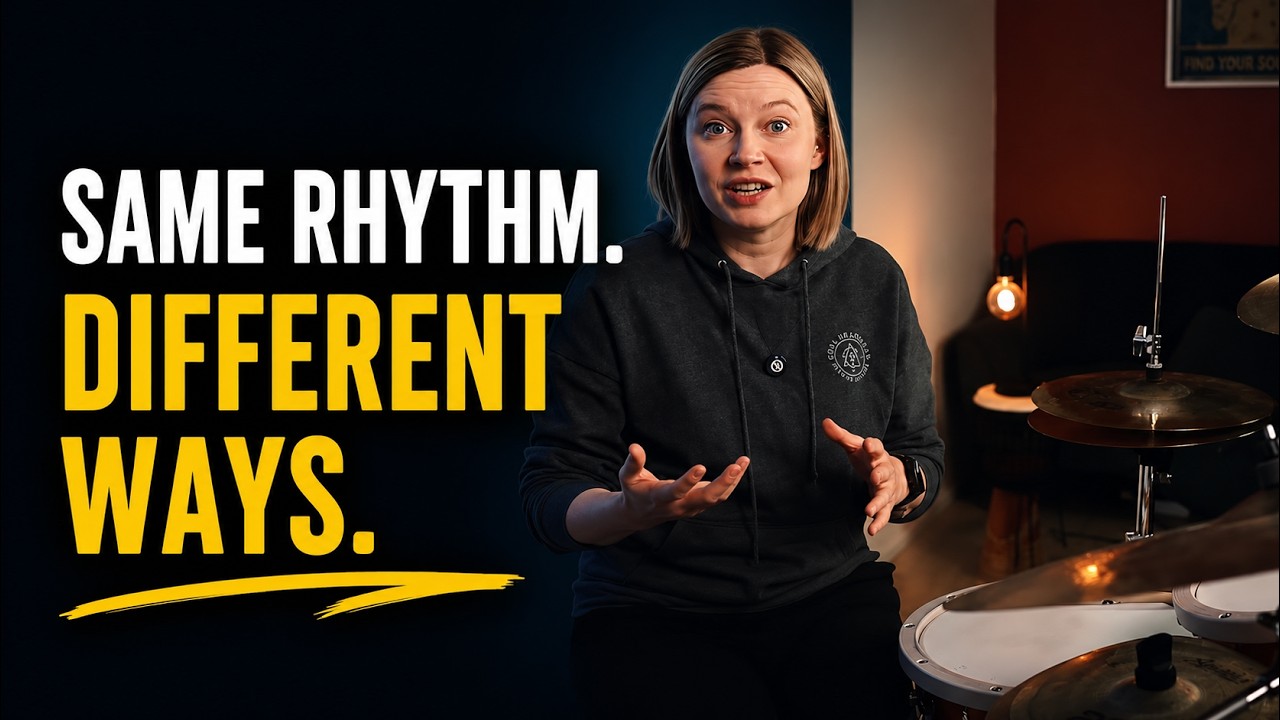
Sari Kujala's new lesson sits on a simple idea with big practical payoff: the same groove can be understood four different ways, and the way you internalize it shapes how musically you play it. Walk away knowing which lens you default to, and which one you've been neglecting.
Kujala lays out four entry points into any rhythm. You can feel it as a sticking pattern (where the hands go), count it (numbers and subdivisions), read it as notation (shapes on the page), or hear it as a melody (the groove sung back to you). Most drummers lean hard on one and avoid the others. That's the blind spot. Try this today: take a groove you already own and run it through all four. Say the stickings out loud. Count it in sixteenths. Write one bar on paper. Then put the sticks down and sing the kick and snare like a vocal line. Same groove, four windows. The one that feels hardest is the one worth living in for a week.
From there, Kujala opens up variation work: shifting bass drum placements, choosing those placements with intent rather than habit, and orchestrating the pattern around the kit so a single idea becomes ten. Start slow enough that you can hear the melody of what you're playing, not just execute it. The takeaway: groove fluency is multilingual, and the drummers who sound most musical are the ones who can translate between all four languages on demand.
🎯 three pro tricks to upgrade any 16th-note fill

Marty B. argues most drummers chase harder fills when the real upgrade is hiding in smaller details: dynamics, orchestration, phrasing, and feel. He takes one simple 16th-note fill and reworks it three ways, and the takeaway is that the notes barely change. What changes is how you play them.
Try it on your own kit tonight. Pick a basic four-beat 16th-note fill around the toms, the kind you'd throw in without thinking. First pass, play it flat and even, so you have a baseline. Second pass, add dynamics: ghost the inner notes, accent the downbeats, and let the last hit breathe. Third pass, reorchestrate without changing the rhythm: move a few notes to the floor tom, drop the bass drum under an accent, or send the final hit to a crash with a kick. Fourth pass, mess with phrasing: push the fill a 16th later so it leans into beat one, or leave a 16th of space at the front so it feels like a setup rather than a sprint. Start slow enough that you can hear the difference between an accent and a ghost note, then bring it back to tempo inside a groove. The common mistake is treating a fill like a separate event from the time around it; the pros treat it as part of the phrase.
Same notes, better fill. Detail beats difficulty.
That's it for today! Thank you for carving out time to read! I'm grateful you're here. 🙏 If you'd like to support the newsletter, consider joining our premium tier.
If you have feedback, a story, or something you'd love to see in the newsletter, just reply to this email. I read every message and respond to each one.
Happy drumming,
Matteo