

⚡ Quick Hits
🔥 the tony williams fill gregg bissonette still steals

Gregg Bissonette breaks down the Blushda, the rolling fill he picked up from Tony Williams. The trick sits in the sticking. A traditional flam drag alternates lead hands, but the Blushda keeps the same lead hand every repetition, giving it that signature Williams flow. Short, clear, and worth stealing for your next solo.
🛒 Gear Picks
🎤 sm57 vs m201 vs e604: which snare mic wins?
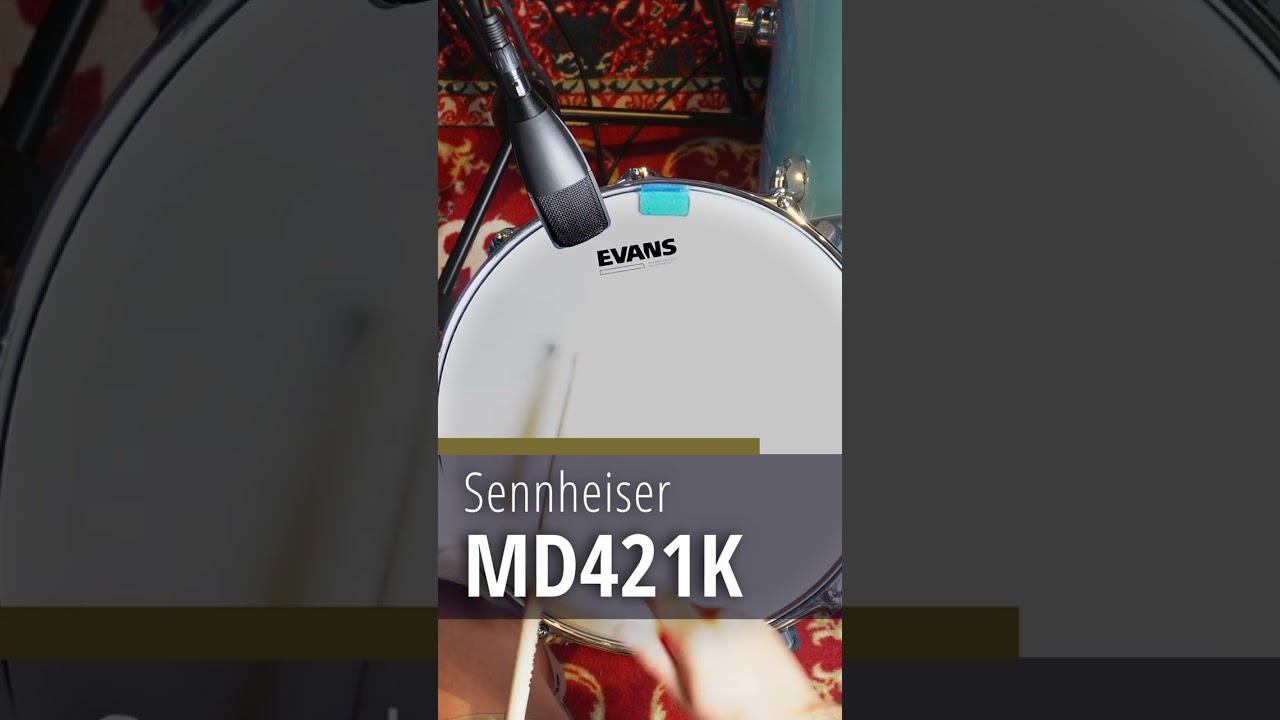
Gideon Waxman lines up the most popular snare mics on the market and lets you A/B them back to back on the same drum. Shure SM57, Beyerdynamic M201, Sennheiser e604, the usual suspects you keep seeing on studio rider sheets and stage plots. The point is not to crown a winner but to train your ear on what each capsule does to the crack, the body, and the wire underneath.
Throw on headphones before you watch. The differences are subtle on laptop speakers and obvious once you isolate the transient response and low mid weight of each option. Useful reference before your next tracking session or mic purchase.
🦶 dw's 3000 double pedal drops 25% — workhorse territory

DW's 3000 Series double pedal is on sale, and for drummers eyeing a workhorse without stepping up to the 5000 or 9000 tier, this is the sweet spot in the lineup. The dual-chain Accelerator drive gives you a fast, responsive feel, and the updated build adds an adjustable footboard angle, swivel toe clamp, and anti-skid rubber mats on the steel base plates for a planted setup.
You also get two-way DW101 beaters with memory locks and delta stroke adjustment with ball bearings, so dialing in spring tension and beater position stays consistent gig to gig. Reviewers pair it with the matching 3000 hi-hat stand and snare stand for a full hardware pack that punches above its price.
🌊 Deep Dives
🎛️ rebuilding dave weckl's 1990 festival de ritmo tone

Dave Weckl's Festival de Ritmo tone from 1990's Masterplan remains a fusion benchmark, and Pascal Thielen sets out to rebuild it piece by piece. The reference points are specific: Weckl's Yamaha Recording Custom kit, a brass piccolo snare, tuning choices, cymbal voicing, mic placement, and mix moves that together shaped the record.
Thielen tracks his recreation on a Drumcraft Series 6 with a Dixon brass piccolo and a Zildjian K Custom setup, then walks through the Beyerdynamic mic chain before landing on a full performance of the tune. Sit with this one if you care about how gear choices, room, and tuning combine to produce a signature sound rather than chasing a single magic bullet.
🎓 Practice & Skills
🌱 one chop, ten variations: jharis yokley's compounding trick
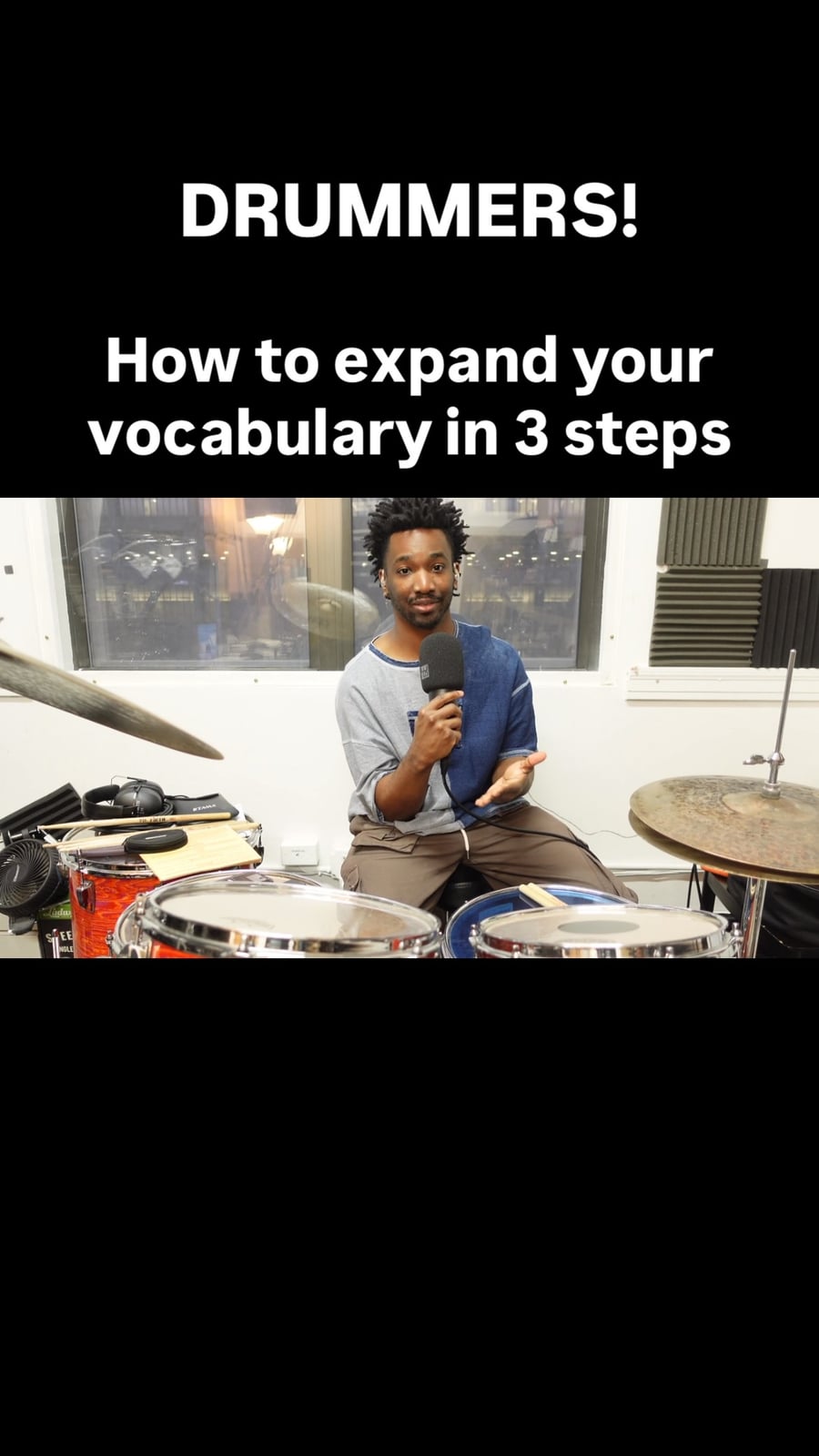
@Jharis Yokley
Jharis Yokley makes a simple point in this clip: one chop, worked through variations, becomes ten. If you treat every new lick as a self-contained trick, you plateau. If you treat it as a seed, your vocabulary compounds.
Here's how to apply his angle today. Pick one chop you already own. Something four beats long, hands and feet, whatever sits comfortably at a medium tempo. Now run it through a checklist. Move the accents. Displace the whole figure by an eighth note, then a sixteenth. Flip the sticking, lead with your weaker hand. Orchestrate it around the kit: hats to floor tom, snare to rack, ride bell instead of crash. Swap one hand stroke for a kick, then swap two. Stretch it into triplets, compress it into thirty-seconds. Loop it as a two-bar phrase with a fill on the second bar. Every pass is a new chop, and it costs you nothing new to memorize.
Common mistake: rushing through variations at full tempo and calling it practice. Start slow enough that each version sounds intentional, then raise the click. Apply it to a groove you already play, a shuffle, a half-time backbeat, whatever, so the vocabulary lives in music, not in isolation.
Takeaway: stop hunting for new licks. Mine the ones you have.
🔺 15 triplet fills to steal for your vocabulary bank
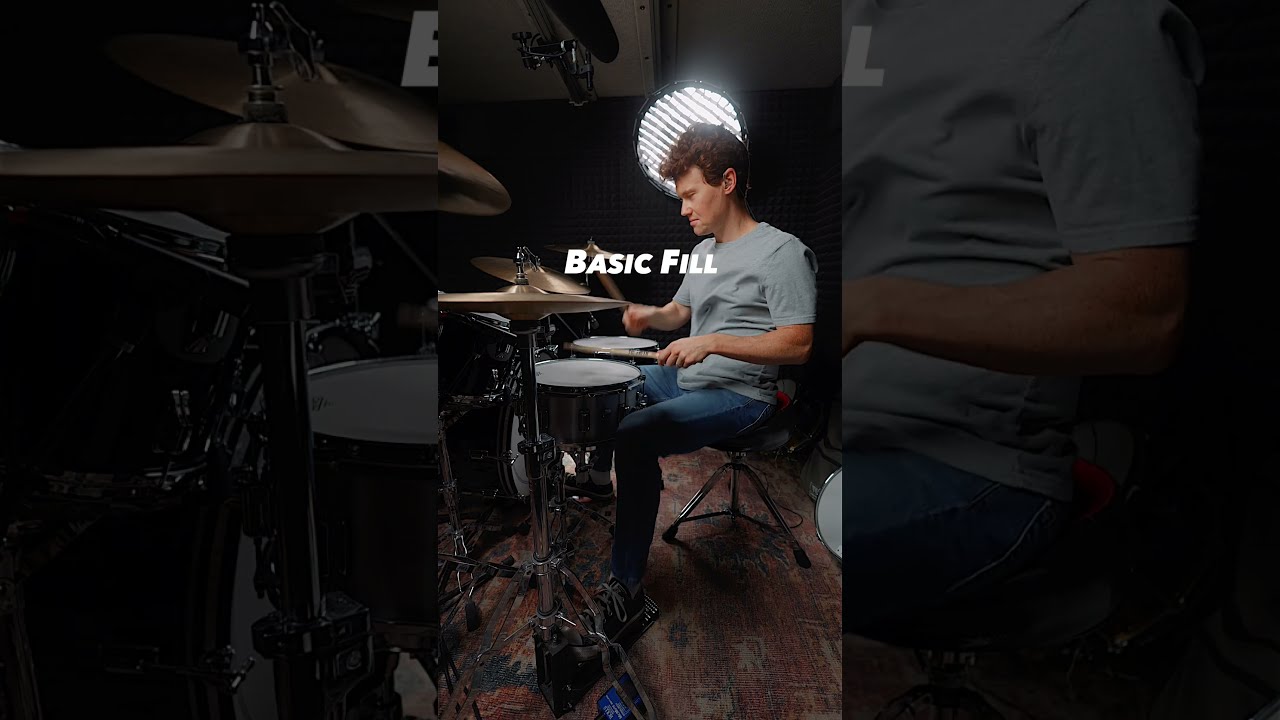
Jeff Randall's short drops fifteen triplet fills into your lap, and the real value is using it as a vocabulary bank rather than a one time watch. Walk away knowing that triplet fills live or die on how you orchestrate three note groupings across the kit, and that stealing a handful of shapes from a player like Randall beats reinventing them from scratch.
Triplets sit in that eighth note triplet or sixteenth note triplet feel where three notes fit the space of two. Most fills in this vocabulary use a repeating sticking (RLK, RLL, RRL, or hand to foot combos) moved around toms, snare, and bass drum. Pick two or three fills from the clip that catch your ear and drill them one at a time. Start at 70 BPM with a metronome clicking quarter notes so you feel the "trip-a-let" subdivision underneath. Loop one bar of time, one bar of fill, for five minutes each. Common mistake to avoid: rushing the last partial of the triplet as you land back on beat one. Count out loud if you have to. Once the fill feels locked, drop it into a song you already play, something in a straight 4/4 like a shuffle blues or a rock ballad where triplet phrasing sits naturally.
Steal the shapes, drill them slow, then use them.
🪜 climb the subdivision ladder that breaks most drummers

Yeongkwi Drums built a subdivision ladder that will expose any weakness in your independence: 16th notes, then 6-tuplets, then 32nd notes, all while the opposite hand holds steady 8th-note hi-hats. Walk away knowing how to keep one limb locked to a grid while the other shifts gears underneath.
The concept is simple. Same sticking pattern, same kick voicing, but the lead hand accelerates through three subdivisions against an unchanging hi-hat pulse. The trick is your brain wants to speed up the hi-hat when the lead hand jumps to sextuplets, and again when it hits 32nds. Do not let it. Set a metronome slow enough that you nail the transition from 6-tuplets to 32nds cleanly. If that jump falls apart, the tempo is too fast. Loop each subdivision on its own for a full minute before stringing them together. Then run the whole ladder with right-hand lead. Then flip it and run it with left-hand lead, which is where most drummers find the real work. Common mistake: rushing the sextuplet phase because it feels awkward between the two even subdivisions. Sit inside it.
Apply the pattern to a slow groove you already play, then push the lead hand through the ladder over the same hi-hat foundation. Independence is the ability to hold one grid while your other limbs argue with it.
That's it for today! Thank you for carving out time to read! I'm grateful you're here. 🙏 If you'd like to support the newsletter, consider joining our premium tier.
If you have feedback, a story, or something you'd love to see in the newsletter, just reply to this email. I read every message and respond to each one.
Happy drumming,
Matteo