
In partnership with

Cut Through Noise with The Flyover!

The Flyover offers a refreshing alternative to traditional news.
We deliver quick-to-read, informative content across sports, business, tech, science, and more that cuts through the noise of mainstream media.
The Flyover's talented team of editors meticulously collects the day's most important news, ensuring you stay informed on top stories and equipped to win your day.
Join over 3 million savvy readers and leaders who trust The Flyover to provide unbiased insights, sourced from hundreds of outlets.
⚡ Quick Hits
⚡ thomas lang unloads at dorset drum festival

Thomas Lang turns up at the Dorset Drum Festival for another round of controlled chaos, caught here in Drum Dog's latest installment. Expect the limb independence and ambidextrous phrasing he's spent decades refining. Worth a minute of your scroll.
🛒 Gear Picks
🎯 every evans snare head, compared side by side

Ryan Prim lines up every Evans snare head back to back, giving you a quick ear test across the full catalog in one sitting. Genera HD, ST Dry, Power Center, Hybrid, EC Reverse Dot, and the rest all get the same stroke on the same drum, so the tonal differences sit right next to each other with nothing else in the way.
If you have been guessing which coated single ply actually sounds drier, or how the reverse dot models stack against the two ply options, this is the shortcut. Keep it bookmarked for your next head swap.
🥁 pearl's beaded aluminum primal: dry, crisp snap under $270

Pearl's Primal Snare Collective in 14x5.5 aluminum aims squarely at players who want cut without ornament. The 1mm beaded shell, brushed and left unadorned, is built for a dry, sensitive, and crisp voice with plenty of snap at standard depth. Nothing on the drum reads as boutique flourish, and that's the point.
Hardware backs up the working-drummer pitch: 2.3mm triple-flanged hoops for a slightly looser rimshot response, die-cast dual tension lugs, and a smooth strainer. Available sizes include 13x7, 14x5.5, 14x6.5, and 14x8, so the collective doubles as a starting point if you want to build out a family of aluminum voices in the same shell recipe.
🌊 Deep Dives
🦶 mike johnston's 3 exercises for faster bass drum doubles
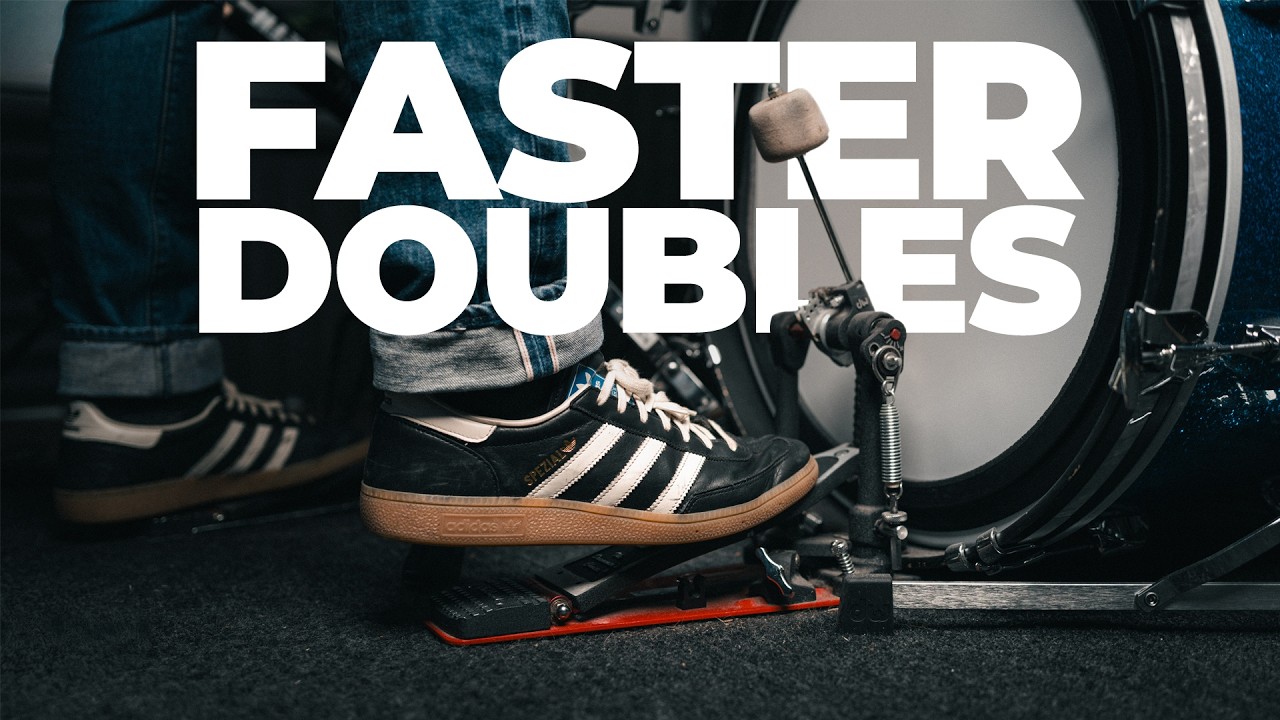
Mike Johnston opens with a truth every drummer eventually accepts: fast bass drum doubles come from reps, technique, and then more reps. From there, he lays out his three go-to exercises for building clean, powerful doubles, starting with a breakdown of foot technique and the skip stroke before moving into the drills themselves.
What makes this worth sitting with is the pacing. Johnston spends real time on the mechanics before piling on speed, so you understand why each exercise works, not only how to run it. Pull up a pad or your kit, set a metronome, and treat it as a proper practice session rather than a watch-through.
🐶 how snarky puppy's michael league built a grammy empire his way

Michael League started Snarky Puppy out of a University of North Texas project in the mid-2000s. On Go with Elmo Lovano, he walks through the whole machine: how the Dallas gospel and R&B scene reshaped the band's feel, how the rotating cast of players became a launchpad for names like Cory Henry, Larnell Lewis, and Bill Laurance, and how he schedules a year out so everyone gets bandstand time.
The back half gets into business drummers rarely hear discussed openly: running GroundUP as an artist-first label, building a no-headliner festival, breaking down 'Lingus' and take selection, his work with David Crosby, and running the operation from a small village in Spain.
🎓 Practice & Skills
🧠 the two hidden skills behind creative fills

Sari Kujala argues your fills sound predictable for one reason: you're treating "learning more fills" as the fix, when the real problem is that creative fills come from two separate skills working together. Walk away from this lesson understanding how subdivisions and sticking patterns interact, and how one pattern reshuffled across different subdivisions gives you a stack of new ideas without memorizing anything new.
Here's the framing. Every fill you play is two decisions stacked on top of each other: the subdivision (eighths, triplets, sixteenths, sextuplets) and the sticking pattern (the actual order of hands and feet). Most drummers lock one sticking to one subdivision and repeat it forever. Kujala's move is to take a single pattern you already own and run it through different subdivisions. Same shape, different rhythmic feel, instantly new fill. The catch is coordination. If your hands only cooperate at one speed or one grouping, you'll default to the safe idea every time. So pick one sticking you use constantly, maybe a basic RLRR LRLL or a paradiddle, and play it as straight sixteenths for a bar, then as triplets, then as sextuplets. Start slow. Keep the pattern identical. Let the subdivision do the creative work. Then flip it: keep the subdivision, change the sticking.
Fill vocabulary grows by recombination, not accumulation.
🧠 why your mind blanks mid-solo — and the fix

Better Drumming tackles the moment every drummer dreads: the bandleader points at you, the spotlight hits, and your mind goes blank. The counterintuitive fix here is that you likely have too many ideas, not too few. Real solo freedom comes from deep work on a small vocabulary, then learning to move those pieces around in real time.
The four-step framework is simple. Pick 2 or 3 ideas you already know, a favorite lick, a rudiment, a groove fragment. Learn each one cold so you own it without thinking. Then practice inversions and permutations: start the phrase on a different beat, flip the sticking, move the accents around the kit, stretch or compress the rhythm. Finally, improvise using only those handful of ideas and their variations. That constraint is the point. You stop reaching for new material mid-solo and start hearing how the pieces connect.
Try this today. Pick two vocabulary items, maybe a six-stroke roll and a linear fill you love. Set a slow tempo, loop a two-bar phrase, and force yourself to solo for four minutes using only those two ideas and their permutations. Notice when you panic and default to autopilot. That is the exact spot deeper practice pays off. The takeaway: soloing confidence comes from mastering a small vocabulary, not stockpiling licks.
That's it for today! Thank you for carving out time to read! I'm grateful you're here. 🙏 If you'd like to support the newsletter, consider joining our premium tier.
If you have feedback, a story, or something you'd love to see in the newsletter, just reply to this email. I read every message and respond to each one.
Happy drumming,
Matteo