
Sponsored by

20 Million Pounds Lost With Method

The secret to lasting progress isn’t extreme diets or all-or-nothing routines—it’s small, consistent actions that actually fit your life. This science-backed approach helps you lose weight through simple, sustainable habits designed to work with your lifestyle, not against it—without restrictive meal plans or overwhelming gym schedules.
The results speak for themselves: users have already lost over 20 million pounds.
Take the quiz to get your personalized plan and stay accountable with small daily actions (plus a surprisingly honest companion to help keep you on track).

⚡ Quick Hits
🕺 ethan groves hijacks "rock with you" with a stealth solo
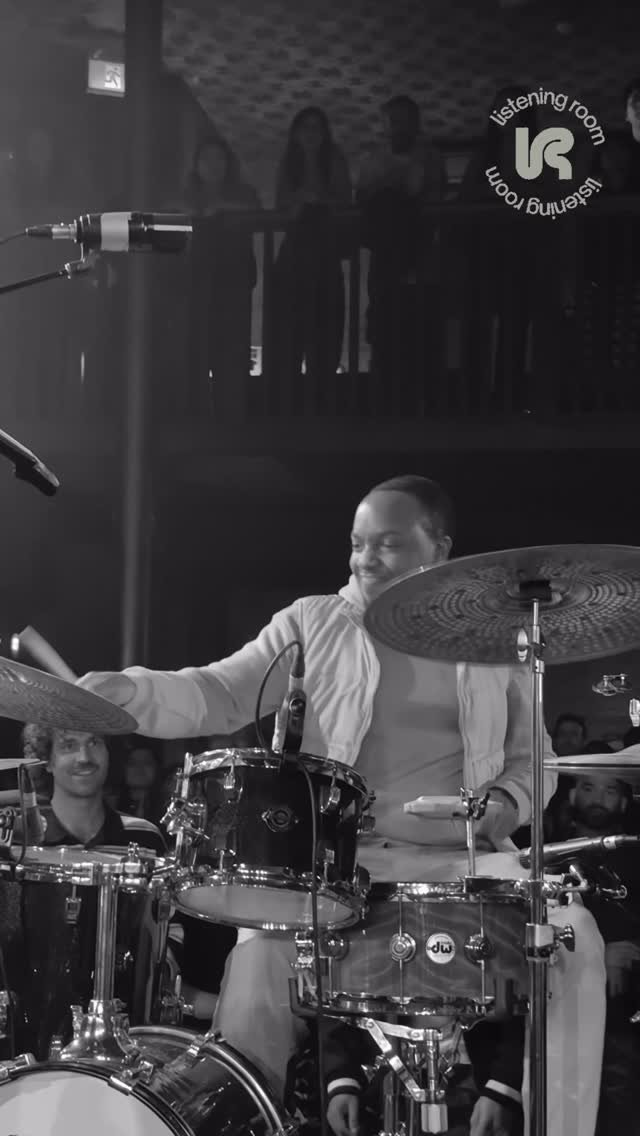
@Listening Room
Ethan Groves stole the room during a "Rock With You" cover at Davie Studios' Listening Room: Michael Jackson Vol. 2 session in Toronto, turning a Soulquarians-style tribute night into a drum solo showcase. The clip catches him making it look effortless, the kind of pocket-and-flash combo that translates instantly to a reel. Worth a 60 second detour before the next session drops.
🦶 chasing steve gadd's hi-fly pocket, no edits allowed
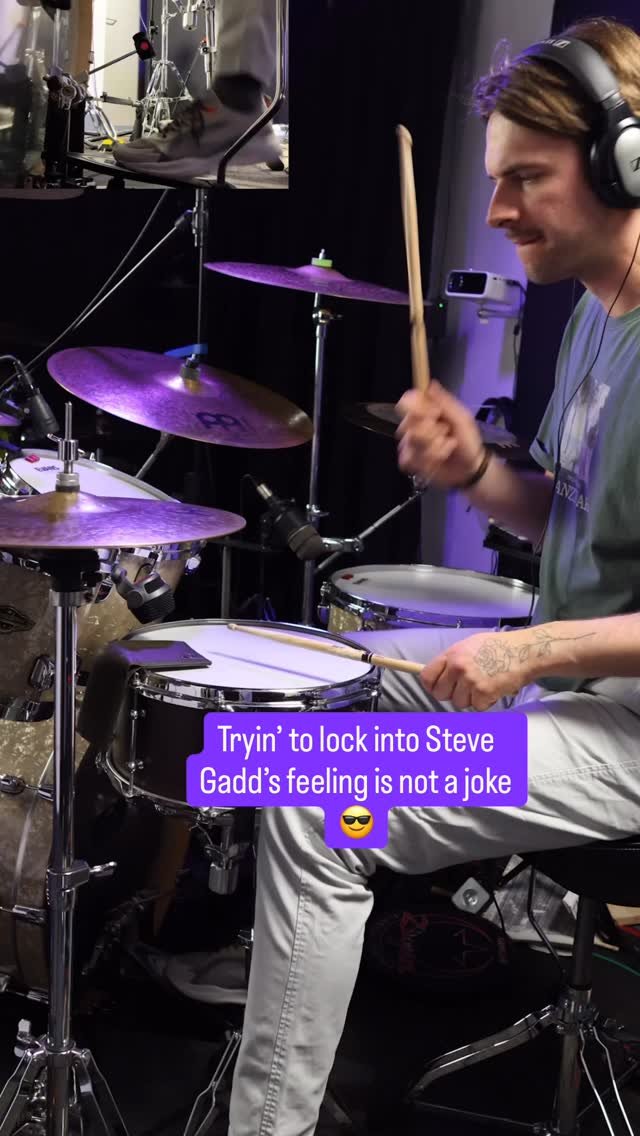
@Michał Jakubowski
Steve Gadd's original groove on Ben Sidran's "Hi-Fly" is the bar, and Michał Jakubowski takes it head on with no quantizing and no edits. He frames the cover as a workout for the bass drum foot, locking into that unmistakable Gadd pocket against the studio track. Headphones on for this one.
🛒 Gear Picks
🔊 daughtry's gong drum trick: 808 sub-bass, zero samples
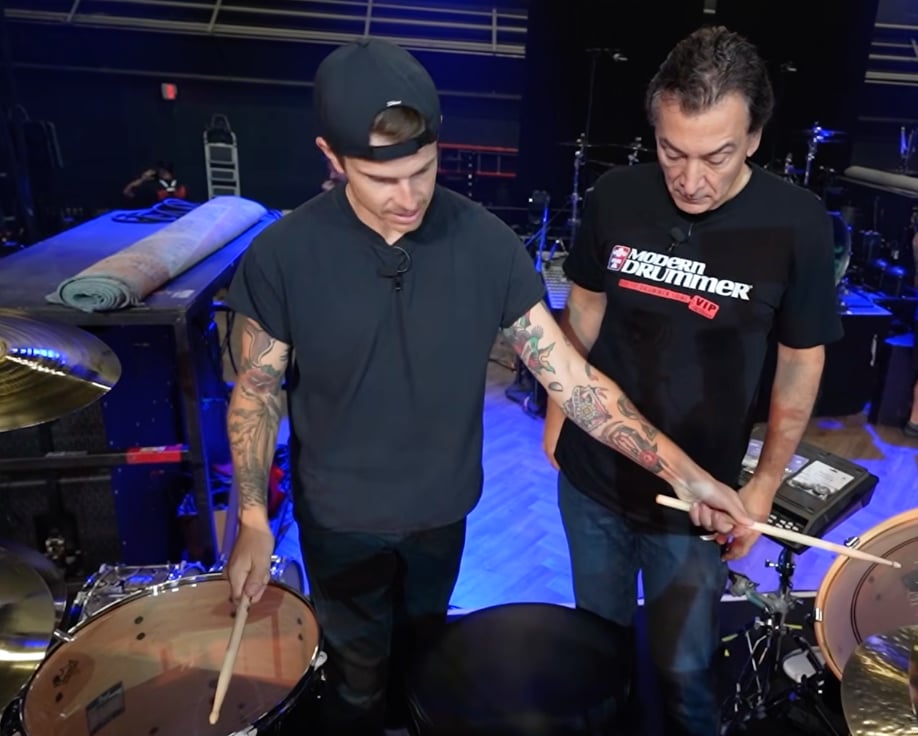
Anthony Ghazel's Daughtry touring rig leans on a Pearl Masters kit, a heavy brass snare, and Zildjian cymbals, but the standout move is a gong drum setup that delivers 808-style sub frequencies completely acoustically, with zero sampling. In the Modern Drummer rundown with David Frangioni, Ghazel walks through his wide-open tuning philosophy, the Remo heads and Vic Firth sticks keeping him through 70-minute rock shows, and a backup arsenal that includes the Vinnie Paul snakeskin signature snare.
The most useful segment may be on Rock Locks, his own tension locking system born from real touring wear and now in use across major tours. Ghazel explains how it evolved out of necessity to keep drums in tune under punishing nightly conditions.
👏 the cymbal stack that sounds like an 808 clap
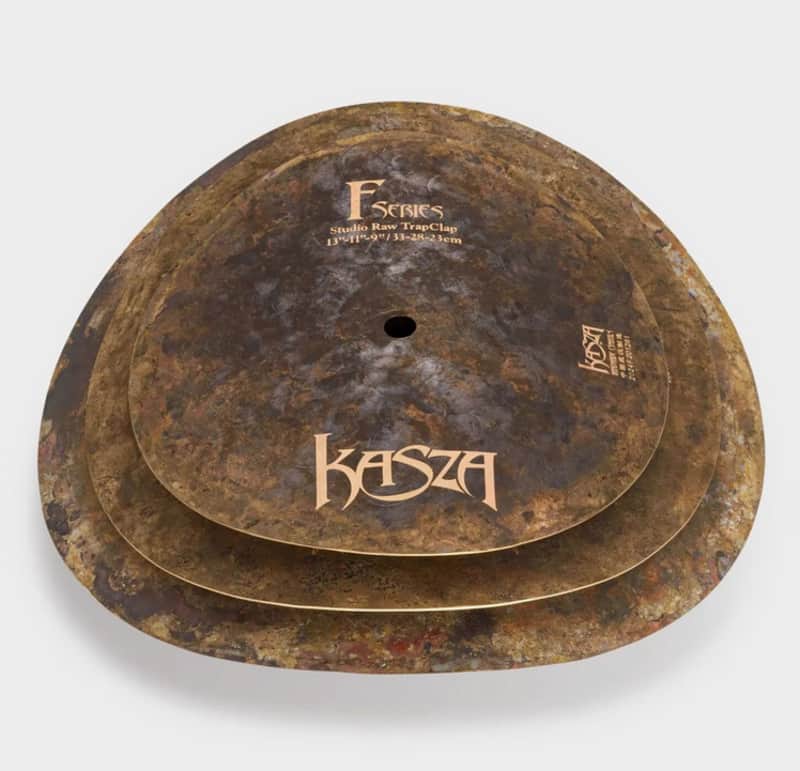
Kasza Cymbals' TrapClap stacks three raw, bell-less plates (13", 11", and 9") into a single trashy unit that, when struck, snaps back with the unmistakable thwack of an 808 hand clap. It's a clever bit of physical modeling: instead of triggering a sample, you're getting that beloved drum machine articulation from actual bronze, with all the air and decay an acoustic source provides.
For drummers chasing modern pop, hip-hop, or hybrid textures without going fully electronic, a stack like this earns its place on a left-side arm or as a backbeat accent. Bell-less construction keeps the pitch ambiguous and the attack dry, which is exactly what makes the 808 clap reference land.
🌊 Deep Dives
🎚️ the session ace behind beck, oasis and elliott smith
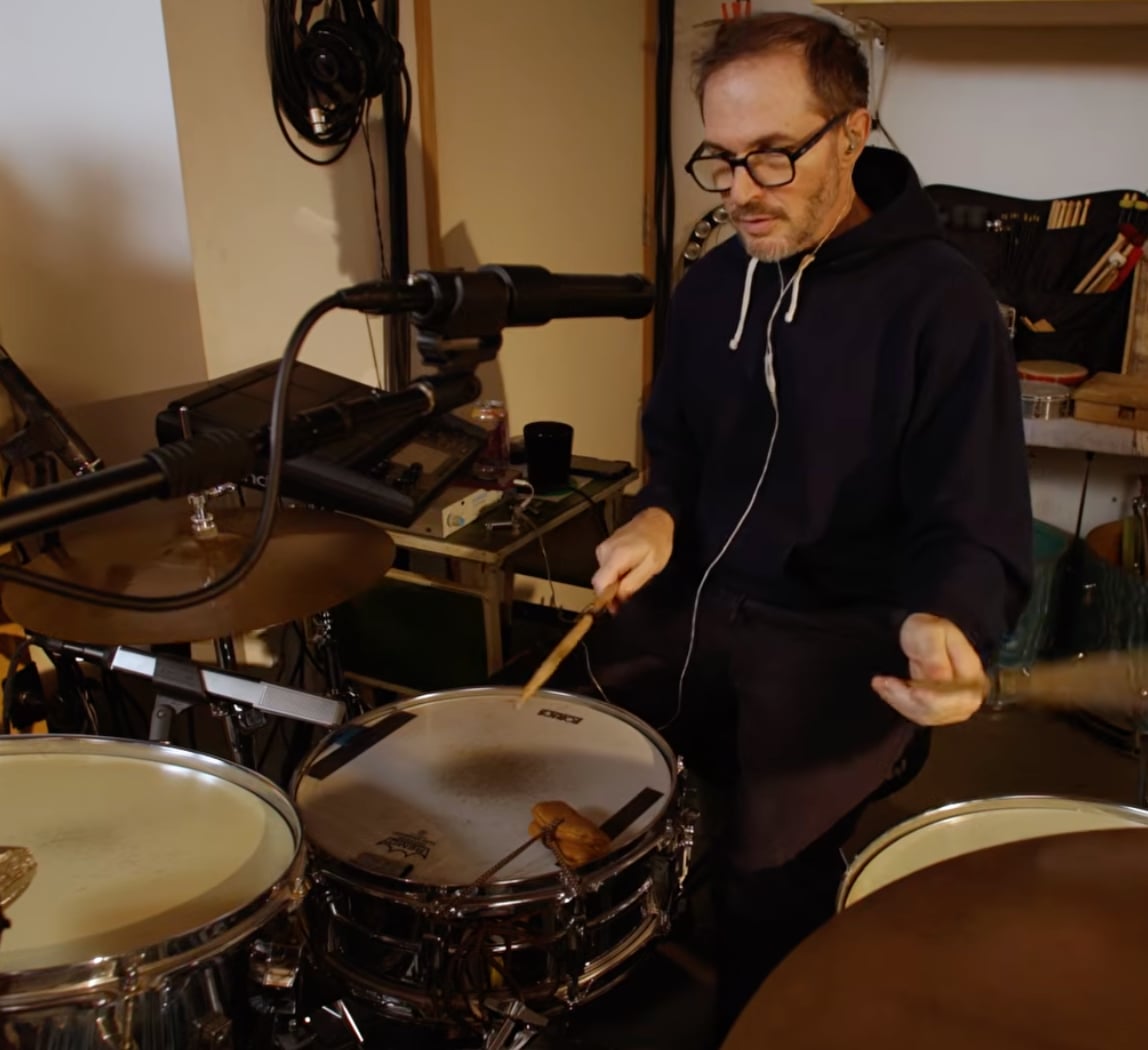
Joey Waronker has quietly held down the kit for Beck, Elliott Smith, REM, Atoms for Peace, Oasis and Roger Waters, and this 12-minute sit-down with The Drum Vault gets at how. He talks about learning all of Led Zeppelin IV in a week as a kid, building his ear against Hendrix and The Who, and the instinct-first, sound-obsessed approach that's carried through decades of sessions.
Along the way he walks through his rig, including early '70s Paiste Giant Beats, the original kit he still records with, and a homemade percussion collection that's grown into its own instrument. The closing story about tracking with Elliott Smith is the kind of studio memory worth queuing this up for on its own.
🎓 Practice & Skills
🗣️ mike johnston: stop playing the same five, find your own voice
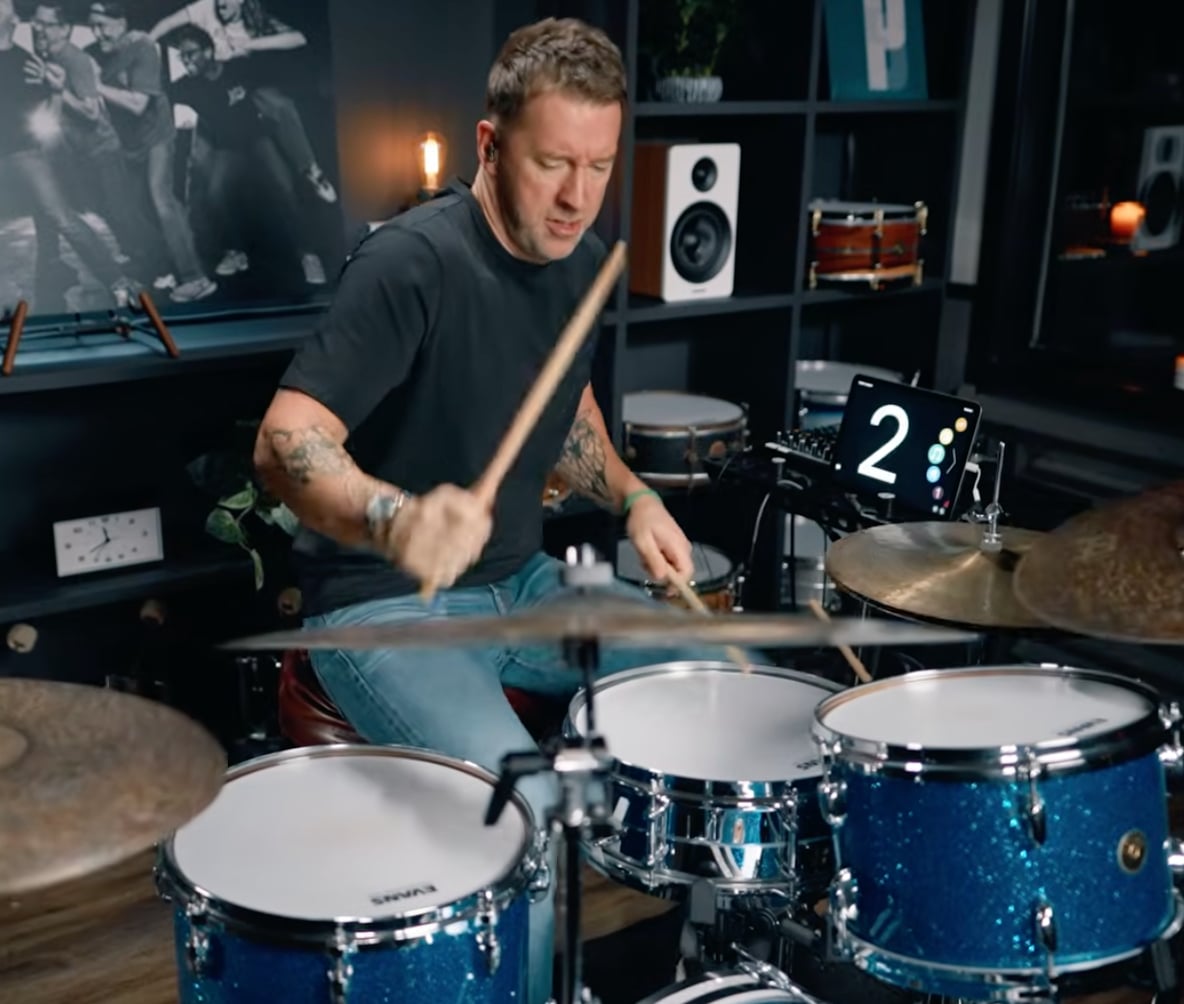
Mike Johnston wants you to stop defaulting to right-left-right-left-left every time a five-stroke grouping shows up. His new lesson reframes the question entirely: what is *your* five? The takeaway is that the standard sticking is just one option out of dozens, and once you treat the grouping as a phrase you can voice, your fills stop sounding like everyone else's.
The vehicle here is 5-5-5-1 phrasing, three groups of five plus a single note, which lands cleanly inside a bar of 16th notes. Johnston works it three ways: as a linear idea with the bass drum filling the gaps, as a non-linear idea where hands and feet overlap, and with flams to spread the pattern across the kit and add texture. Practically, that means picking one grouping of five and committing to it before you move on. Try a linear voicing first, something like RLK RLK RLK plus a tail note, then rebuild the same five with a flam on the downbeat and orchestrate it around toms. Start slow enough that the sticking is honest, then push toward Johnston's goal tempo in the video. The common trap is rotating through clever stickings without ever internalizing one, so you end up with vocabulary you can't actually deploy in a fill. Pick a five, own it, then build a second one next to it.
Your five should sound like you, not like the book.
🦶 displaced paradiddle: shift the sticking, free your kick foot
@Pavel Mamonau
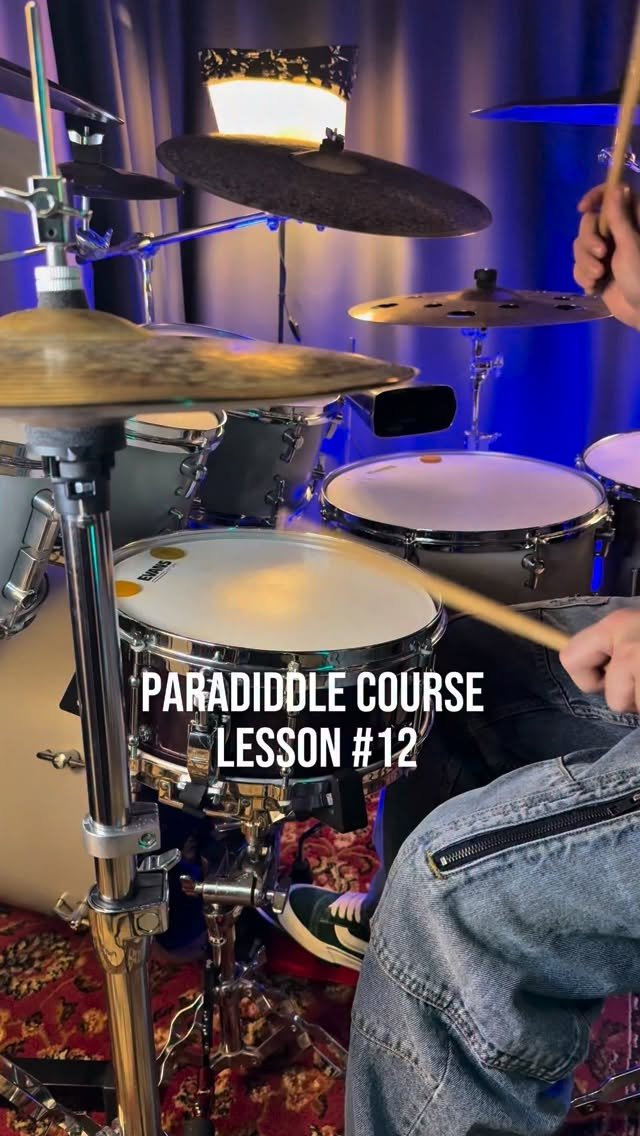
Pavel Mamonau's twelfth lesson in his paradiddle series takes the standard RLRRLRLL and shifts the whole phrase by two sixteenth notes, giving you RLLRLRRL across the hands. The payoff: a familiar rudiment suddenly lands in unfamiliar places, which rewires where your accents fall and forces your kick foot to navigate around a sticking that no longer starts on the downbeat.
Here is how to attack it. Lock the hands first. Loop RLLRLRRL as straight sixteenths on a single surface, slowly, until the pattern feels boring. Only then add the kick, and move it one sixteenth-note placement at a time: kick on the 1, then on the e, then the and, then the a, holding each variation for a minute or two before shifting. The common trap is letting the hands wobble or reset every time the foot moves. Do not let them. The hands are the metronome; the foot is the variable. Stay relaxed in the shoulders, keep stick heights even so the displaced accents do not turn into random spikes, and use a click. If you want to musicalize it, voice the right hand to the hi-hat and the lefts to the snare and watch the backbeat drift to surprising spots, which is exactly the point.
Treat it less like a chops drill and more like coordination and groove training disguised as a rudiment. Master the displacement and your independence, your phrasing, and your comfort with odd accent placements all level up at once.
🎤 madonna's drummer: the two-bar trick that lands gigs
Brian Frasier Moore, the drummer behind Madonna, Justin Timberlake, and P!nk, says one of his quiet secrets for landing big gigs is the two bar repeat. In a short Sound Advice lesson from Evans, he frames it as the kind of fundamental that separates drummers who play parts from drummers who hold down a show.
The idea is simple on paper: a groove that resets every two bars instead of every one. That extra bar of breathing room is where pro session and tour drummers live. It lets the second bar do something the first one didn't, a small variation, an answered phrase, a setup into the downbeat, without ever derailing the song. For pop and R&B gigs especially, that two bar shape mirrors how vocal phrases and song sections actually move, so your groove starts to feel like it's listening to the singer instead of just running underneath them.
Today, put on a track you already know and force yourself into a strict two bar phrase. Play bar one completely straight. In bar two, change exactly one thing: a ghost note, a different hat opening, a small kick variation, a snare pickup into the next downbeat. Then repeat. Start slow enough that bar two feels deliberate, not reactive. The common trap is treating every bar like a chance to add something, which kills the groove. Resist. The takeaway from Frasier Moore is that restraint, shaped over two bars, is what makes you gig ready.
🌎 From The Community
💶 580-euro yamaha stage custom: vintage advantage or modern birch? (Reddit)
Over on r/drums, /u/claudemiester is weighing a 580 Euro Yamaha Stage Custom with bags against the modern all-birch version, asking whether the older "Advantage" shells hold up for a grunge and stoner home studio. It's the kind of value-tier debate that splits the room every time it surfaces, and the thread is gathering the usual mix of birch loyalists and vintage holdouts. Worth a scroll if you've ever eyed a used Stage Custom and wondered which era to chase.
Advice for a new drummer (Reddit)
A bass player thrown into the School of Rock drum chair is staring down Pat Benatar's "Heartbreaker," Amy Winehouse's "Valerie," and a Stereophonics-style "Under My Thumb," and asking r/drums where to even start. It's the kind of post that pulls great answers out of the lurkers: rudiment routines, click work, song-specific groove breakdowns. Drop in if you've ever had to learn three tunes faster than felt reasonable.
That's it for today! Thank you for carving out time to read! I'm grateful you're here. 🙏 If you'd like to support the newsletter, consider joining our premium tier.
If you have feedback, a story, or something you'd love to see in the newsletter, just reply to this email. I read every message and respond to each one.
Happy drumming,
Matteo