
Sponsored by

Grab a free 10-pack of THC gummies from Cycling Frog! Just cover $4.99 shipping. Fruity, perfectly dosed, and made for campfires, park days, and whatever summer turns into.
Must be 21+ and only valid on 10ct bags of gummies.
NOT VALID IN OH, CA, CO, AL, LA AND NJ.

⚡ Quick Hits
👻 the chicago shuffle secret hides in the ghost notes
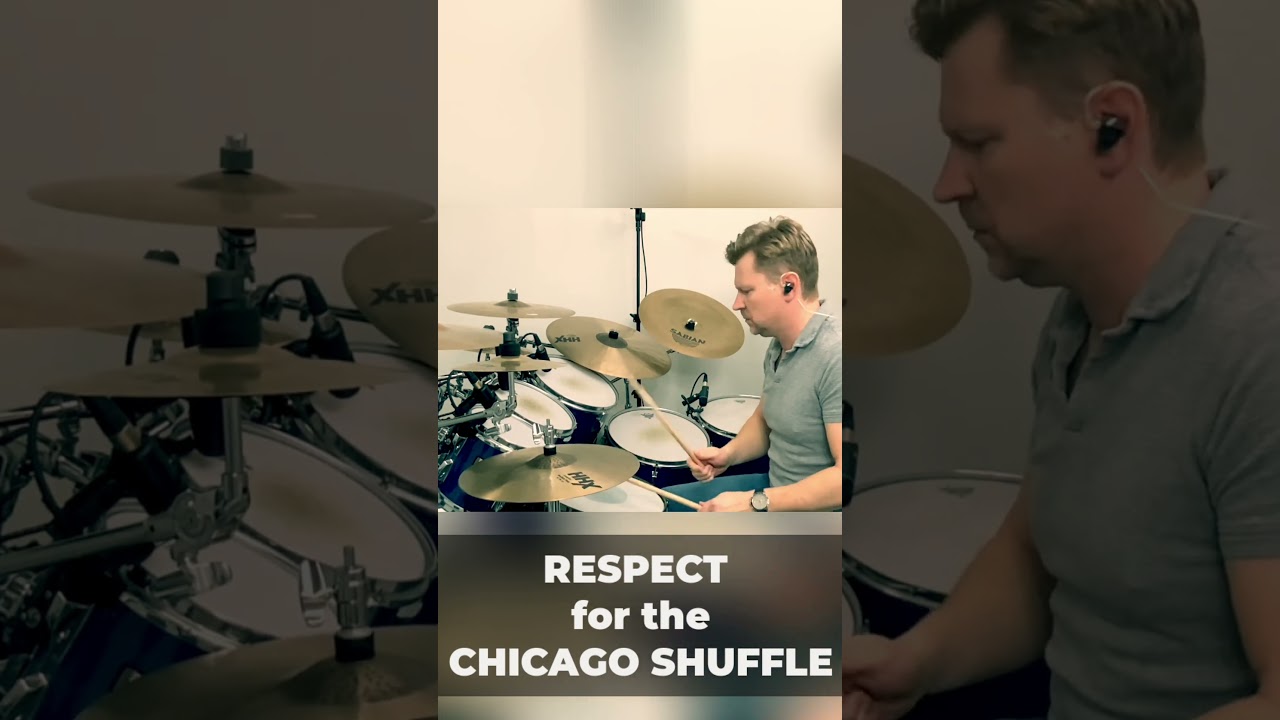
Marty B. breaks down the Chicago shuffle from his "Boogie Man" cover in 54 seconds, and the secret lives in the ghost notes. Watch how he keeps those soft strokes swinging between the backbeat instead of straightening them out, which is what separates a real shuffle from a stiff approximation. Worth a slow-mo rewatch before your next blues gig.
🎤 bruno mars groove, a 30-second clinic in feel
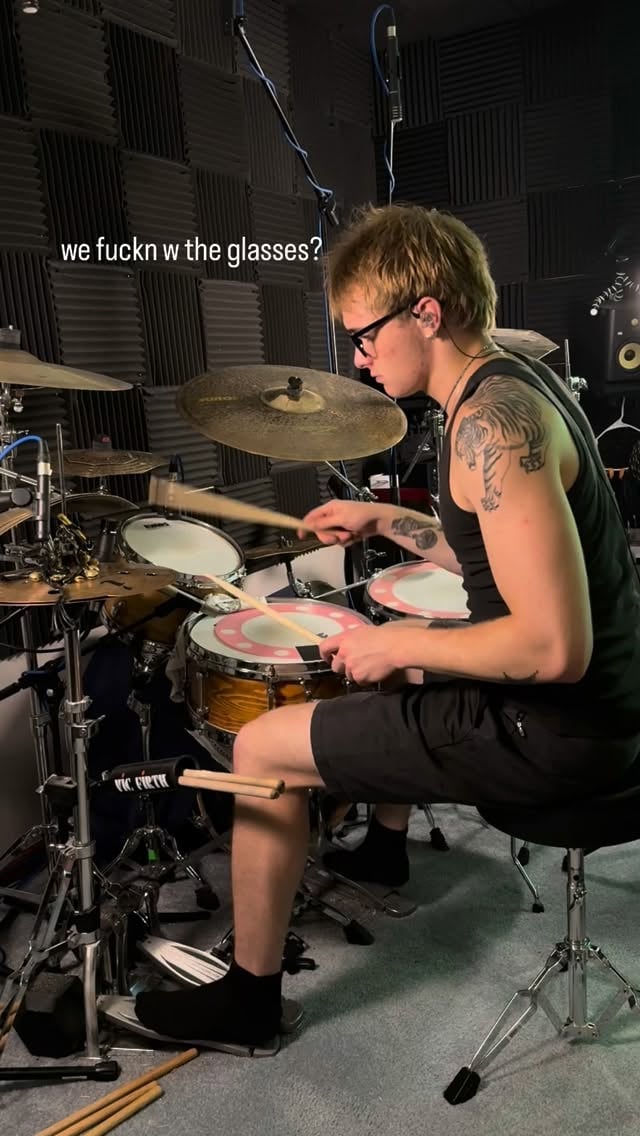
@Owen Jackson
Owen Jackson drops into a Bruno Mars groove with the unflashy precision that gets a session player called back, locking pocket and ornament into the same breath. It's a short reel, but the touch on the hats and the placement of the backbeat do the talking. Worth a 30-second study for anyone working on feel over fireworks.
🕺 jj wallace's ghost-note clinic on bruno mars' "finesse"
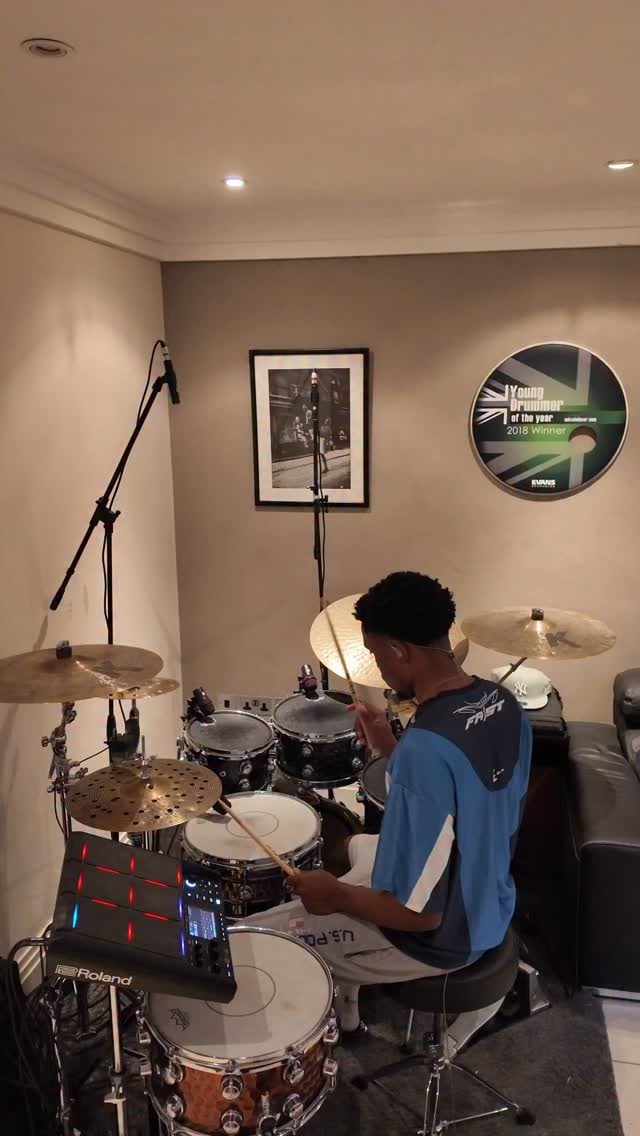
@JJ Wallace
JJ Wallace pockets Bruno Mars' "Finesse" with the kind of slick, dancing-in-the-seat feel the song demands, ghost notes whispering under a hi-hat that struts more than it ticks. It's a short reel but a clinic in restraint, proving the groove lives in what you don't play. Worth a loop or three before your next R&B gig.
🛒 Gear Picks
🥢 the $16 nylon-tip 3-pack that keeps showing up in gig bags

ProMark's LA Specials 5A three-pack is the kind of stick that keeps showing up in gig bags for a reason: hickory, oval nylon tip, three pairs for around sixteen bucks. The nylon tip gives you a brighter, more articulate ride sound (great if you're chasing cut on darker cymbals or playing mesh heads on an electronic kit), and the hickory holds up to most genres without feeling like a budget compromise.
They're not a heavy-hitting touring stick. Players gigging regularly seem to like them, but anyone hammering multiple sets a week will chew through a pair fast. Treat them as a reliable practice and weekend-gig workhorse, a backup pair to keep in the case, or your go-to for the electronic kit at home.
💺 SALE: a hydraulic throne to maximize comfort

The Augioth DT-13 hydraulic throne lands at $99.99 (down from $129.99) and aims squarely at drummers who spend long hours behind the kit. The seat rides on a customized gas spring and a tripod base reinforced with non-slip rubber feet and extended dual-steel brackets, rated to a 500-pound load. Adjustment range runs roughly 17 to 25 inches, with a contoured memory foam cushion and matching backrest in a motorcycle-style profile.
What stands out at this price is the combination of back support and a genuinely stable base, two things budget thrones usually fumble. Early reviews flag easy assembly, solid build, and real comfort during longer sessions, which is exactly what you want from the one piece of gear that touches you the entire gig.
🌊 Deep Dives
🎷 larnell lewis unloads a full solo on snarky's osaka stage
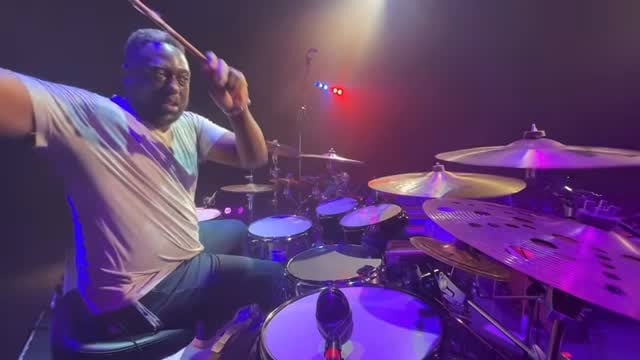
@Larnell Lewis Music
Larnell Lewis unloaded a full solo during Night 2 of Snarky Puppy's Osaka run, and it's the kind of clip worth queuing up with headphones rather than thumbing past. His vocabulary moves freely between jazz, fusion, gospel and funk, and the way he navigates that wide kit, with multiple snares, an aux, and a stack of Zildjian FX and Trashformers, gives the solo real textural range.
If you geek out on setups, his current Snarky tour rig has been documented in detail across his socials, Yamaha shells, Evans heads, and a deep cymbal setup anchored by a dry-leaning ride. Worth a look after the solo lands.
🎧 neil peart's isolated subdivisions track is a 7/8 clinic

Neil Peart's isolated drum track for "Subdivisions" is a clinic in restraint and architecture. Stripped of Lifeson's guitars and Lee's synths, you hear how Peart anchored that 7/8 verse pulse, how deliberately he placed every china and splash accent, and how the chorus fills breathe instead of crowd the bar.
Sit with it. This is the kind of footage that rewards a second pass with sticks in hand, mapping his ride patterns and the way he resolves phrases back to the downbeat. Whatever you think you know about "Subdivisions," hearing it solo'd makes the composition underneath the kit obvious in a way the full mix never quite does.
🎓 Practice & Skills
🎼 6/8 isn't 4/4 with extra notes — 10 levels deep

Jeff Randall's "10 Levels of 6/8 Beats" is a quick tour through how a compound time signature evolves from beginner pulse to advanced phrasing, and the takeaway is bigger than any single pattern: 6/8 is not 4/4 with extra notes, it is its own feel built on two groups of three.
Start by internalizing the dotted-quarter pulse. Count "1-2-3, 4-5-6" but tap your foot only on 1 and 4. That two-feel is the foundation every level in Jeff's video builds on. Once that pulse is locked, you can start moving the snare. The most common beginner version puts the kick on 1 and the snare on 4, hats running eighths underneath. From there, the levels in the clip open up the obvious next steps to explore on your own kit: displacing the snare to beat 3 or 6 for a half-time lilt, breaking the hats into a 3+3 ostinato versus a syncopated 2+2+2, adding ghost notes between the backbeats, and finally layering linear kick patterns that weave through the triplet grid. A common mistake to avoid is rushing the second half of each group of three, which flattens the swing out of compound time. Practice with a metronome clicking only on the dotted quarter, around 60 to 70 bpm, so you have to feel the inner subdivisions yourself.
Apply it to a tune today: try the verse of "Norwegian Wood" or a Sleep Token track that sits in a 6/8 feel. Master the two-feel pulse first, and the rest of the levels start making sense fast.
🧠 mike johnston: 5 rudiments you're playing wrong as grooves

Mike Johnston has a simple premise in his latest lesson: you already know enough rudiments to play great grooves. You just haven't orchestrated them like grooves yet. Spend a few minutes here and you'll walk away with a fresh way to hear paradiddles, flams, and doubles, not as exercises on a practice pad but as raw material for the kit.
The angle is orchestration, subdivision, and spacing. Same sticking, different voices, different feel. Take a paradiddle: leave the sticking alone, but move the right hand to hi-hat, drop the accented left to snare, and push a couple of unaccented notes onto the toms or as ghost notes. Now shift the subdivision from sixteenths to a swung feel and listen to how the same hands suddenly sound like a groove instead of a rudiment. Johnston walks through five of these transformations, with worked examples between the intro and the "go practice" sign-off.
Today, pick one rudiment you already own at a comfortable tempo. Play it on the pad, then orchestrate it once across the kit without changing a single sticking. Then do it again at a different subdivision. The common mistake is speeding up to prove you can; resist that. Start slow enough that every voice has its own dynamic, especially the ghost notes. The takeaway: rudiments don't need to be rewritten to groove, they need to be re-voiced.
⚡ faster hands without the forearm burn — carlin muccular's fix
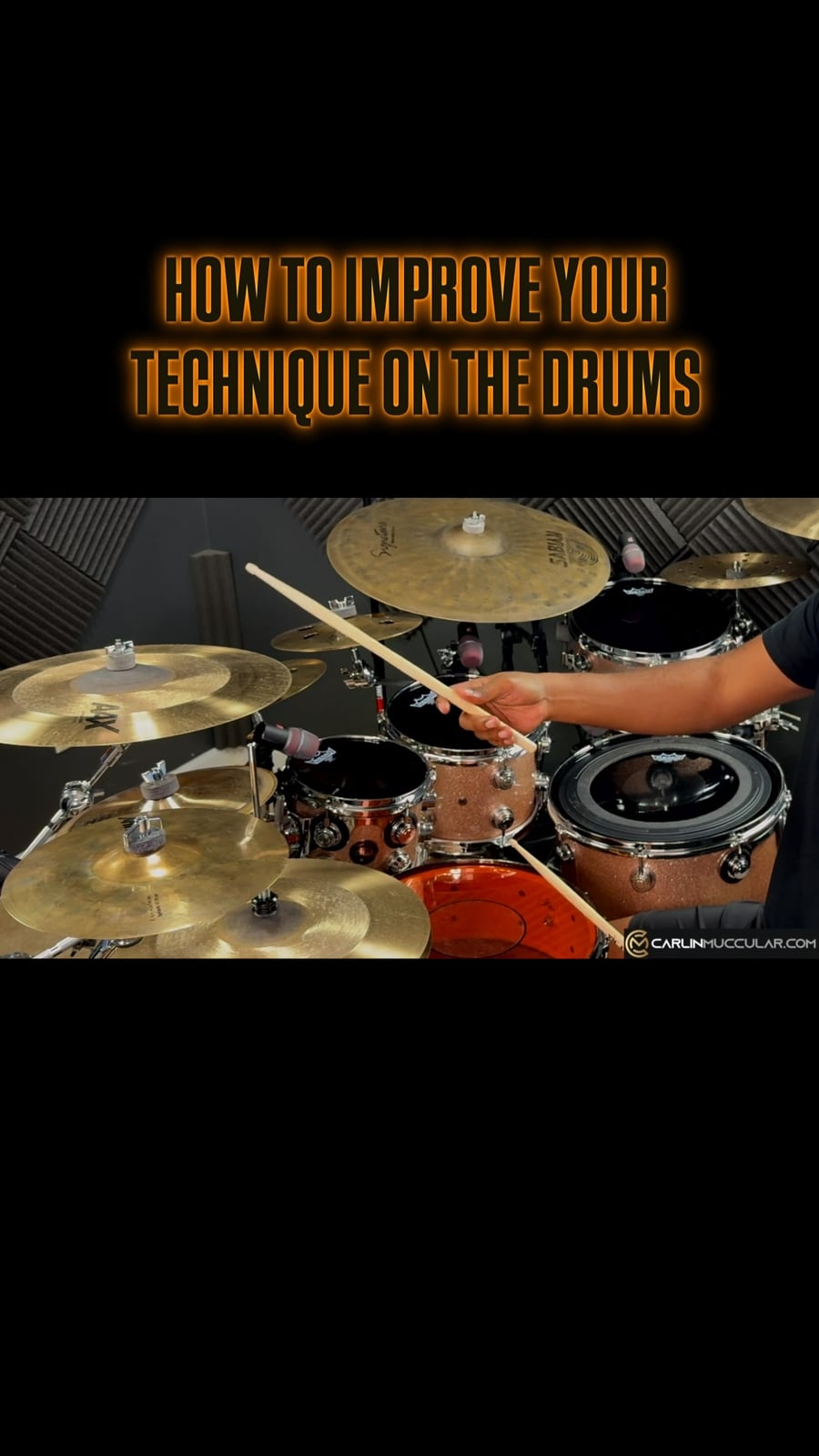
@CARLIN MUCCULAR
Carlin Muccular has a quick reel out aimed at a problem every developing drummer hits: hands that gas out long before the song does. His framing is blunt and useful. What feels obvious to seasoned players, that speed comes from efficiency and not effort, is often invisible to beginners grinding through singles at full tension.
The angle the clip opens up is fatigue as a technique problem, not a stamina problem. If your forearms burn after a minute of sixteenths, the fix usually is not more reps at that tempo. It is loosening the fulcrum, letting the stick rebound instead of muscling it back up, and letting the fingers do the work your wrist is currently overdoing. Try this today. Drop your metronome to around 80 bpm and play single strokes as quietly as you can manage, focusing on the stick bouncing into your fingertips rather than being lifted. Then push to 100, 110, 120, only moving up when your hands stay relaxed at the slower tempo. Two common mistakes to watch for: a death grip on the back fingers, and lifting from the shoulder when the tempo climbs. Apply it to something like the verse groove of a fast shuffle or a busy hi hat pattern in a tune you already know, and notice where the tension creeps back in.
The takeaway: faster hands are built by removing effort, not adding it.
That's it for today! Thank you for carving out time to read! I'm grateful you're here. 🙏 If you'd like to support the newsletter, consider joining our premium tier.
If you have feedback, a story, or something you'd love to see in the newsletter, just reply to this email. I read every message and respond to each one.
Happy drumming,
Matteo