
Sponsored by

Learn why a great property doesn’t always make a great deal.

Wharton Online’s Real Estate Investing Certificate Program teaches the same analytical framework used by institutional real estate investors and experienced operators alike.
Get the same hands-on training used at BlackRock, KKR, and other top firms
Earn a globally recognized certificate from a top business school
Collaborate in LIVE office hours with Wharton faculty and investing practitioners from Wall Street Prep
Join the next cohort starting June 8. Use code SAVE300 to get $300 off tuition.

⚡ Quick Hits
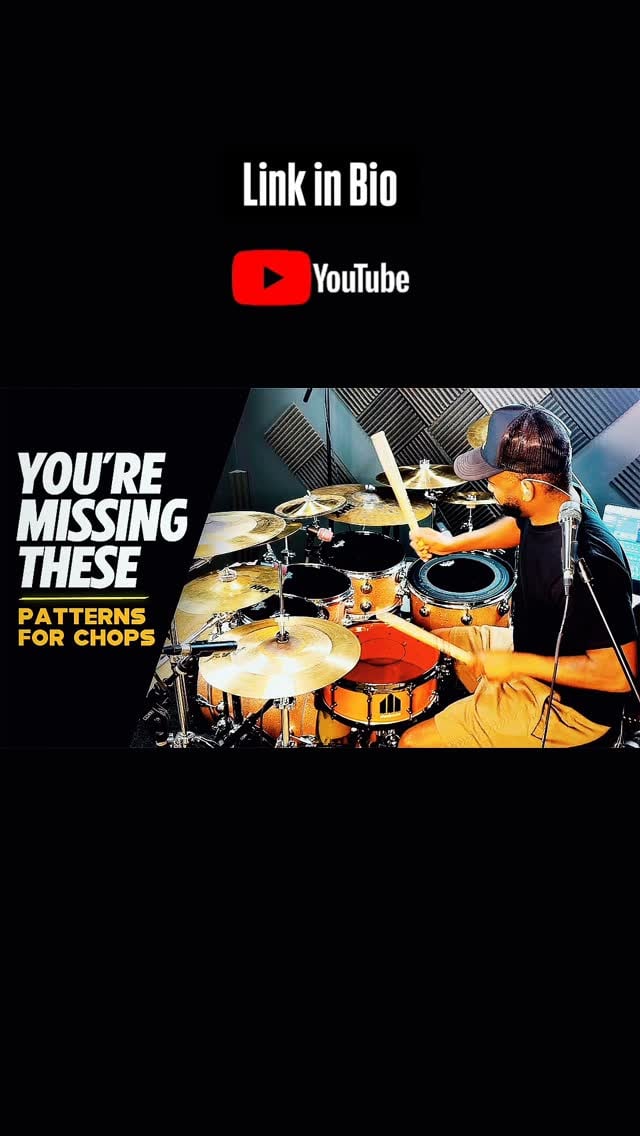
🃏 carlin muccular's "shuffle the deck" rudiment for orchestrating around the kit
@CARLIN MUCCULAR
Carlin Muccular's current favorite rudiment is a sticking puzzle: RLLRLLRR / LRRLRRLL in sixteenths, built to live at what he calls an "intersection." His framing is the hook here, treading water instead of swimming, or shuffling cards before dealing them around the kit, so you can chop and think about where to move next. A smart little vocabulary builder for orchestrating around the drums.
🎸 tears for fears anthem, rebuilt by ash soan's pocket

Ash Soan and Ariel Posen take "Everybody Wants To Rule The World" and rebuild it from feel up, stripping the Tears for Fears anthem to tone, pocket, and conversation between two players. Soan, the UK session ace behind records for Adele, Seal, and Snow Patrol, leans into restraint over flash, every ghost note and cymbal choice serving the phrase. A 102-second clinic in taste.
🛒 Gear Picks
🌑 Meinl Classics Custom Dark Cymbal Pack Review

Meinl's Classics Custom Dark line has earned its reputation as the sweet-spot upgrade, and Gideon Waxman's studio demo makes a strong case for why. Cast from B12 bronze, the series slots neatly between entry-level B8 and pro-tier B20, with extra hammering, wide blade lathing, and that signature smoked finish that reads beautifully on camera.
Waxman runs the full pack through dynamics and styles: 14" hats, 16" and 18" crashes, a 20" ride, a 16" Trash China, and a 10" splash. It's a useful listen if you're weighing a mid-priced setup that still looks the part under stage lights. Check out the Classics Custom Dark pack on Amazon.
🎧 the $52 in-ears quietly taking over stage rigs
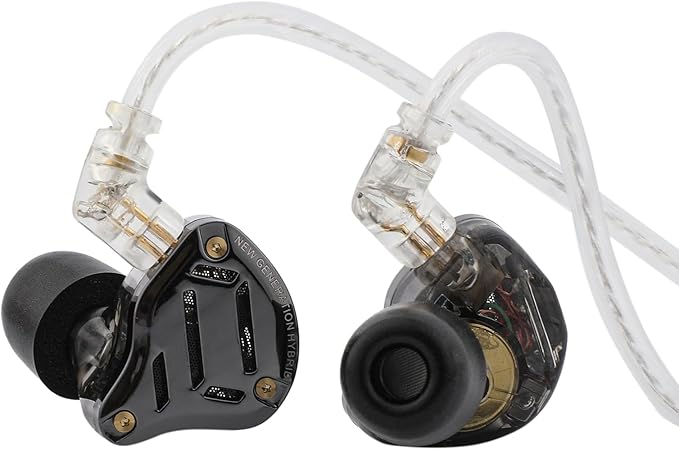
The KZ ZS10 Pro 2 has quietly become the budget IEM that keeps showing up in stage stories, and at $52 it is easy to see why. The shell packs a 10mm dynamic driver plus dual balanced armatures in a 1DD+4BA hybrid with a three-way crossover, and a four-position tuning switch lets you dial in more low end or tame the treble without touching your monitor mix. The detachable silver-plated 2-pin cable means a snapped wire is a replacement, not a write-off.
For drummers, the appeal is practical. One verified buyer notes using them as stage IEMs across two three-hour shows, and another points to the cymbal clarity, which matters when you are tracking hi-hat patterns under a loud guitar rig. Pair them with a beltpack and an extension cable and you have a working-musician monitor for the price of a couple of cymbal felts.
🌊 Deep Dives
🎬 styx's todd sucherman builds a pocket around steve morse

Todd Sucherman tracking "Midnight Tide" for Legacy Pilots' new double album Camera Obscura Vol I & II is the kind of studio footage worth the full sit-down. The session pairs him with a Steve Morse guitar solo, Frank Us on keys and guitars, Lars Slovak on bass, and vocals from Jake Livgren, so you're watching a Styx-caliber pocket get built around prog-leaning material.
At roughly nine minutes, the clip is long enough to show how Sucherman shapes a part rather than just demos a take. Watch his cymbal choices, the way he reins in fills around the vocal entries, and how he sets up Morse's solo without stepping on it. A clinic in serving the song while still sounding unmistakably like himself.
🦾 thomas lang's 13-minute clinic in four-limb independence

Thomas Lang turns nearly thirteen minutes of independent limb coordination into a clinic on what the body can actually be trained to do. Pulled from his Creative Control DVD on Hudson Music, the solo moves through layered ostinatos, four-way splits, and the kind of foot work that makes most players reconsider what they call "fast." It is less a showcase than a thesis: every limb its own voice, every voice on its own clock.
Worth sitting with if you are working on independence or wondering how deep the rabbit hole goes. Pause it, loop sections, watch the feet. The full Creative Control package is where the methodology lives, but this excerpt alone is a study session.
🎓 Practice & Skills
👻 the ghost notes that built hip hop, decoded

Hannah Welton tackles Clyde Stubblefield's "Funky Drummer" in a new Drumeo clip, and if you've ever tried to play the most sampled groove in history and had it come out stiff, this is the breakdown to sit with. The lesson here is less about memorizing a pattern and more about understanding why Stubblefield's 1970 take on a James Brown session became the DNA of hip hop, drum and bass, and just about every sampler ever loaded.
The whole groove lives in the ghost notes. The backbeat is steady on 2 and 4, but everything between those snare hits is a quiet conversation of left hand whispers that you barely register individually and absolutely feel when they're gone. Start slow. Pick a tempo where you can hear the difference between an accent and a ghost, somewhere around 70 BPM, and only push it up when the ghosts stay buried. The common mistake is playing the ghost notes too loud, which flattens the dynamic range and kills the swing. The second mistake is quantizing it in your head. Stubblefield's feel sits slightly behind, with a hair of swing on the sixteenths, and that human push and pull is the whole point.
Pull up the original, loop eight bars, and play along until your ghosts disappear into the kit. Then go listen to "Fight the Power" and hear where it went.
🧠 learn tool drummer danny carey's sober intro fill

Danny Carey's opening fill on Tool's "Sober" is one of those handful of seconds that drummers have been rewinding for thirty years, and Stan Bicknell just planted his flag with a full breakdown of how he hears it. By the end of his nine-minute video, you'll have a working interpretation of the fill, a sense of where the orchestration sits across the kit, and a target to chase in the practice room this week.
The fill is deceptive because it sounds linear and tumbling but it's organized. Bicknell's approach is to slow it down, map which voices go where between toms, snare, and kick, and then rebuild it at tempo. Treat his version as one valid reading rather than gospel — Carey himself plays it slightly differently across live recordings, which is part of the fun. Start by learning the rhythmic skeleton without orchestration: just clap or sing the subdivisions until the phrasing feels natural in your body. Then add the kit voicing Bicknell suggests, hands first, kick last. Use a metronome well below the studio tempo and only move up in five-bpm steps once it's clean. The common trap is rushing the back half of the fill because the front half feels comfortable, so loop the last beat in isolation. Once it's locked, play along to the actual track and feel how the fill resolves into the riff.
Steal the phrasing, not just the notes.
That's it for today! Thank you for carving out time to read! I'm grateful you're here. 🙏 If you'd like to support the newsletter, consider joining our premium tier.
If you have feedback, a story, or something you'd love to see in the newsletter, just reply to this email. I read every message and respond to each one.
Happy drumming,
Matteo