
Together with:
Free Weekly AI Sessions for Experienced Software Engineers.

Every Wednesday at 5 PM CT, Gauntlet AI professors teach a live, hands-on AI engineering session — completely free. If you're nontechnical, this isn't for you. New topic every week, built for engineers who want to build, not just watch. See upcoming sessions.

⚡ Quick Hits
🔥 linkin park's "from the inside" gets a fresh hit
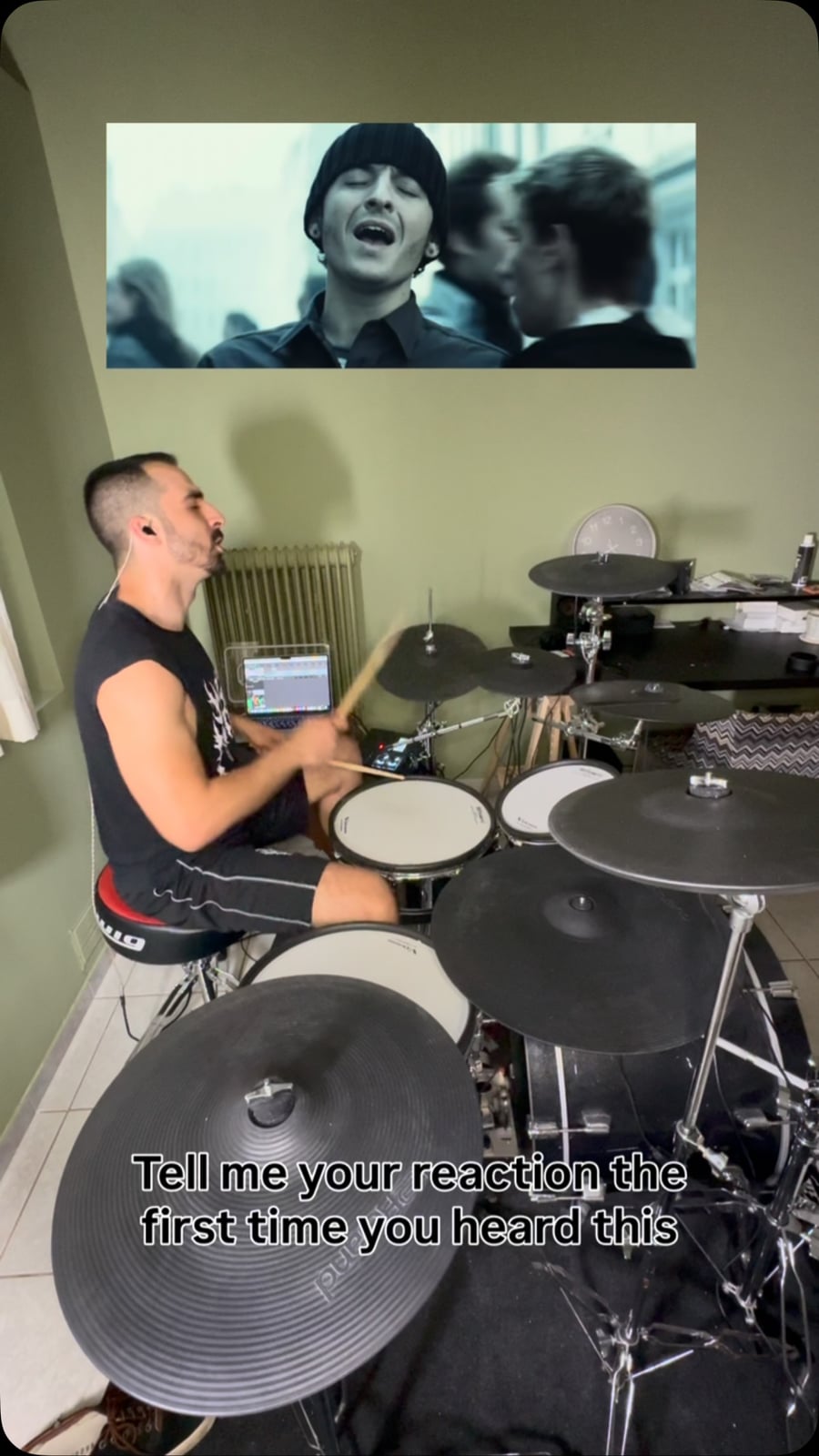
@Jason Fekas
Jason Fekas takes on Linkin Park's "From the Inside," tracking Rob Bourdon's part with Mixwave samples and the kind of pocket the song lives or dies on. The verse restraint into that chorus payoff is what makes the cover hit, and Fekas nails the dynamic jump without overplaying it. A clean nu-metal study from the Novelty drummer worth a minute of your scroll.
🛒 Gear Picks
🎧 Today only sale on these in-ear monitors

Last call on the Prime Day deal: the Linsoul KZ ZS10 Pro 2 is down to $43.99 from $54.99, and for drummers eyeing a budget IEM for stage monitoring or practice, this is the window. Each shell packs a 1DD+4BA hybrid setup, with a 10mm dynamic driver and four balanced armatures running through a 3-way crossover, plus a tuning switch on the housing so you can push more low end for kick and floor tom or pull back the highs when cymbals get harsh.
Reviewers using them on stage report solid isolation and clear cymbal articulation, with the usual note that the stock silicone tips are worth swapping. At 25 ohms with a detachable 2-pin cable, it's a sensible first IEM or a cheap backup pair.
🌊 Deep Dives
📀 smashing pumpkins hit 30: chamberlin on reworking mellon collie

Jimmy Chamberlin sits down with Loudwire Nights' Chuck Armstrong to talk about taking Mellon Collie and the Infinite Sadness back on the road for its 30th anniversary in 2026, and the conversation lands where any Chamberlin interview should: inside the drum chair. He digs into how he's rethinking parts he tracked in his twenties, what it means to revisit a double album's worth of material with three more decades of vocabulary behind the kit, and how he balances the original feel with the way he plays now.
It's a good sit-down for anyone who studies his fusion-leaning phrasing, or just wants to hear him talk craft before the tour kicks off.
🎓 Practice & Skills
🧠 the 7-then-6 lick that fuels gospel chops

@Przemek Smaczny
Przemek Smaczny drops a clean odd-grouping lick in this Reel, built on alternating clusters of seven and six notes around the kit. The payoff for you: a practical way to break out of straight sixteenths and start phrasing fills that feel longer, more elastic, and a little disorienting in the best way.
The concept is simple to say and harder to play. You're stacking a group of 7 against a group of 6, then resolving back to the downbeat. Over a quarter note pulse, a 7 plus a 6 gives you 13 partials to fit into the bar however you slice it, which is why these phrases sound like they're stretching time without actually rushing or dragging. Start by clapping or tapping the groupings on a pad before you orchestrate them. Count out loud: "1-2-3-4-5-6-7, 1-2-3-4-5-6." Once that's locked, move the 7 around the toms and keep the 6 on snare, or flip it. Set the metronome around 70 to 80 bpm and treat the click as quarter notes, not subdivisions, so your ear has to hold the grid. The common mistake is letting the groupings dictate the pulse instead of the other way around. If the downbeat slips, you've lost the lick. Try dropping it into a gospel or fusion shuffle as a one bar fill before the turnaround.
Phrase the math, don't play it.
🌀 two stickings, endless fills: leo usinger's rll & kll trick
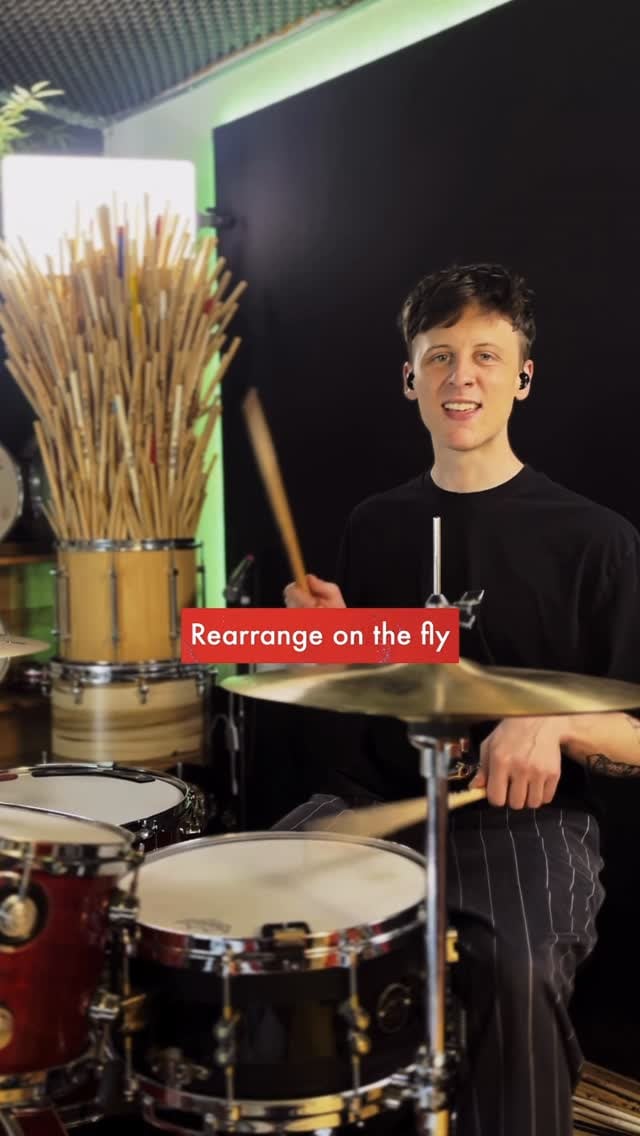
@LEO USINGER
Leo Usinger is back with a simple improvisation gateway: RLL and KLL, two three-note cells you can loop, displace, and stretch into solo ideas without ever leaving the kit. If you have been stuck playing the same fills, these are the patterns to spend ten minutes with today.
Read the letters as voices, not just hands. R is a right hand, L a left hand, K a kick. So RLL is right, left, left. KLL is kick, left, left. Both are three-note groupings, which is the whole point: drop a three-note cell over a four-beat pulse and the accents naturally shift, giving you that "over the barline" feel without doing any math. Start on a pad or snare at around 80 bpm, metronome on quarters, and just loop RLL until the downbeat keeps moving under your hands. Then do the same with KLL, feeling the kick land in different spots of the beat. Once that locks, orchestrate. Move the R around the toms while the LL stays on snare. Move the LL between snare and hats while the K anchors. The common mistake is rushing into orchestration before the three-against-four feel is internal, so stay on one surface longer than feels necessary.
Apply it to anything with space: a half time groove, a slow shuffle, an open jazz vamp. Two cells, infinite fills. Loop the pattern until your ear, not your counting, tells you where one is.
✅ a simple checklist to fix your messy practice routine
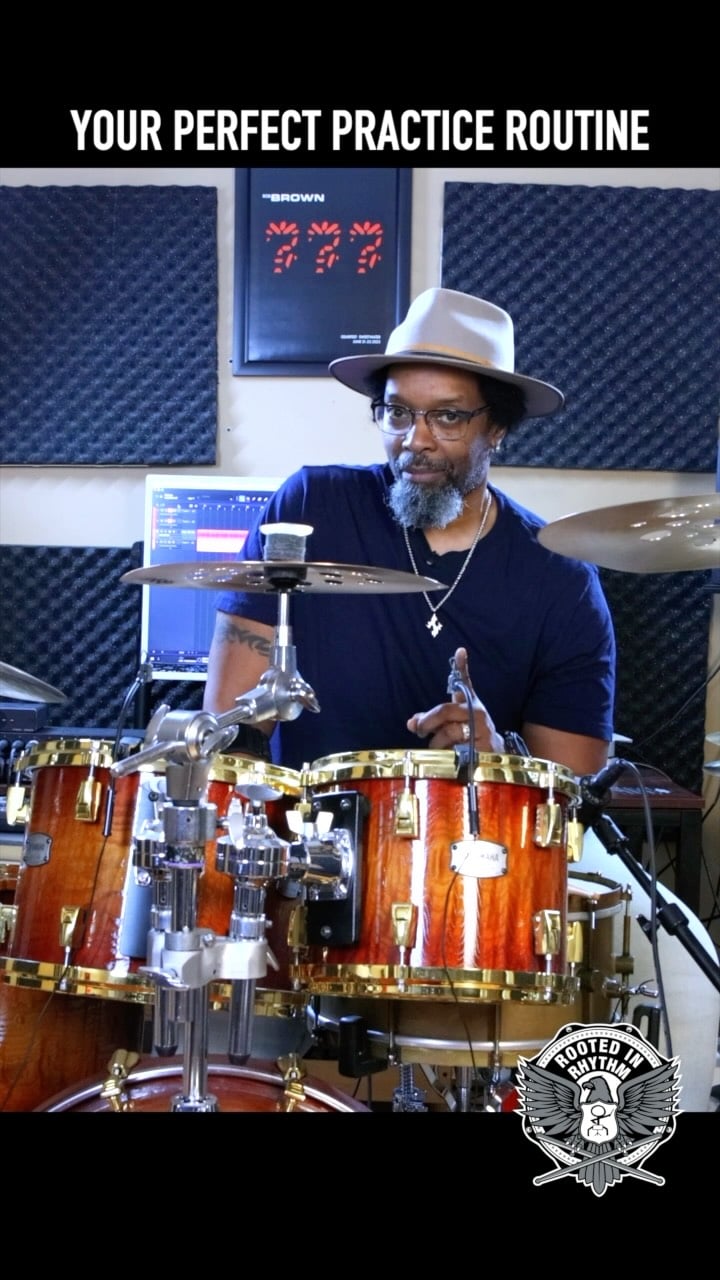
@Rob 'Beatdown' Brown 🥁
Rob "Beatdown" Brown wants to fix the biggest problem new and returning drummers face: staring at the kit with no plan. His Instagram lesson lays out a simple checklist framework so you can stop drifting through random YouTube rabbit holes and actually design a daily and weekly routine with clear objectives.
The core idea is to stop treating practice as one giant blob labeled "drums." Break it into categories and rotate them: rudiments and hand technique, foot technique, time and groove, reading, song study, and creative play. Pick a small number of items from each bucket per session rather than trying to cover everything at once. Today, try this. Sit down before you play and write three things on a notepad: one technical item (single stroke roll at a slow tempo, heel-toe on the hat, paradiddle around the kit), one musical item (a groove or fill you want to internalize), and one song you're learning end to end. Set a timer, maybe 15 minutes per block, and stop when it rings. The common mistake Rob is pushing against is the open-ended noodle session where you play what you already know for an hour and call it practice. If a category bores you, keep it short, but keep it on the list so weak spots don't get ignored for months.
The takeaway: a written checklist with a few clear objectives turns vague practice time into real progress.
That's it for today! Thank you for carving out time to read! I'm grateful you're here. 🙏 If you'd like to support the newsletter, consider joining our premium tier.
If you have feedback, a story, or something you'd love to see in the newsletter, just reply to this email. I read every message and respond to each one.
Happy drumming,
Matteo