
In partnership with

Better than your last ED “solution”

Most ED meds handle blood flow. That's only half the job. Rugiet Ready™ is a 3-in-1 sublingual treatment that targets your brain and your body—because great sex starts with arousal, not just circulation.
Just drop it under your tongue and Rugiet Ready™ works in as little as 15 minutes and lasts up to 36 hours. No pills to swallow, no planning your night around pill timing.
Over 400,000 men have already made the switch and the reviews are borderline inappropriate (in a good way).
Try Rugiet Ready™ and find out what your body's actually capable of.

⚡ Quick Hits
🎆 inside disturbed's tour kit before the pyro hits

Mike Wengren walks Modern Drummer through his custom Pearl Reference One kit in a 58-second pre-show rundown, then rips into "Prayer" with Disturbed's pyro team firing off behind him. It's a quick peek at the tour rig and the spectacle it has to survive night after night.
🎤 post malone's drummer goes way harder than you'd expect

Jacopo Volpe, the man behind Post Malone's touring kit, gets a 43-second spotlight from Modern Drummer that proves the gig is way more than four-on-the-floor pop duty. Caught during Post's South Florida stop, the clip is a teaser for a full podcast episode and tour kit rundown. Worth the scroll if you only know Posty from the radio.
🛒 Gear Picks
🎤 sm57 vs three challengers: the snare mic shootout

The Shure SM57 has been the default snare mic for decades, but Drum Drum Drum's shootout puts it head to head with three worthy challengers: the Audix i5, the Beyerdynamic M 201, and the Shure Beta 57A. Each runs through the same three snares, a 6.5x14 DW Collector's Purpleheart, a 5.5x14 DW Pre-Collectors Maple, and an entry-level 5x14 metal snare, so you can hear how mic choice tracks with shell material as much as with playing style.
The format is refreshingly practical: individual hits first, then full grooves, across roughly nine minutes. A useful watch before your next tracking session or mic purchase.
🎤 On Sale: the mic that owns every snare in the world
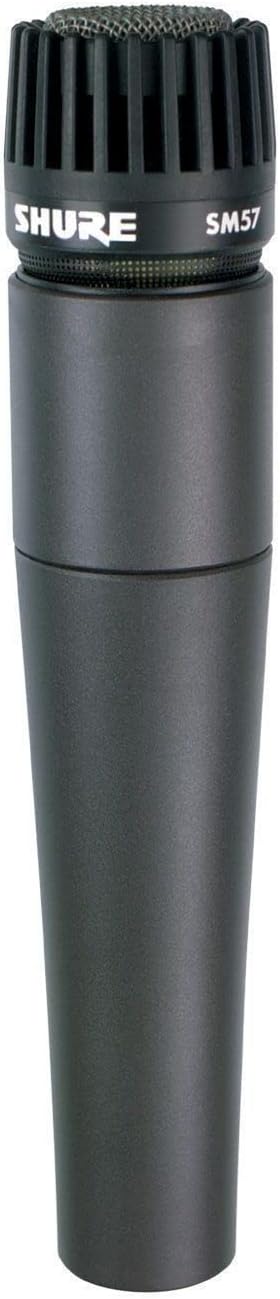
The Shure SM57 has been the snare mic for so long that it's almost easier to list the records it isn't on. Currently on sale, the cardioid dynamic earns its workhorse reputation through a contoured presence boost that lets a snare snap through a dense mix without extra EQ surgery, plus a tight pickup pattern that rejects hat bleed and room wash when you're close-miking a kit.
Beyond the snare, it slides under toms, in front of a kick beater for click, on a guitar cab, or on percussion and horns when you're tracking a session. Pneumatic shock mount, XLR out, built to survive being dropped off a riser. If you don't own one yet, this is the gap to close.
🌊 Deep Dives
🎬 styx's todd sucherman tracks a 16-minute prog epic in one take

Todd Sucherman tracking a sixteen-minute prog epic in a single take is the kind of session footage worth clearing your schedule for. The Styx drummer's run through Legacy Pilots' "The Illusion of Knowing," off Camera Obscura Vol I & II, is captured uncut from behind the kit, so you get the full arc of pacing, dynamics, and decision-making across nearly a thousand seconds of music with no edits to hide behind.
What makes it a study, not just a flex, is watching how Sucherman shapes a long-form piece — where he leans back, where he commits, how he sets up transitions before they arrive. Sit with the whole thing rather than scrubbing; the payoff is in the through-line.
🎸 richard bona on what vinnie, gadd and weckl taught him

Richard Bona has spent decades on bandstands with the heaviest drummers alive (Vinnie Colaiuta, Steve Gadd, Dave Weckl, Omar Hakim, Antonio Sanchez, Manu Katché, Dennis Chambers, Paco Séry), and on Episode 105 of Go With Elmo Lovano, the Cameroonian bassist gets into what that vantage point taught him about rhythm. He traces the arc from gigging at age five in Minta and building his own guitar at seven, to discovering Jaco in Paris, music-directing Harry Belafonte, joining the Zawinul Syndicate, and winning a Grammy with the Pat Metheny Group.
For drummers, the meat sits around the 1:21:59 mark, where Bona talks playing with drum legends, plus his thoughts on feeling odd meters and polyrhythms through an African lens. Nearly 98 minutes well spent.
🎓 Practice & Skills
👻 the flam isn't decoration — it's a deliberate thickening

Flams are one of the first rudiments you learned and one of the last you actually master. Drum Drum Drum's flam crash course reframes them as an artistic choice, not just a sticking exercise, and that's the lesson worth carrying into your next practice session: a flam isn't a decoration, it's a deliberate thickening of a note.
Here's the working definition to keep in your head. A flam is a grace note played just before the main note, with the two hands striking at different heights so the grace note is quieter and the main note speaks. The grace stick sits low, maybe an inch off the head. The main stick starts high. They move together and land almost together. That gap between "almost" and "together" is the whole craft. Too tight and it's a flat double stop. Too loose and it's a sloppy ruff. Start slow, around 60 bpm, on a single pad, and just play right flam, left flam, alternating, watching your stick heights more than listening. Then apply it musically: put a flam on the backbeat of a half time groove, or on the first note of a fill, and notice how the snare suddenly sounds wider and more vocal. Common mistake to avoid: flamming everything. Pick one note in a phrase that deserves the weight.
Treat flams as accents with texture, not filler, and your grooves get bigger without getting busier.
🔔 escape the shuffle: triplets in afro-cuban 6/8

Sari Kujala wants to pull triplets out of the shuffle box and drop them into Afro-Cuban 6/8 territory, where the ride bell pattern and a three-against-two feel completely reframe how you hear the pulse. Walk away from this one and you'll understand why the same triplet figure can swing a blues groove or anchor a bell pattern that feels nothing like swing at all.
The core concept is the 6/8 bell pattern played against a two-feel bass drum pulse, with ghost notes filling in the spaces and dynamics shaping where the groove breathes. Start by isolating the bell rhythm in your strong hand and getting it absolutely steady before you add anything underneath. Then drop in the bass drum on the two main pulses so you can feel the three-against-two rub. Only once that locks in should you layer ghost notes with the weak hand. The common mistake is rushing the bell or letting the accents flatten out, which kills the polyrhythmic tension that makes this groove work. Sari spends real time on accent placement around the two-minute mark and on how phrasing choices change the entire feel later in the video, so slow tempos and exaggerated dynamics are your friend here.
Take it slow, get the bell singing, and let the three-against-two do the work.
🎤 why your snare sounds thin: mic placement decoded

ArtOfDrumming walks through the three mic positions that actually shape a recorded snare: top, bottom, and shell. If you've ever wondered why your snare sounds thin in the mix despite feeling huge in the room, this is the angle to study — mic choice and placement do more for snare tone than any tuning tweak once the drum already sounds good acoustically.
The short version of what the video opens up: the top mic captures the attack and body of the stick hit, the bottom mic gives you wires and crack, and a shell mic picks up the resonance of the drum itself. Each one hears a different snare. Try this today. Set up your top mic an inch or two off the head, angled toward the center, and listen back solo'd before you do anything else. Then add the bottom mic and flip its phase, because if you don't, the two will fight and you'll lose low end. Common mistake to avoid: cranking the bottom mic for "more snare" when really you just need to back the top mic off the rim a touch. If you've got a third input, point a shell mic at the side of the drum and use it as a flavor channel, not the main sound.
Takeaway: top for body, bottom for wires, shell for character, and always check phase before you reach for EQ.
That's it for today! Thank you for carving out time to read! I'm grateful you're here. 🙏 If you'd like to support the newsletter, consider joining our premium tier.
If you have feedback, a story, or something you'd love to see in the newsletter, just reply to this email. I read every message and respond to each one.
Happy drumming,
Matteo