
In partnership with

AI Is Moving Fast. Here's How to Keep Up.

AI is moving faster than any other technology. New models. New tools. New claims. New noise.
Most people feel like they're behind. But the people that don't, aren't smarter. They're just better informed.
The Future Today is a daily briefing for people who want clarity. In one concise email each day, you'll get the most important AI and tech developments, learn why they matter, and what they signal about what's coming next.
Written for operators, builders, leaders, and anyone who wants to sound sharp when AI comes up in the meeting.
One email. Five Minutes. Stay ahead of 99% of the world.

⚡ Quick Hits
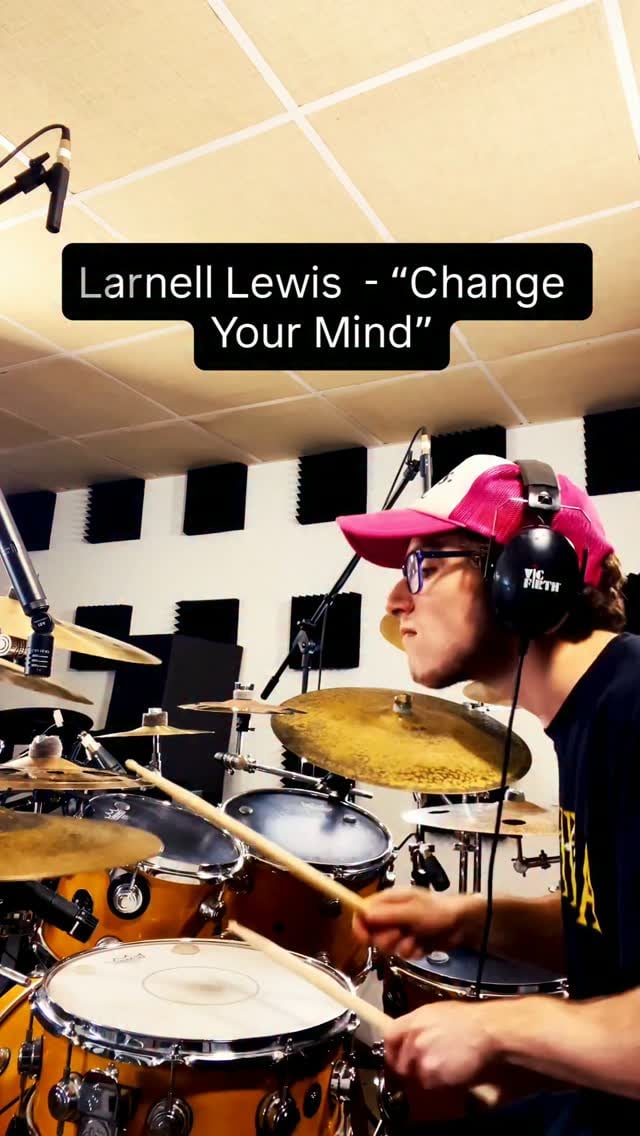
🔒 jake rosen and larnell lewis lock into a filthy pocket
@Jake Rosen
Jake Rosen locks in with Larnell Lewis on "Change Your Mind," and the pocket is exactly where you'd want two players of this caliber to land it. Rosen sits deep under Lewis's phrasing, letting the groove breathe while punching accents in the right cracks. Worth a rewind for anyone studying how to sound tight without crowding another drummer's part.
🛒 Gear Picks
🎩 sabian's 14" xsr hi-hats on sale: pro b20 bronze on a working budget

Sabian's 14" XSR Hi-Hats land in that spot where a working drummer's budget meets B20 bronze. A medium-weight top gives you accurate stick response, and a heavier bottom adds clarity and cut when the stage gets loud.
The top articulates cleanly for tight sixteenths and ghosted work, while the heavier bottom keeps the chick focused and the open sound aggressive enough for rock gigs. Pair them with a 20" ride and a 16" crash and you've got a setup that holds up in a jazz room or a club without swapping cymbals between sets.
🌊 Deep Dives
⚡ the wrist twist that's killing your fast hi-hats
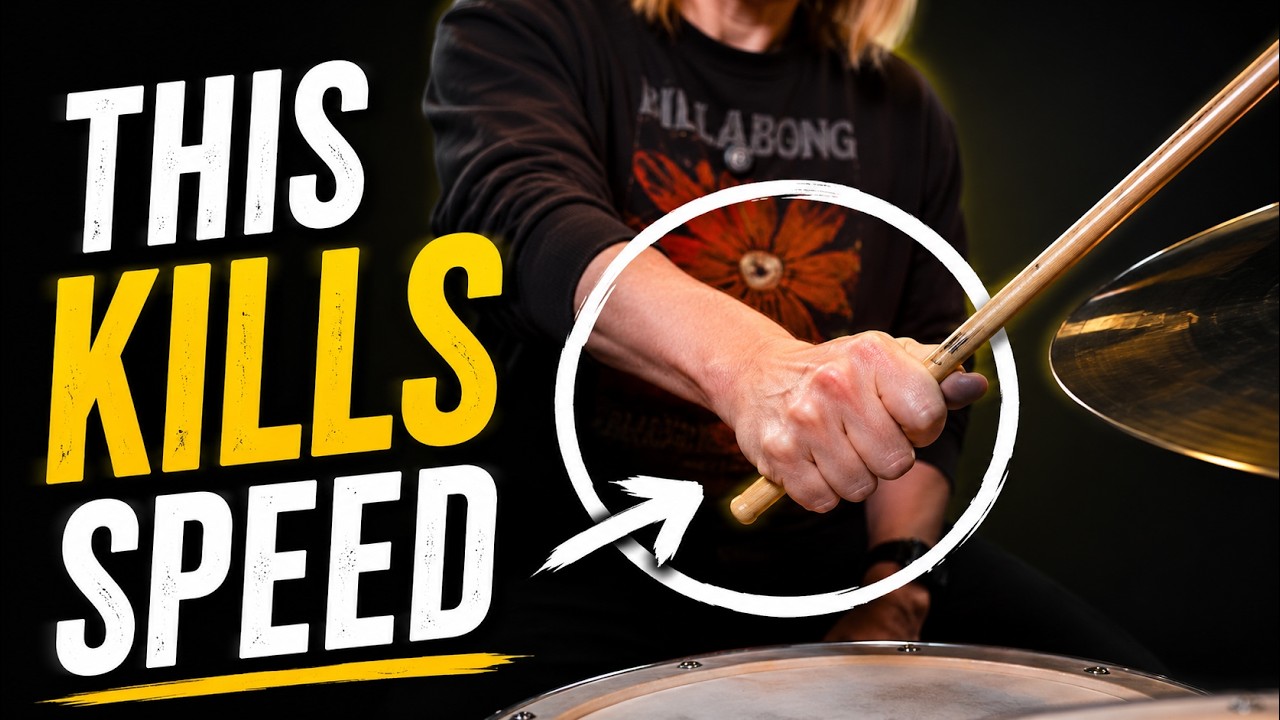
Sari Kujala argues most drummers sabotage fast hi-hat patterns by twisting the wrist, and the fix is a cleaner motion, not more effort. She breaks down what the wrist actually does during quick strokes, why pairing a strong downstroke with a relaxed upstroke changes everything, and how lower stick heights become non-negotiable as the tempo climbs.
The grip section is where a lot of players will find their leak. Kujala walks through the tension traps in how you hold the stick, then shows how the back fingers take over for control once the wrist stops overworking. Worth sitting with if your sixteenths at faster tempos still feel like a workout.
⚡ the boring 5-step fix for stalled hand speed
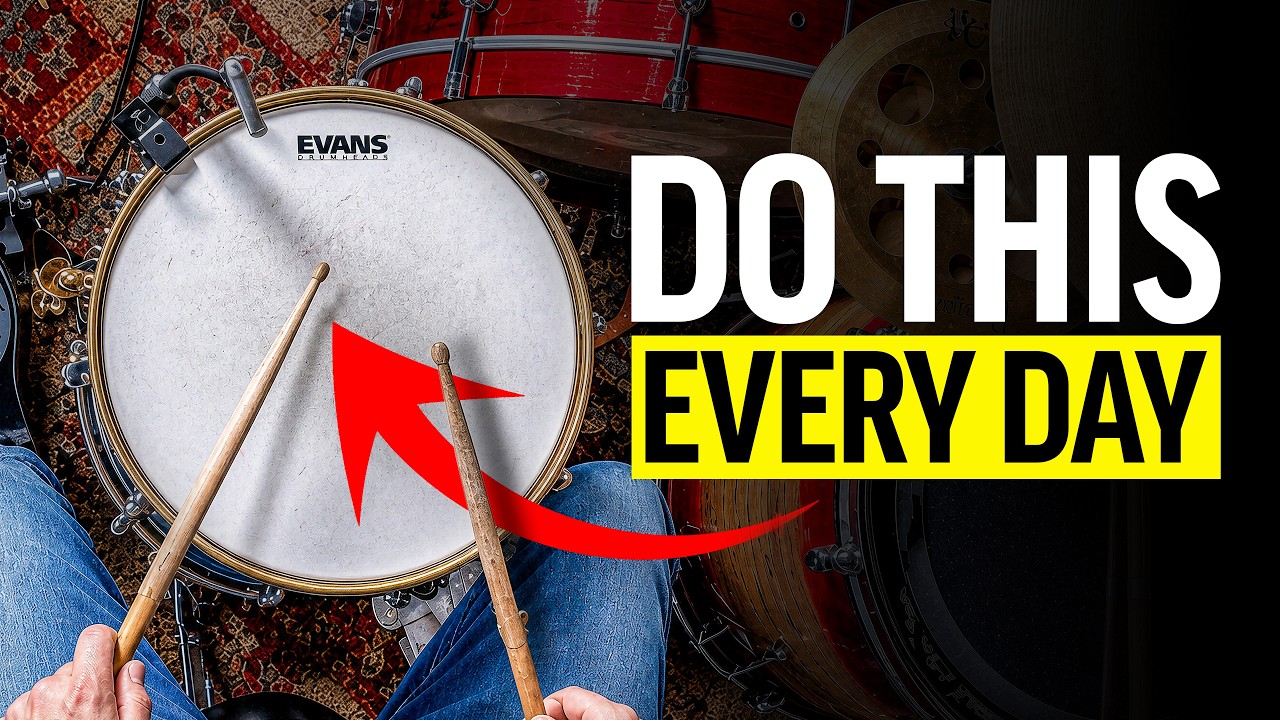
Drum Beats Online argues most drummers chase hand speed the wrong way, and the fix looks boring on paper. The video walks through a five step progression: the grid, the fulcrum, the wrists, the fingers, and a drop catch exercise that ties the mechanics together. Each layer builds on the last, so you are not grinding singles at a metronome hoping for miracles.
The payoff comes at the end with what he calls the laziest way to triple your kick speed, applying the same mechanical thinking to the feet. Worth sitting with if your rudiments have plateaued and you suspect the issue is technique, not effort.
🎓 Practice & Skills
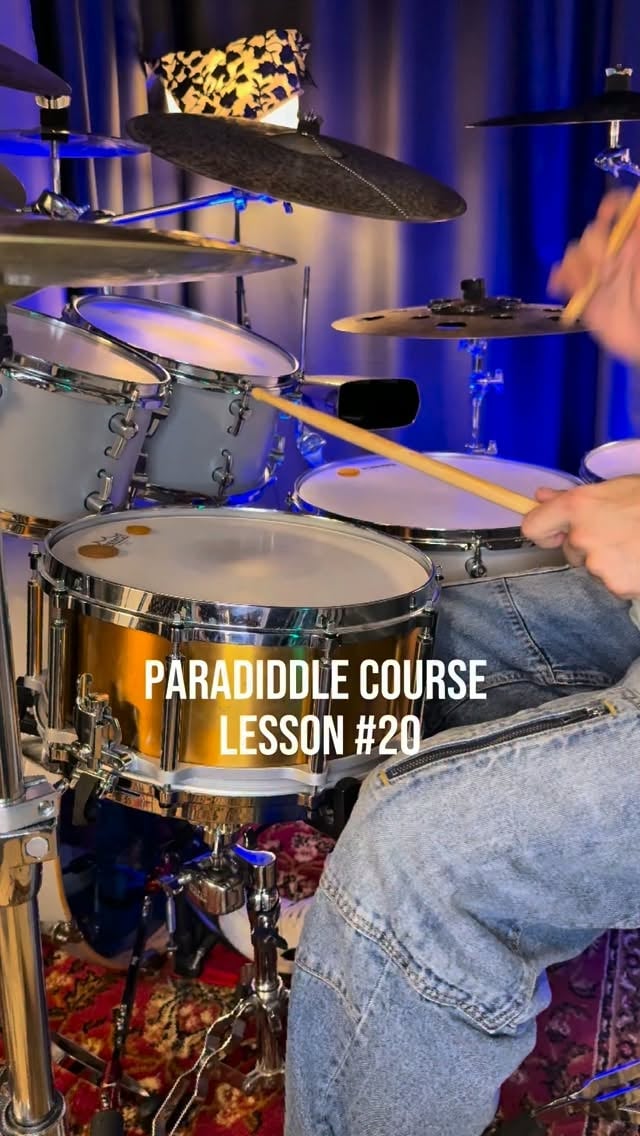
🦶 paradiddle between kick and snare, three hi-hat feels on top
@Pavel Mamonau
Pavel Mamonau's Paradiddle Course hits Lesson 20, and this one moves the paradiddle around the kit in a way that will expose any weak spot in your coordination. You will walk away with a framework for orchestrating a single paradiddle between kick and snare while your hi-hat holds three different time feels underneath.
Here is the setup. Take a standard paradiddle sticking and split it between kick and snare, then shift the orchestration by one 16th note each pass, alternating as you go. Over the top, cycle your hi-hat through three feels: quarter notes, offbeat eighth notes, then straight eighth notes. The offbeat variation is where most drummers stumble because the hat no longer lines up with the downbeat, so your internal pulse has to stay locked without a visual anchor. Start slow enough to say the sticking out loud. Loop one hi-hat feel for a full minute before switching. If the kick and snare orchestration falls apart when you move to offbeat hats, pause and clap the hat pattern while you foot the kick alone. Rebuild from there. A common mistake is rushing the shift to the next 16th note displacement before the current one feels automatic. Do not move on until you can hold it for two minutes clean.
Coordination grows fastest when one limb is doing something your ear does not expect. Use this as your independence work this week.
⚡ the paradiddle speed drill most players skip
@𝕍𝕒𝕤𝕚𝕝𝕚𝕤 𝕋𝕤𝕒𝕔𝕙𝕣𝕒𝕤
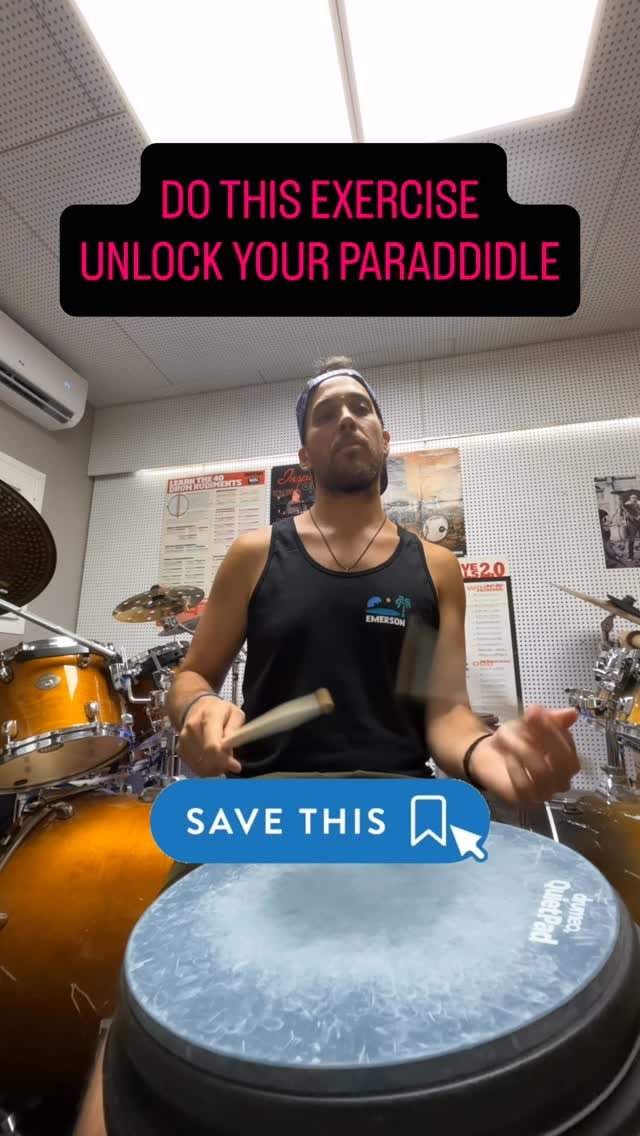
Vasilis Tsachras drops a paradiddle speed drill worth adding to your warmup rotation. The lesson is simple in framing but demanding in execution: build paradiddle velocity by working with a click and resisting the urge to rush.
Paradiddles (RLRR LRLL) sit at the heart of hand technique because they mix singles and doubles inside one compact sticking. Speed problems usually come from two places: the doubles collapse into flams, or your accents drift off the downbeat. Tsachras's fix is the one most players skip. Start slow, always with click. Set the metronome somewhere you can play cleanly, maybe 60 to 80 bpm playing sixteenths, and only move up when every note sounds even at that tempo. Bump the click by 4 or 5 bpm at a time. If the doubles get sloppy, drop back down. Isolate the weak hand by running RLRR alone, then LRLL alone, before stitching them together. Watch your accent on beat 1 of each grouping so the pattern stays locked to the pulse instead of floating.
Apply it musically by moving the accented note around the kit, hi-hat to snare to tom, while the unaccented notes stay on the snare. That turns a rudiment into a fill vocabulary. Slow and clean beats fast and messy every session.
🎯 jp bouvet's 3-minute fix for a weak backbeat

JP Bouvet packs a full backbeat technique lesson into a short clip, and the angle is worth your practice time this week: how you hit the snare on 2 and 4 shapes everything else in the groove.
The backbeat sounds simple until you record yourself and hear the truth. Volume, tone, and timing all live in the wrist, the grip, and where the stick lands on the head. Watch Bouvet's setup before the strike. Notice the height of the stick, how relaxed the fingers stay, and where the tip contacts the drum. Then take it to your kit. Play a straight eighth note groove at 80 bpm and do nothing but focus on the 2 and the 4. Aim for the center of the head. Let the stick rebound instead of burying it. Record a minute, listen back, and check whether every backbeat sounds the same or whether one is choking out. A common mistake is squeezing the stick on impact, which kills tone and steals volume. Loosen the back fingers and let the fulcrum do the work. Once the sound is consistent, push the tempo to 100, then 120, and keep the same tone.
Your backbeat is your signature. Spend ten minutes a day on it and every groove you play gets better.
🎷 ten swung fills to rescue your shuffle and jazz feels
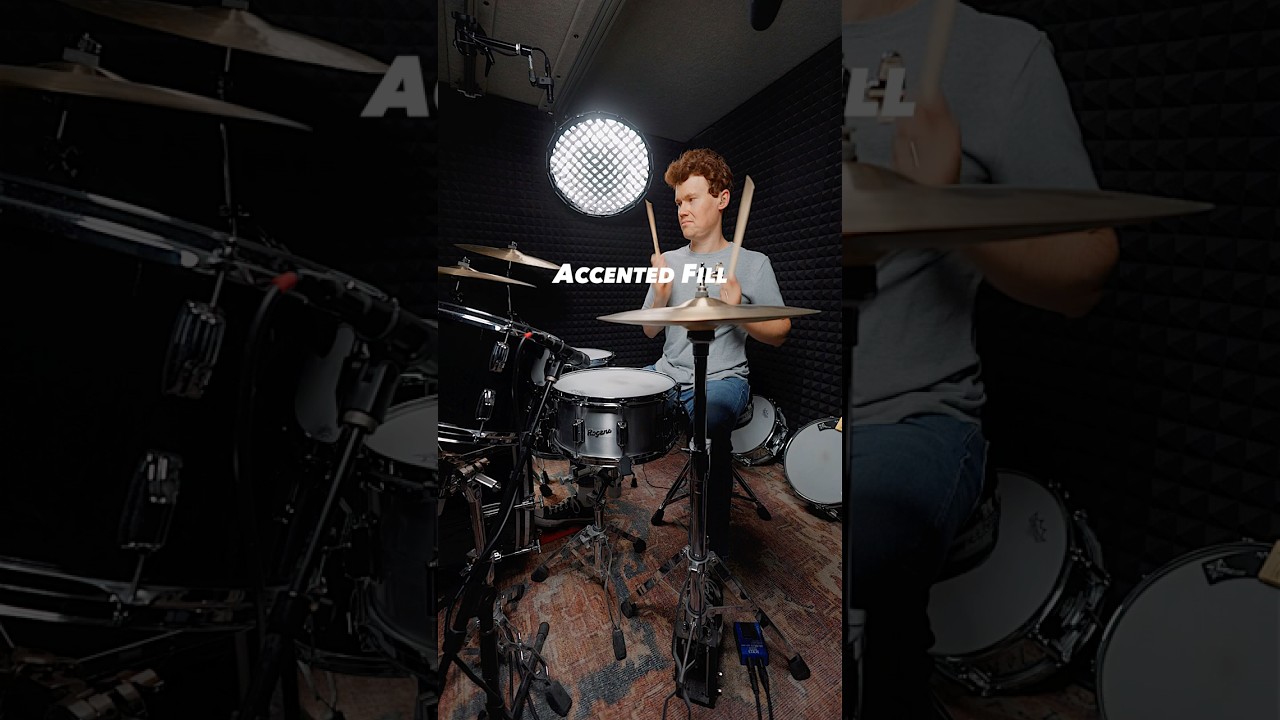
Jeff Randall's short drops ten swung fills back to back, and a few minutes with it gives you a bigger vocabulary for shuffle, jazz, and half time swing feels where straight sixteenth fills fall flat.
Swung fills live or die on the triplet grid. The hits ride the long-short pulse of eighth note triplets, so the space between notes breathes instead of marching. Loop the video, pick one fill, and sing the rhythm before you play it. Then set a metronome around 80 bpm with the click on 2 and 4, play time for three bars, and drop the fill on bar four. The common mistake is straightening the fill under pressure. If your hands start to even out, slow down another 10 bpm and exaggerate the long-short bounce until the swing locks back in. Once one fill feels natural, chain two together across two bars so you build phrasing, not just licks.
Apply them to a shuffle blues, a half time swing groove, or any jazz tune where you're trading fours. Start with the fills that use the fewest voices so you hear the triplet clearly, then add toms and kick spreads as your ear adjusts. Steal one, own it, then come back for the next.
That's it for today! Thank you for carving out time to read! I'm grateful you're here. 🙏 If you'd like to support the newsletter, consider joining our premium tier.
If you have feedback, a story, or something you'd love to see in the newsletter, just reply to this email. I read every message and respond to each one.
Happy drumming,
Matteo