
Sponsored by

Summer starts here (free gummies!)

The sun is here and we're back outside!
Longer days, lighter hangs, and THC gummies that fit the vibe. Grab a free pack of gummies from Cycling Frog! Just cover $4.99 shipping. Fruity, perfectly dosed, and made for campfires, park days, and whatever summer turns into.
Must be 21+ and only valid on 10ct bags of gummies.
NOT VALID IN OH, CA, CO, AL, LA AND NJ.

⚡ Quick Hits
👀 the drummer LA pro dominick hernandez wants you to know
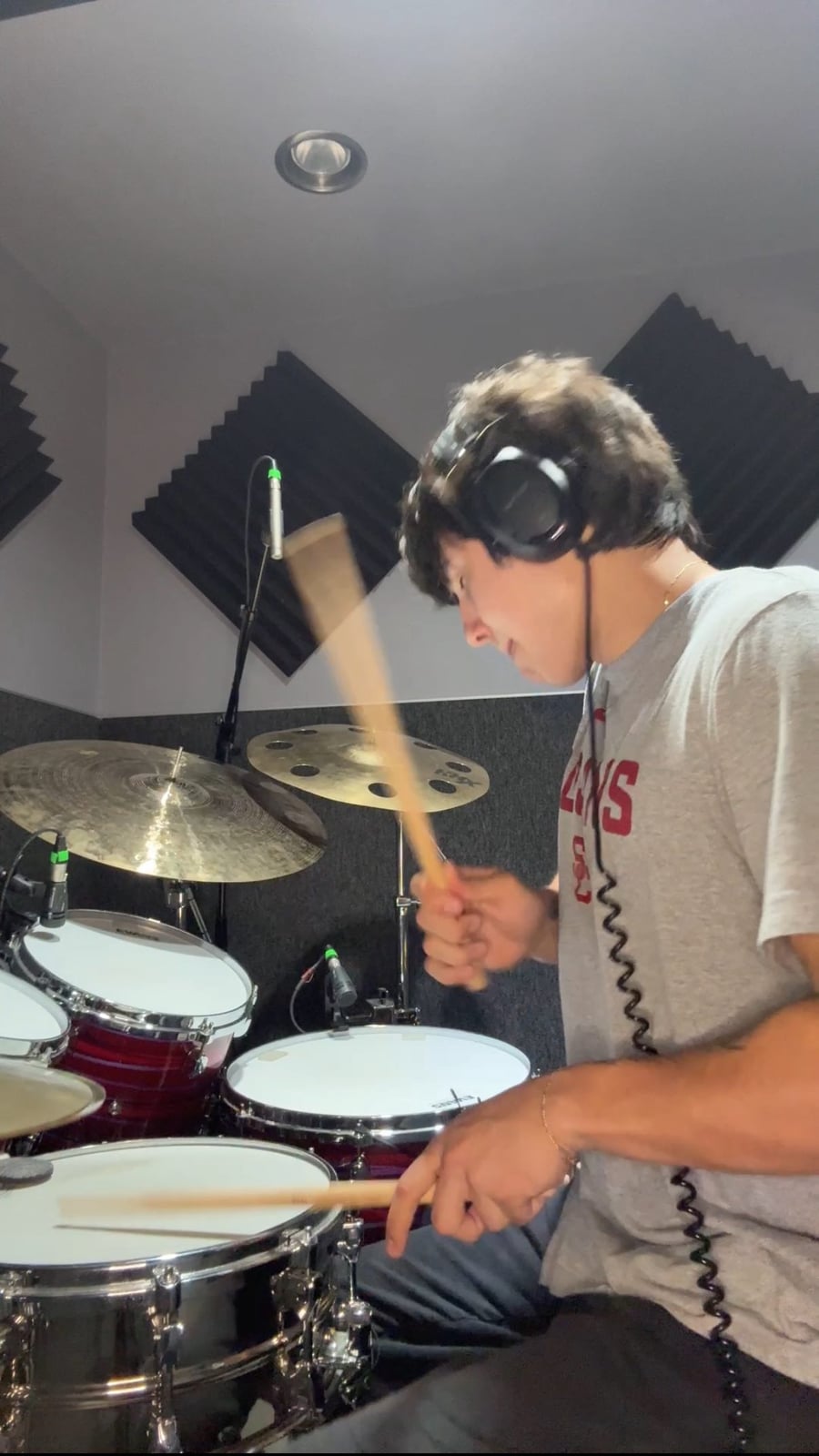
@Dominick Hernandez
Dominick Hernandez drops a Purdie shuffle-flavored groove over a beat from LA producer mom.tudie, and the pocket is undeniable. The session cat instincts come through in every ghost note, with hi-hat work that breathes around the track instead of crowding it. The clip is racking up views fast, and it's easy to hear why.
🏎️ van halen's "hot for teacher" intro

Alex Van Halen's "Hot For Teacher" intro has had drummers arguing for 40 years: Lamborghini engine, four bass drums, layered electronics, or something stranger? In this short Drumeo teaser, they tee up the real story behind how Alex actually pulled it off. A tight setup for the full breakdown, and a reminder why that intro still feels unplayable.
🛒 Gear Picks
🛒 e-kit comparison: roland, efnote, alesis, zildjian and dw

Sweetwater Soundcheck breaks down the current e-kit landscape across three budget tiers, starting at the Roland TD-02K and Alesis Nitro Max end and climbing through the EFNOTE 3 Series, Roland VAD316, and Alesis Strata Core in the mid-range. The 25-minute guide is genuinely useful if you're trying to figure out where mesh heads, better modules, and acoustic-feel shells actually start paying off.
The pro tier is where it gets interesting: the Roland VAD716, EFNOTE Pro 703X, Alesis Strata Prime, Zildjian ALCHEM-E, and DW's DWE kit all get face time, which is a rare chance to see Zildjian and DW's relatively new electronic offerings sized up against the establishment. Worth scrubbing to the section that matches your budget rather than watching front to back.
🎯 the digital tuner that ends drum-tuning guesswork for good

The Ahead DrumDial Digital Precision Tuner reads tension at the head itself instead of relying on rod torque, which is why a lot of drummers lean on it for fast, repeatable tunings across the kit. It's a solid Father's Day pick if Dad still tunes by ear and a prayer — quiet to use backstage, consistent enough for the studio, and a real upgrade over guesswork.
🌊 Deep Dives
👮 why stewart copeland never flipped his kit (and how it shaped the police)

Stewart Copeland is left-handed, but he never flipped his kit. In this Drumeo clip, The Police's engine room explains why he stuck with a right-handed setup and how that decision shaped the lopsided, hi-hat-driven feel that became his signature. It's a short sit at just over three minutes, but it reframes a lot of what you hear in "Roxanne" and "Message in a Bottle": the off-kilter accents, the busy left hand, the way his ride patterns sit forward in the mix.
Worth queuing up if you've ever wrestled with whether to mirror your kit, or if you just want to hear one of rock's great stylists trace a quirk of geography back to a sound the rest of us have been trying to cop for forty years.
🔧 josh freese and his tech break down dw's 9000x rebuild

Josh Freese sits down with his drum tech Fiona Jeans for a 27-minute walkthrough of DW's new 9000X hardware, and the conversation goes well past the usual demo script. Mechanical design engineer Connor Lombardi opens with the overview, then Freese and Jeans dig into the parts they actually care about as working players: the stackable counterweights, the Innerlock internal memory system, the redesigned ball mounts and tom geometry, the revamped hi-hat construction, and the new 9300 snare stand.
The most interesting stretches are the ones about why the 9000 series needed an overhaul at all, and how artist feedback on wobbles, angles, and pedal feel shaped the rebuild. Freese also reflects on his 40-plus years with DW, which gives the whole thing some weight beyond a product reveal.
🎓 Practice & Skills
🧠 fix the paradiddle mistake that kills your fills
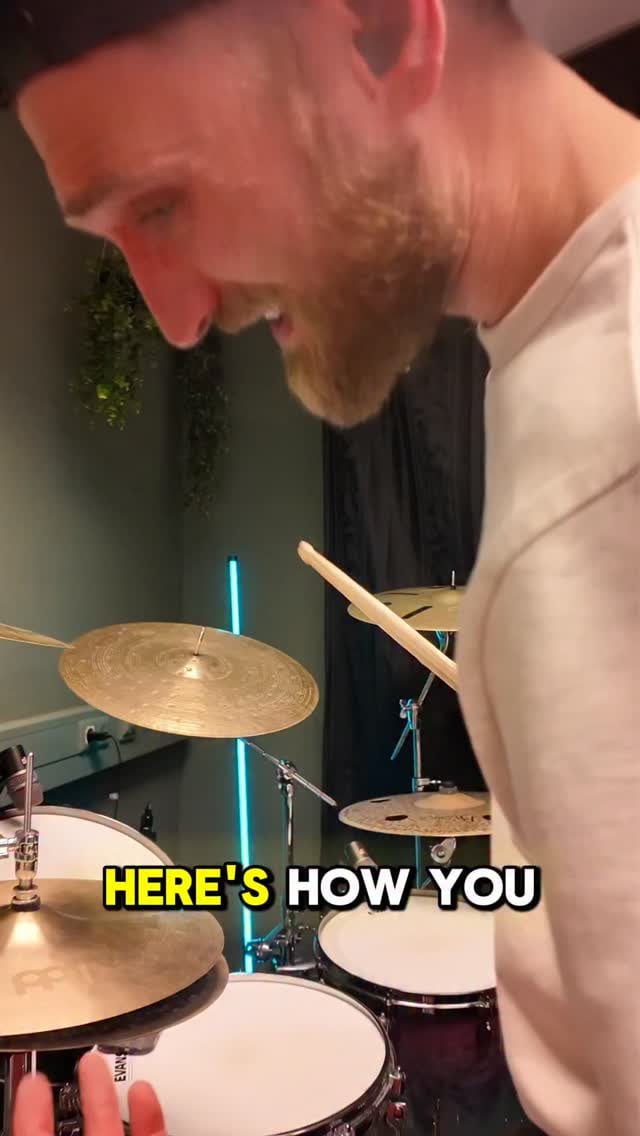
@Eddie Van Dongen | Creative Drum Coach
Eddie Van Dongen wants to fix the most common paradiddle problem on the kit: you can rip them clean on the snare, but the moment you try to move them around the drums they collapse into mush. His angle is that paradiddles are genuinely groovy and musical, and that most players just never took the proper first step before scattering them across toms and cymbals.
The lesson here is orchestration discipline. Before you spray a paradiddle across snare, toms and cymbals, lock the sticking under your hands at a tempo where every note is even, every accent lands, and the right and left feel identical in weight. Start slow. Try 70 bpm, single paradiddle, eight bars without moving anywhere. Then make one small move: leads only on a tom, alternating bars snare and floor tom, while the inner notes stay on the snare. That single change is usually where players discover their left hand is quieter, late, or buried. Fix that before adding a second voice. A good song to test it on is anything mid tempo and backbeat driven where you can drop a two beat paradiddle fill into bar four without losing the pulse. Avoid the classic mistake of speeding up the second half of the rudiment when the lead moves to a tom.
Get the rudiment musical in one place first, then let it travel.
👻 the 5 ghost note mistakes flattening your groove

Sari Kujala spends six minutes on the one thing that separates a stiff backbeat from a groove that breathes: ghost notes, and the five small mistakes that flatten them. Walk away knowing that ghost notes aren't just "quiet notes." They're a stroke-control problem, and fixing them is what makes your hands sound professional.
Here's the frame. A real ghost note lives somewhere around the snare head, barely audible under the hi-hat, and it only works if your accent above it is loud enough to create contrast. Most players miss on the contrast, not the ghost note itself. Kujala calls out the usual suspects: ghost notes that sit too high in volume, ghost notes that jump out right after an accent (the classic upstroke trap, where your stick rebounds and the next tap comes in way too hot), and grooves with no real dynamic range between the two. The fix is stroke control. Start slow, around 70 bpm, with a basic two-and-four backbeat and ghost notes on the e and a of beat two. Play the accents as full strokes and the ghosts as taps, and consciously bring the stick back down low after every accent so the next ghost stays whispered. Record yourself. If you can clearly hear the ghosts in the room but barely hear them in the recording, you're in the pocket. Then take it to something like Rosanna or Cissy Strut and listen for the gap between loud and quiet.
The takeaway: ghost notes don't get better by playing them quieter, they get better by playing the accents louder and controlling where the stick lives between strokes.
✋ gavin harrison-inspired flam chain: 3, 4, 5, 7 against quarters
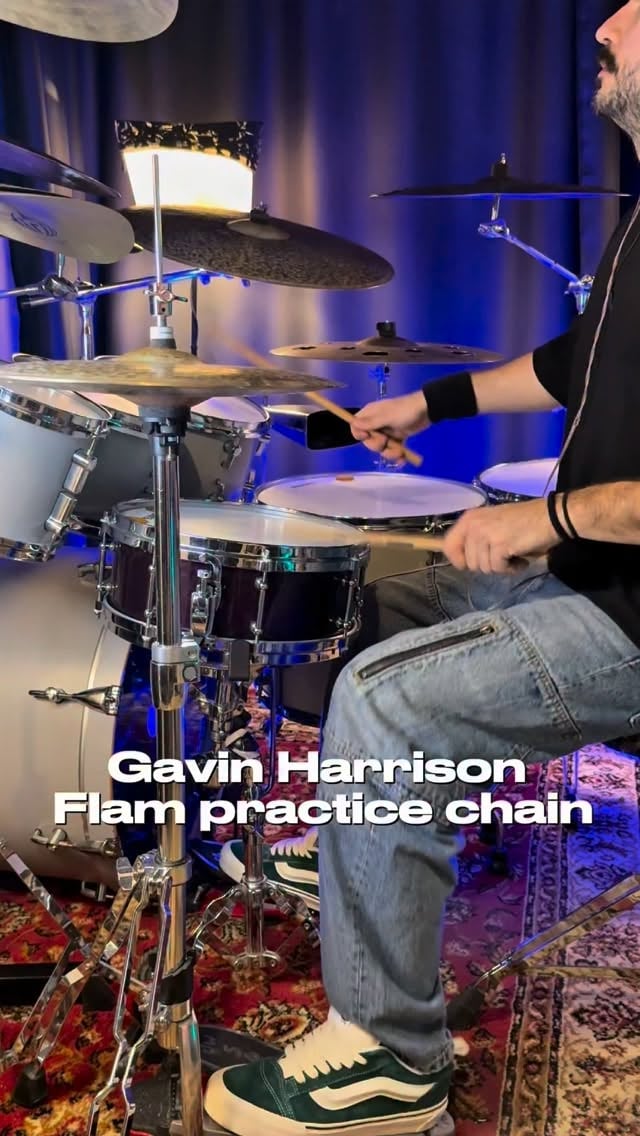
@Pavel Mamonau
Pavel Mamonau's Flam Practice Chain is a Gavin Harrison-inspired hand workout that runs flam groupings of 3, 4, 5, and 7 over a steady quarter-note hi-hat. Walk away from this one understanding how to phrase odd flam groupings against a straight pulse without losing the count, so you can drop them into a groove without it sounding like an exercise.
Here's the idea. You're stacking flammed notes in groups of three, then four, then five, then seven, with the hi-hat ticking quarters underneath as your anchor. The trick is that the flam accents shift against the pulse as the grouping changes, so the left foot becomes your lifeline. Start painfully slow, somewhere you can actually hear the grace note sit just before the main stroke, not on top of it. Count the hi-hat out loud, "1, 2, 3, 4," while the hands cycle the grouping. Isolate one number at a time: loop just the 3s until the accent pattern feels locked, then just the 5s, then the 7s, before chaining them. The common mistake is letting the flam collapse into a flat double when you speed up, so back the tempo off the moment the grace note disappears. Once the chain feels clean, try moving the flams around the kit, or drop a 5- or 7-grouping over a half-time backbeat the way Harrison does in Porcupine Tree.
Slow, controlled, musical. Get the grouping under your hands first, then take it back to the groove.
That's it for today! Thank you for carving out time to read! I'm grateful you're here. 🙏 If you'd like to support the newsletter, consider joining our premium tier.
If you have feedback, a story, or something you'd love to see in the newsletter, just reply to this email. I read every message and respond to each one.
Happy drumming,
Matteo