
In partnership with

Wish your car insurance was pricier? Didn’t think so.

Find out if another carrier could offer you a better rate. Compare your offers all in one place and get your best rate on LendingTree. Just answer a few questions and get your quotes in a matter of minutes.
⚡ Quick Hits
🎷 dave weckl tears into buddy rich's book in sweden

Dave Weckl tore into Buddy Rich's "Ya Gotta Try" with the Uppsala Big Band on an outdoor Swedish stage this summer. The clip is barely long enough to register the horn stabs and Weckl's ride pattern locking the chart together, but it captures why players still make the pilgrimage for the Buddy book.
🎛️ dave weckl dials in oak shells before showtime
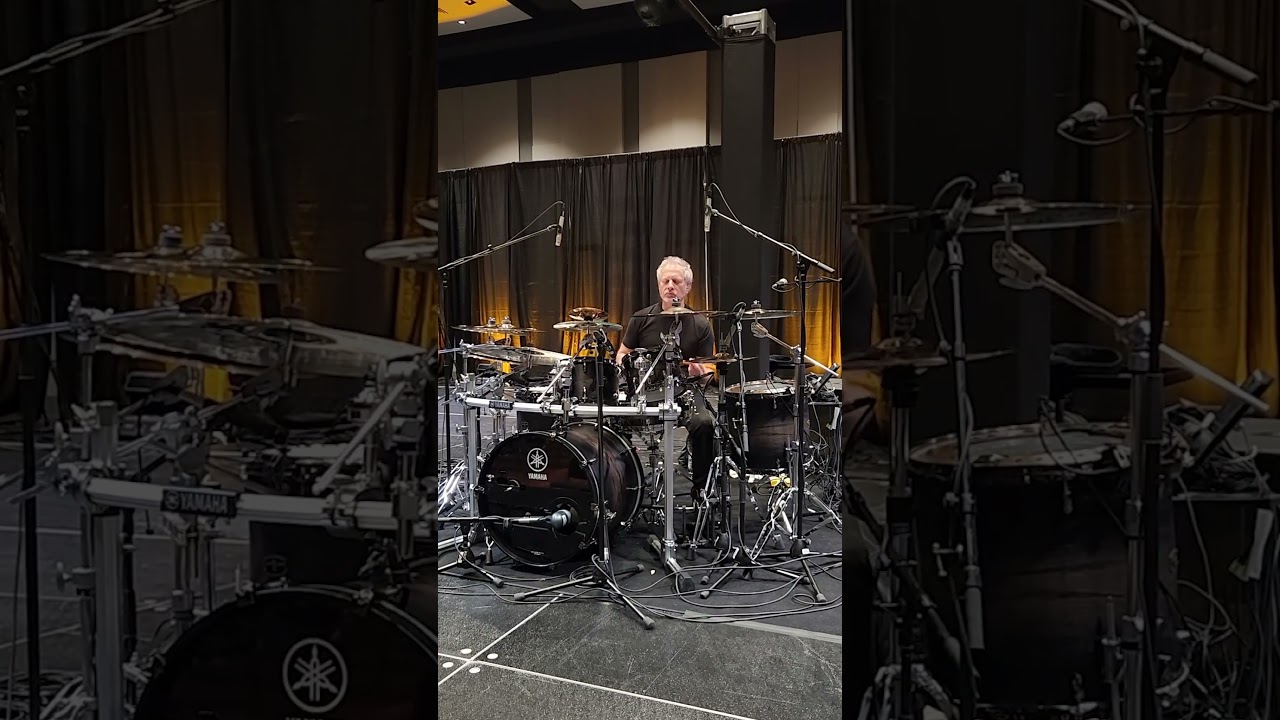
Dave Weckl runs soundcheck on Yamaha's Live Custom Hybrid Oak in a short clip, tuning the kit in the room before showtime. It's a quiet look at how he shapes tone one pass at a time, and the shell resonance alone is worth the minute.
🛒 Gear Picks
🎛️ marcus finnie cycles zildjian stacks through one groove

Marcus Finnie cycles through a rotation of Zildjian FX stacks in this Shorts clip, letting each pairing color a different corner of the same groove. You get a quick tour of what a well-chosen stack can do to a phrase, from tight, trashy chirps to longer, papery washes that sit somewhere between hi-hat and effect. Worth a look if you're mapping out where to slot a stack in your own setup, or just want to hear how Finnie voices them against a pocket rather than as one-off accents.
💥 zildjian's laser-cut 16" efx: trashy stack magic

Zildjian's 16" A Custom EFX takes the shimmering A Custom character somewhere sharper and trashier, with laser cut-outs across the bow that give it an immediate, explosive attack and a fast, choked decay. It's an extra-thin cymbal built for punctuation rather than sustain, which is why it works so well in a stack.
Pair it under a splash for a tight china bark, sit it on top of a crash for a compressed white-noise accent, or leave it standalone for quick transitional hits that cut without hanging around. Currently listed on Amazon in a bundle with sticks, a stick bag, and a polishing cloth if you're building out the effects side of the kit.
🌊 Deep Dives
🧩 tool's "pneuma" decoded: the clave hiding underneath

Tool's "Pneuma" has stumped a lot of listeners trying to count along, but Yogev Gabay's breakdown argues the puzzle unlocks faster than you'd expect once you see the clave underneath it. He walks through the main themes, that bass line, the B section, and the guitar part, showing how Danny Carey and company superimpose riffs over a rhythmic anchor most listeners miss.
The payoff is the counting lesson at the end, a practical framework for hearing the tune in real time rather than just marveling at it. If you've ever tried to tap along and given up, this is worth the sit-down.
🎓 Practice & Skills
💥 jp bouvet: stop crashing on beat 1

JP Bouvet has a short lesson worth a spot in your practice time: rethink where you put the crash. The crash doesn't have to land on beat 1 to feel resolved, and once you hear that, your fills open up.
Most of us default to the same reflex. Fill, crash on the downbeat, ride pattern resumes. It works, but it flattens your phrasing over time. Bouvet treats the crash as a phrasing tool rather than a landing pad. Try crashing on the "and" of 4, or on beat 2, or delaying it until the second bar of a new section. Try skipping the crash entirely and letting the groove restart with just the ride or hats. Each choice reshapes how the listener hears the bar line. Sit down at a comfortable tempo, loop a simple two-bar fill, and cycle through four different crash placements without changing anything else. Notice which one makes the phrase feel like a question and which one closes it. A common trap: crashing hard every transition, which trains the band to expect it and robs your bigger moments of impact. Save the downbeat crash for when it actually means something.
One tweak that changes how musical your playing sounds.
🍱 mike johnston's favorite fill of 2026, four skills in one bite
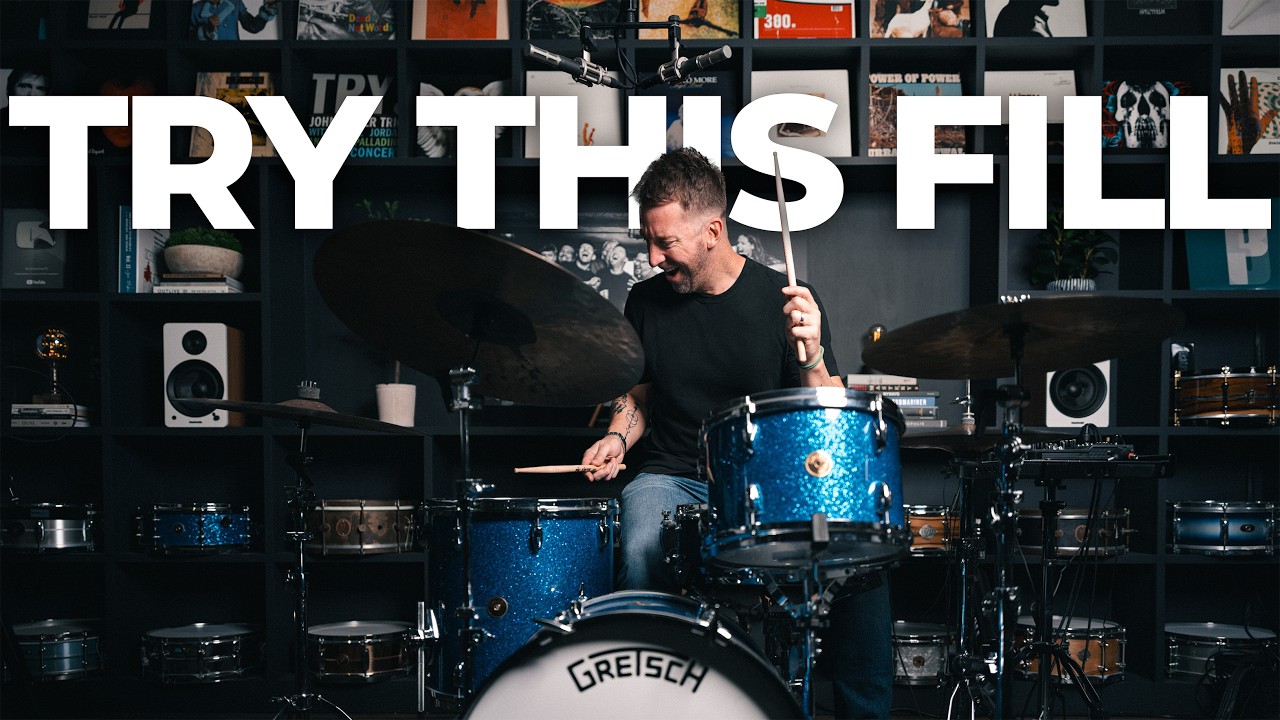
Mike Johnston is calling this one of his favorite fills right now, and he built it like a "well-balanced meal": inverted double strokes, hand-foot combinations, linear blocks moving between tom, snare, and kick, and simple singles stitching the whole phrase together. If you've been stuck recycling the same fill vocabulary, this lesson makes you level up four concepts at once.
Here's the plan. Don't try to play it at speed. Johnston demos it slowly to internalize the pattern, and if you're learning from scratch, start slower still. Grab the notation Johnston linked so you're reading the exact sticking rather than guessing from the video. Isolate the inverted doubles first, since that's the sticking most intermediate players fudge. A clean inverted double means the second, weaker stroke matches the first in volume and spacing. If it doesn't, slow down further. Then work the two linear blocks separately before chaining them, and only add the hand-foot dynamics once the orchestration between kit pieces is locked. The final four notes are what tie it back to beat one, so practice landing them into a groove, not into silence.
One fill, four skills, and a tempo ladder to climb. Spend a week on it and your fill vocabulary won't sound the same.
🦶 turn ordinary tom fills into double-kick bombs
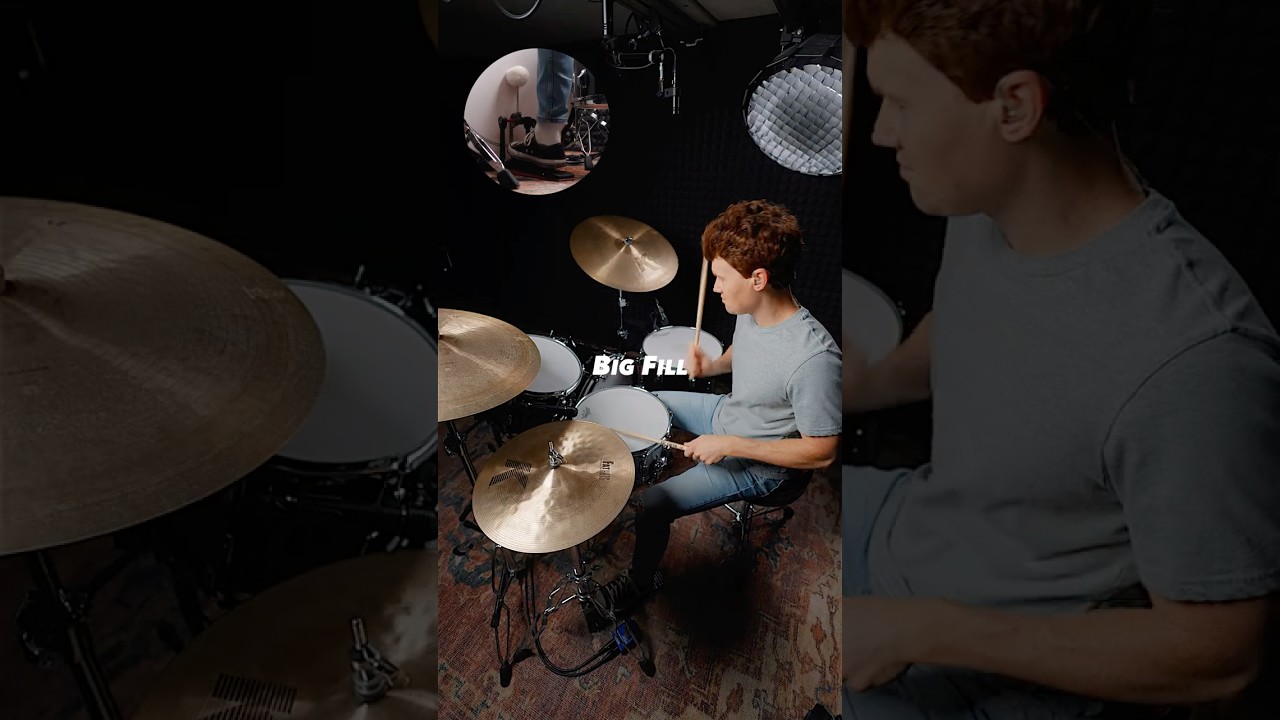
Jeff Randall wants your fills to hit harder, and his fix is simple: stop letting the kick sit out while your hands do all the work. In a quick Short, he lays out how to weave double-kick under standard fill vocabulary so a routine tom run turns into something with real bottom-end propulsion.
The angle to steal is treating the feet as an extra voice inside the fill, not a separate event before or after it. Take a fill you already own, say a basic 16th-note trip around the toms, and start subbing in doubles on the kicks underneath specific hand notes. Start slow. Genuinely slow. A relaxed practice tempo is not too conservative when you're lining up left foot, right foot, and hands into one clean grid. The common mistake is rushing the feet to catch up with the hands, which flams every downbeat and buries the tom tone. Isolate the feet first against a metronome, then layer the hands on top once the kick pattern feels automatic. Apply it to something you already play, a fill going into a chorus works well, and resist the urge to double-kick the entire bar. One well-placed burst under the last two beats does more than a wall of sixteenths.
Feet are a melodic voice inside the fill, not a bulldozer underneath it.
That's it for today! Thank you for carving out time to read! I'm grateful you're here. 🙏 If you'd like to support the newsletter, consider joining our premium tier.
If you have feedback, a story, or something you'd love to see in the newsletter, just reply to this email. I read every message and respond to each one.
Happy drumming,
Matteo