
Sponsored by

I'm 63 With $1.5M. Can I Spend $10K a Month?

You’ve saved $1.5 million. Now comes the real test.
Can it produce $10,000 a month, or will that pace drain your portfolio?
Most retirees do not get a clear answer until it is too late.
The issue is not just how much you have. It is whether your portfolio was built to pay you, not just grow.
That difference can determine whether your money lasts decades or starts breaking down early.
Sequence of returns, taxes on withdrawals, healthcare costs, and whether the 4% rule still applies all play a role.
Fiduciary advisors created a breakdown showing what drives sustainable income and why the same $1.5M can produce very different outcomes.
If you have $1M or more invested, do not guess.
⚡ Quick Hits
🕺 michael jackson's "human nature" turned into a pocket clinic
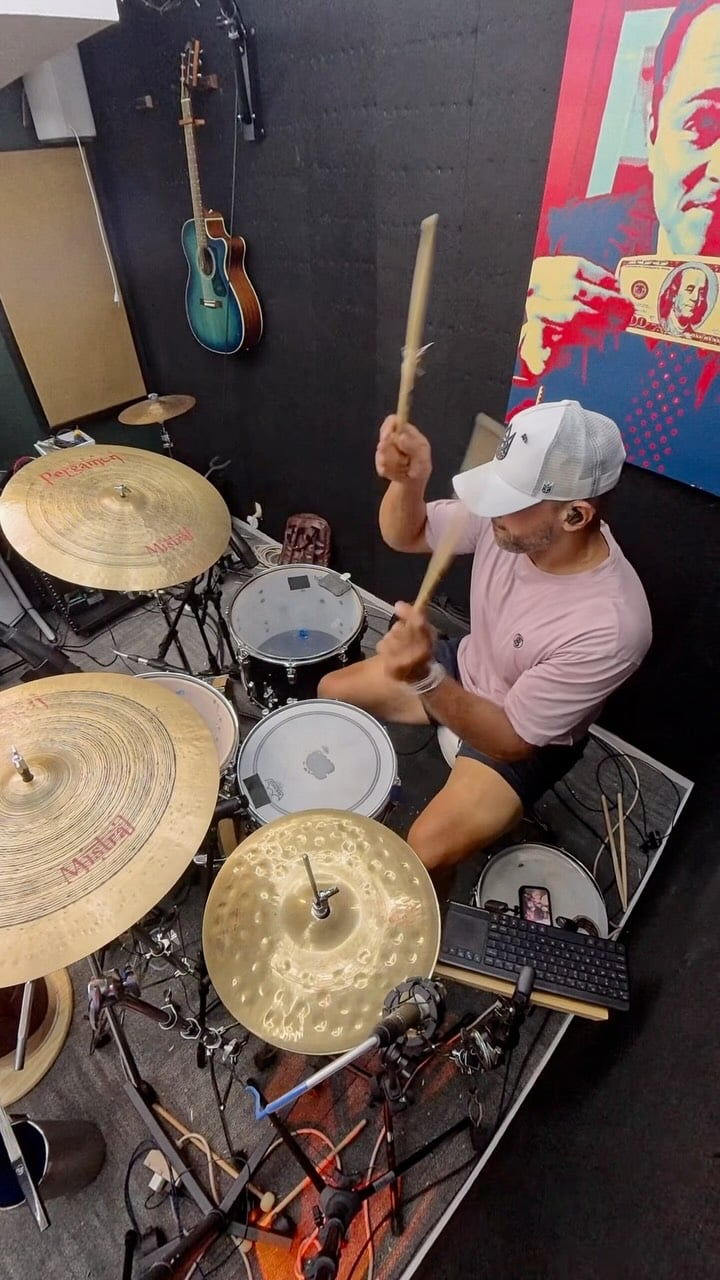
@Josue Reynoso
Josue Reynoso slips into Michael Jackson's "Human Nature" alongside bassist Carlos Chavez, and the pocket does the talking. It's a loose Saturday hang turned masterclass in feel, the kind of clip where the groove sits so deep you forget there's no melody on top. Ninety thousand views in a few days suggests the room agrees.
😂 tony royster jr.'s hotel room clinic (sorry, neighbors)
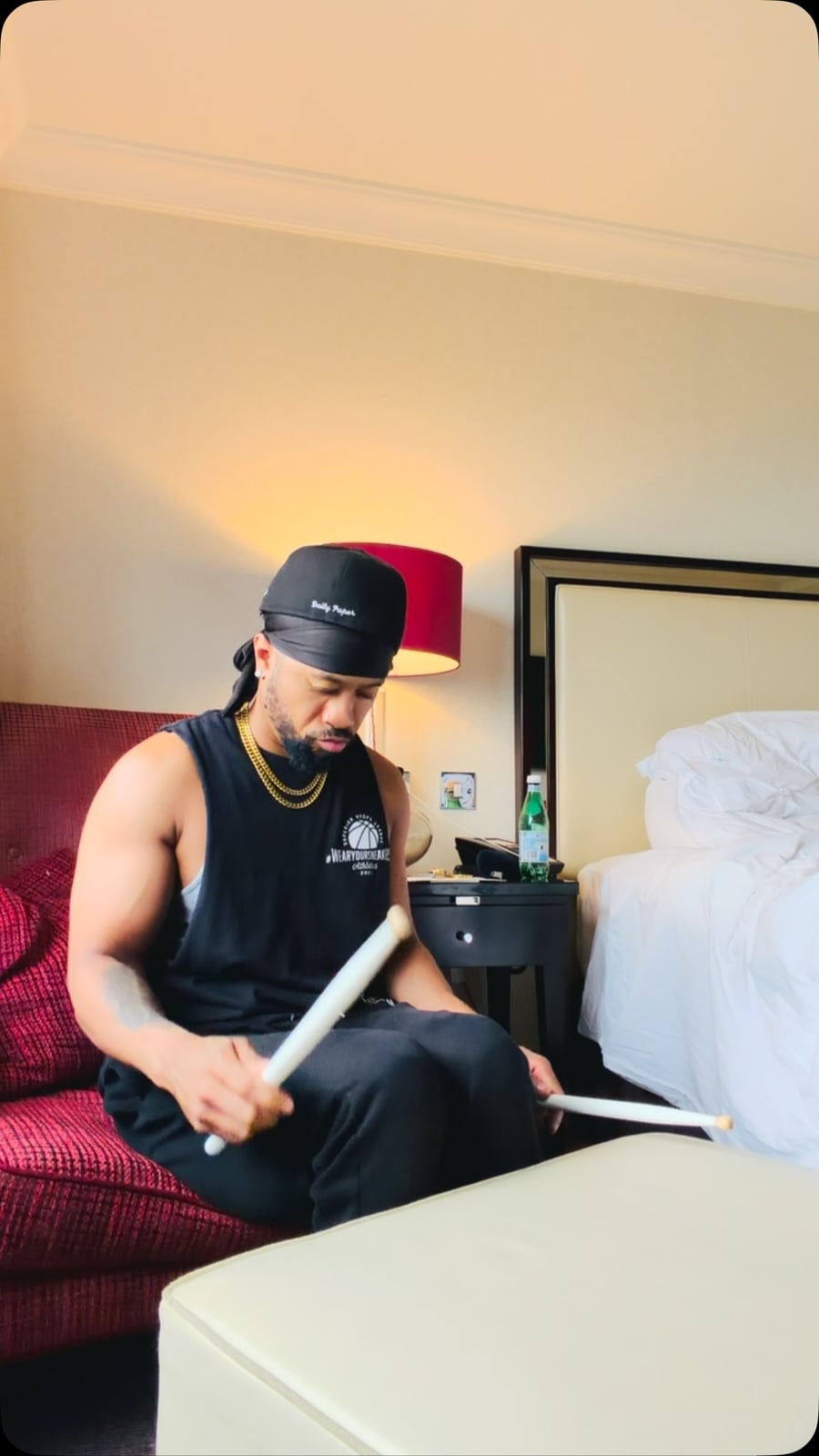
@Tony Royster Jr.
Tony Royster Jr. is killing time on tour by hammering rudiments into a hotel pillow, captioning it "just trying to get the blood flowing" with a half-joking note about noise complaints. No kit, no click, just hands snapping cleanly off a soft surface, which is arguably the cruelest practice pad ever invented. A reminder that the road grind for the pros often looks like this between gigs.
🛒 Gear Picks
🥊 gretsch's phosphor bronze snare flattens 2 and 4

Gretsch's 6.5x14 USA Custom Phosphor Bronze, demoed here by Archibald Ligonnière, is the kind of metal snare that makes a maple drum sound polite. Where a wood shell gives you warmth, midrange roundness, and a backbeat that blends, this 5mm phosphor bronze shell pushes a brighter, denser, more cutting tone with way more sustain and ring. The 4mm die-cast hoops tighten the rimshots into a near-pistol crack, and the 42-strand wire keeps ghost notes articulate even when you're swinging for the fences.
Pair that with 45º bearing edges and the Lightning throw-off and you've got a session-ready backbeat cannon. Deep pockets only though, because this is firmly in two-grand snare territory, aka the "I told my spouse it was $400" tier.
🌊 Deep Dives
🎷 gergő borlai's 7-minute fusion clinic on a blue gretsch

Gergo Borlai tears through "E-FLAT (Part 2)" on the main stage at the UK Drum Show 2025, reuniting the European Mantra material with Péter Lukács, János Nagy, and Tamás Barabás. The nearly seven-minute performance ping-pongs between razor stickings, heavy riff sections, and lyrical interplay, all behind an Azure Blue Burst Gretsch USA Custom kit dressed in matching blue Remo heads. A clinic in fusion drumming as composition.
🎓 Practice & Skills
🦶 paradiddle independence: split the sticking, free the foot
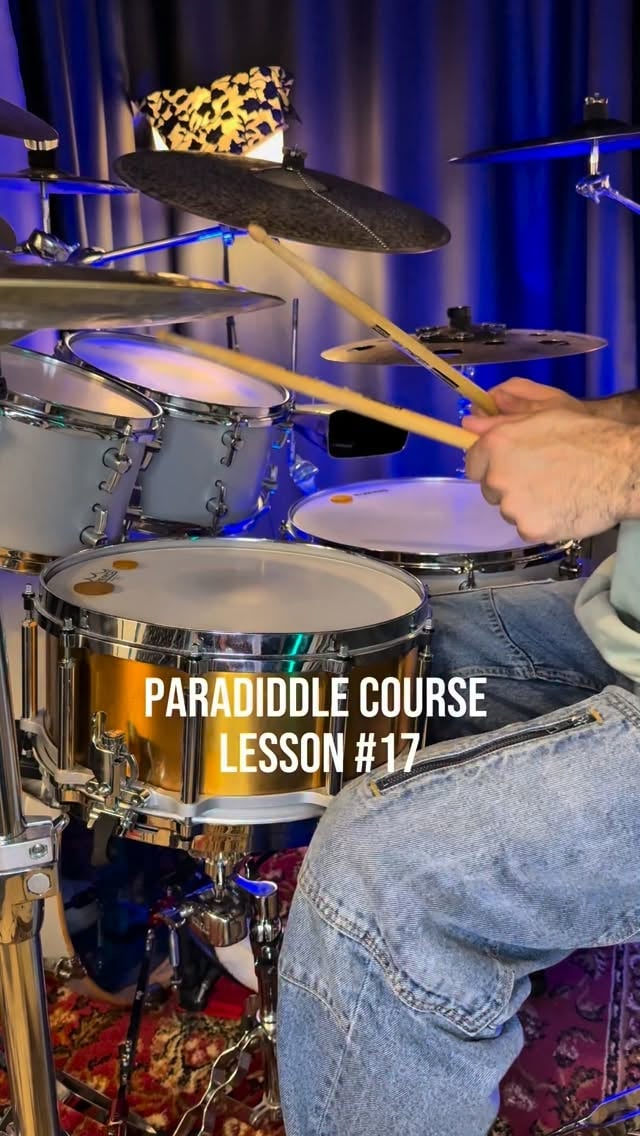
@Pavel Mamonau
Pavel Mamonau's paradiddle course hits Lesson 17, and the premise is sneakier than it sounds: a single paradiddle split between hi-hat and snare while your kick foot walks through every 16th-note permutation underneath. Spend a few minutes with this one and you'll come away with a clearer feel for how the right-left-right-right, left-right-left-left sticking locks in even when the foot keeps shifting beneath it.
Here's the setup. Your hands play a single paradiddle, but instead of both on snare, the right hand rides the hi-hat and the left hand answers on the snare. Underneath, the kick cycles through one, two, and sometimes three notes per quarter, working through the 16th-note grid. Start slow, slower than feels useful. Loop one kick permutation for a full minute before moving to the next, and count "1 e and a" out loud so you can hear exactly where the foot is landing against the sticking. The common trap is letting the left hand collapse in volume when the kick gets busy, so isolate the hands alone first, then add the foot. Once it locks, try it against something like Tower of Power's "Soul Vaccination" or any tight 16th-note groove to feel the independence pay off.
The takeaway: paradiddle independence isn't about speed, it's about keeping the sticking honest while the foot moves freely beneath it.
🎼 15 fills in 6/8 to steal for your next ballad

Jeff Randall packs 15 fills in 6/8 into a short clip, and the real value is having a menu you can pull from the next time a waltz-feel tune or a power ballad asks for something other than a straight quarter-note crash. Spend a few minutes with this one and you walk away with a vocabulary problem solved: what to actually play when the bar has six eighth notes instead of four.
The mental shift in 6/8 is grouping. You're not thinking 1 e and a, you're thinking 1 2 3, 4 5 6, with the pulse on 1 and 4. Most fills that feel "wrong" in 6/8 are 4/4 fills jammed into a 6/8 bar, with accents landing in the wrong place. So before you copy Randall's licks, count out loud and tap the dotted-quarter pulse with your foot. Then run any sticking you already know, singles, doubles, paradiddles, in groups of three or six around the kit and notice how different orchestrations land on or off the pulse. Start slow, maybe dotted-quarter equals 60, and only speed up once the downbeats stay locked. Apply it to something real: "Nothing Else Matters," "We Are the Champions," "House of the Rising Sun," any 12/8 blues shuffle. Pick three fills from the clip, not all fifteen, and actually get them into a tune this week.
Vocabulary you don't use is vocabulary you don't have.
🌊 the flow groove secret: it's the ghost notes, not the fills

Brett Clur's 27-second short opens the door to the "flow groove," that loose, conversational pocket where the kick, snare, and hats stop sounding like a grid and start sounding like a sentence. Watch it once for the feel, then watch it again for the spaces between the notes. That's where the lesson lives.
The idea behind a flow groove is simple: you're playing a backbeat, but you're letting ghost notes, open hats, and small hand-foot displacements breathe in and out of the pattern so it never sits perfectly square. Start by getting a basic two-and-four groove rock solid at around 80 bpm. Once it's locked, add quiet ghost notes on the snare between the backbeats, so your left hand is talking under the main beat instead of just waiting for two and four. Then start nudging the kick: an extra sixteenth before beat three, an upbeat push into beat one. Keep the hats steady so the listener still feels the pulse. The most common mistake is overplaying. If every sixteenth is loud, there's no flow, just clutter. Dynamics are the whole point. Try it over something like D'Angelo's "Untitled" or any midtempo neo-soul track and let the groove sit slightly behind the click.
Takeaway: flow comes from ghost notes and dynamics, not from adding more notes.
That's it for today! Thank you for carving out time to read! I'm grateful you're here. 🙏 If you'd like to support the newsletter, consider joining our premium tier.
If you have feedback, a story, or something you'd love to see in the newsletter, just reply to this email. I read every message and respond to each one.
Happy drumming,
Matteo