
In partnership with

Stop Fine-Tuning Models You Don’t Need

Fine-tuning sounds like the answer until you factor in the cost, the data pipeline, and the six months before a bigger model makes yours obsolete. Most of the time, prompt engineering or better context gets you there. But sometimes it doesn't — and that's where things get interesting.
In this free night session, Aaron Gallant covers the real tradeoffs behind fine-tuning LLMs, from synthesizing training data with frontier models to running PEFT and QLoRA on constrained hardware. You'll learn when smaller, specialized models actually beat throwing money at a bigger one — and why data curation is the work nobody wants to talk about. Built for engineers who want to make the right call, not just the cool one.
Live and remote. Wednesday, June 3 at 5 PM CT. Register now.
⚡ Quick Hits
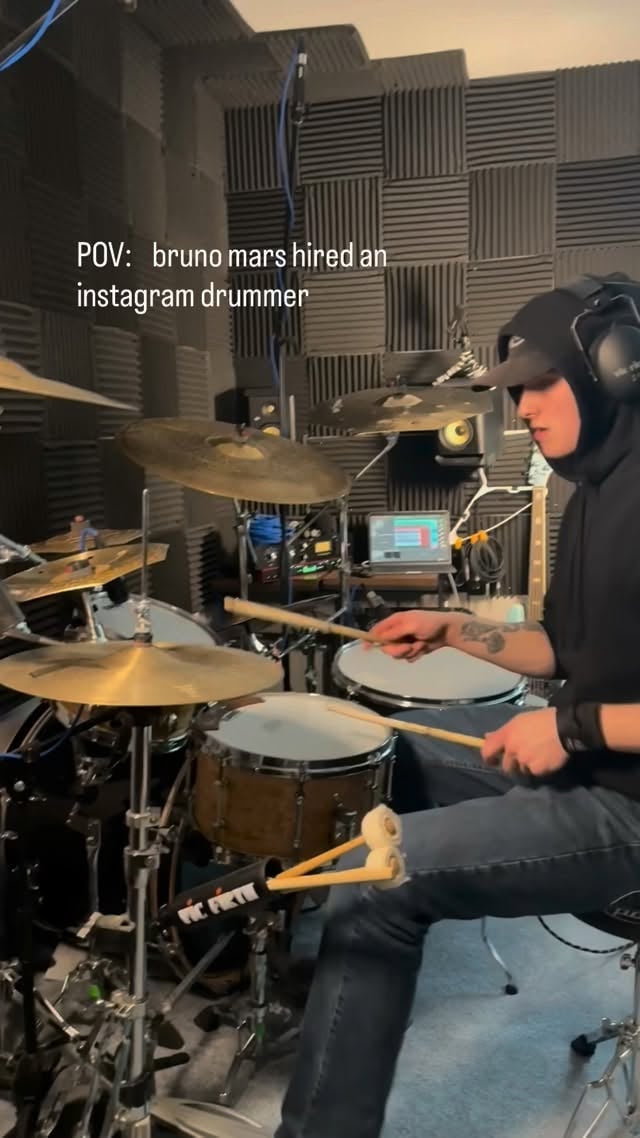
🎤 a bruno mars groove, pocket-perfect in 30 seconds
@Owen Jackson
Session drummer Owen Jackson drops a Bruno Mars groove into the feed, locking pocket-first feel against the polish of a pop hit. It's the kind of quick reel that shows why his playing keeps turning up on session calls: clean backbeats, tasteful ghost notes, no wasted motion. Worth a 30-second watch for anyone studying modern session feel.
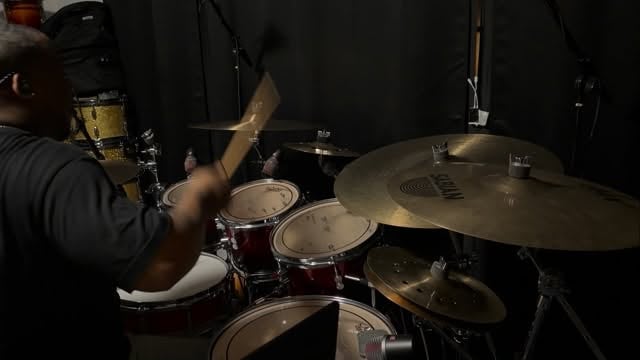
🎯 ryan strickland jr locks into a bbeardedunivercity cut
@Ryan Strickland Jr
Ryan Strickland Jr revisits a bbeardedunivercity cut on Instagram, and the pocket is exactly why his feed keeps pulling drummers in. It's a quick lock-in clip that doubles as a reminder of how clean his playing sounds when laid over someone else's track. Worth the thirty seconds.
🛒 Gear Picks
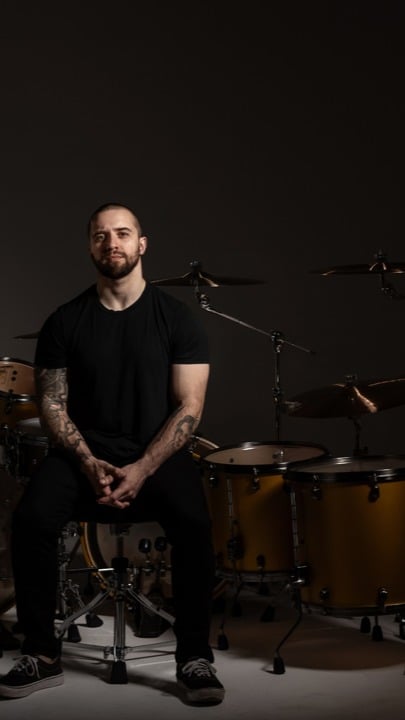
🔥 slipknot's casagrande tests paiste's new flanger stacks
@Paiste Cymbals
Eloy Casagrande puts Paiste's new PST X Swiss Flanger Stacks and Crashes through their paces in a short clip from the cymbal maker, and the Slipknot drummer's typical ferocity translates well to the trashier, more chopped voicings these stacks deliver. Flanger Stacks have been a go-to for metal and modern players who want a quick, papery FX layer that cuts without ringing forever, and pairing them with the matching crashes gives you a coherent family rather than a mismatched effects pile.
Worth a watch if you're considering a stack to slot into a busy setup, or just want to hear what Casagrande gravitates toward when handed something new.
🎒 zildjian's touring stick bag doubles as your gig backpack

Zildjian's Touring Stick Bag is built for drummers tired of hauling a backpack and a stick bag to every gig. The main compartment fits a tablet, in-ears, drum keys, and muffling odds and ends, while a detachable inner bag keeps a working stage selection of sticks within reach. Tuck-away backpack straps, a padded shoulder strap, and a trolley sleeve handle the travel side.
🌊 Deep Dives
🗣️ benny greb's 9-minute solo: the language of drumming, spoken fluently

Benny Greb treats the kit like a spoken language, and this nine-minute solo makes the case as clearly as anything of his on YouTube. Pulled from Hudson Music's Language of Drumming, it's Greb threading his rhythmic alphabet into a single flowing statement: binary and ternary cells stacked, inverted, and orchestrated around the kit with the kind of dynamic control most players reserve for ballads.
What makes it worth the full sit is watching the vocabulary surface in real time. You can hear him build phrases, punctuate them, and resolve them like sentences, with the rudiments serving as grammar rather than party tricks. If you've been meaning to dig into the Language of Drumming method, this is the audition.
✋ the left-hand progression that fixed dimitri fantini's weak side

Dimitri Fantini spends thirteen minutes unpacking the left hand work that reshaped his playing, and the chapter list tells you he's serious about the sequence: a foundational technique, a second layer that builds on it, a smaller refinement, then drills to lock it all in. It's the kind of structured breakdown that rewards practice pad time rather than passive watching.
Filmed at Red Bridge Studios with his usual Paiste, Gretsch, Vater and Evans setup, this one is worth queuing up when you've got sticks in hand and twenty minutes to actually run the exercises. If your weaker hand has been the bottleneck in everything from singles to ghost notes, Fantini's progression is a focused place to start chipping away at it.
🎓 Practice & Skills
🪘 four-limb afro-cuban puzzle: guaguancó decoded
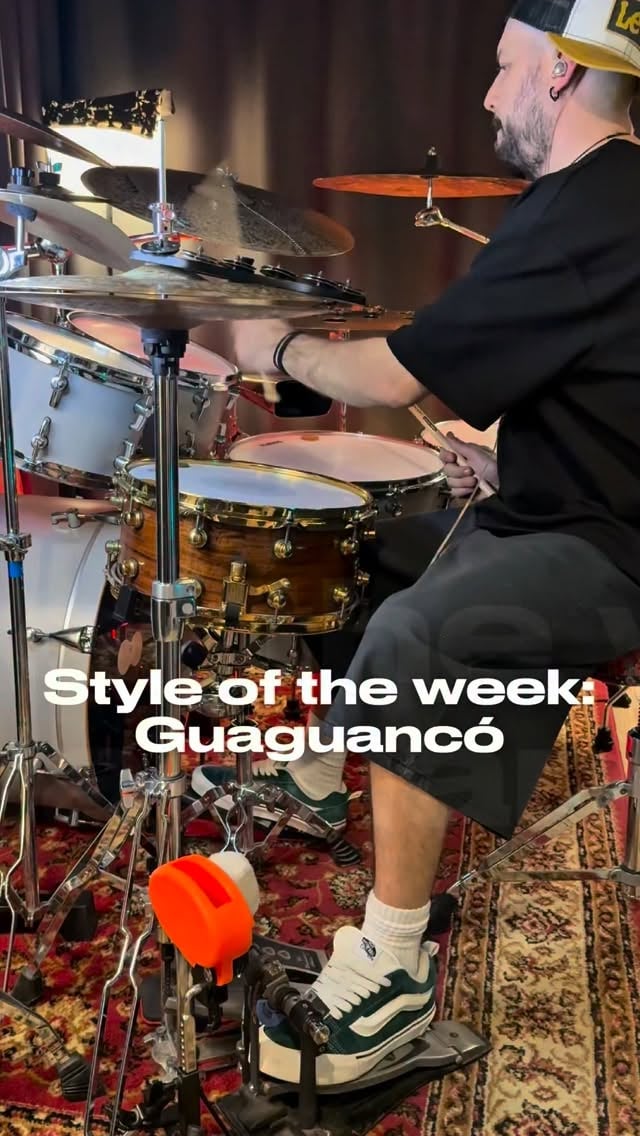
@Pavel Mamonau
Pavel Mamonau's Style of the Week is Guaguancó, a four-limb Afro-Cuban coordination puzzle that will stretch your independence in ways a standard kit vocabulary won't. Spend a week with this and you walk away with a working feel for clave-based drumming, plus a real test of how cleanly each of your limbs can speak on its own.
Here's the assignment. Right hand plays the 3/2 cáscara on a shell or ride. Left hand carries the guaguancó pattern on the snare, ideally with cross-stick and open tones to mimic the conga voicings. Right foot holds the tumbao on the bass drum. Left foot stamps the 3/2 son clave on the hi-hat. Four voices, one groove, and the clave is the gravity that pulls everything together.
Build it in pairs. Start with left foot clave and right hand cáscara until they lock without thinking. Add the tumbao foot next, then layer the snare pattern in last. Go painfully slow, somewhere around 60 to 70 bpm, and only move up when every voice sounds intentional. The common trap is letting the snare drag the cáscara off the clave, so if things wobble, drop the snare out, reset to the clave and cáscara, and rebuild. Record yourself and listen for which voice is hiding. If one limb is mumbling, isolate it. The takeaway: independence is not the goal, clave is. Independence is just how you serve it.
🦶 paradiddle hands, four kicks between every note
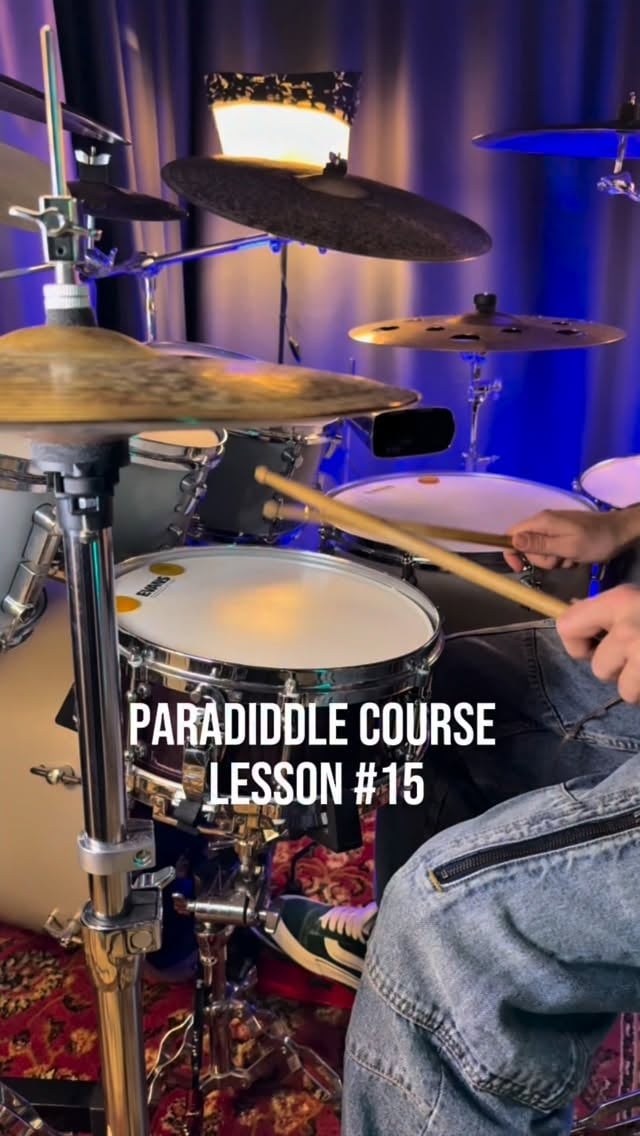
@Pavel Mamonau
Pavel Mamonau's Paradiddle Course hits Lesson 15, and this one is a foot workout disguised as a hand exercise. By the end you'll know how to layer bass drum notes inside a standard 16th-note paradiddle without letting your hands collapse, building real foot speed and independence in the process.
The concept is simple to describe and hard to execute. Take the paradiddle (RLRR LRLL) running as 16ths, and start dropping bass drum notes into the spaces between each stroke. Begin with one kick between each hand, then progress to two, three, and finally four bass notes packed between each paradiddle note. Your hands stay locked into the same sticking the whole time while your foot subdivides faster and faster underneath. Start slow, slow enough that the foot subdivisions are actually even, not a blur of approximation. A click is non-negotiable here. The most common trap is letting the hands tense up or rush as the foot density increases, so isolate the foot first against a steady hand pattern before chaining the levels together. Watch for the bass drum and the snare hand landing exactly together on the downbeats. If they flam, you're not ready to add more kicks yet. Work each density level for a full minute before moving up, and only push the tempo once all four levels feel clean at the slower setting.
Solid hands, busy feet, even spacing. That's the whole lesson.
From the archives: larnell lewis makes one kick sound like two
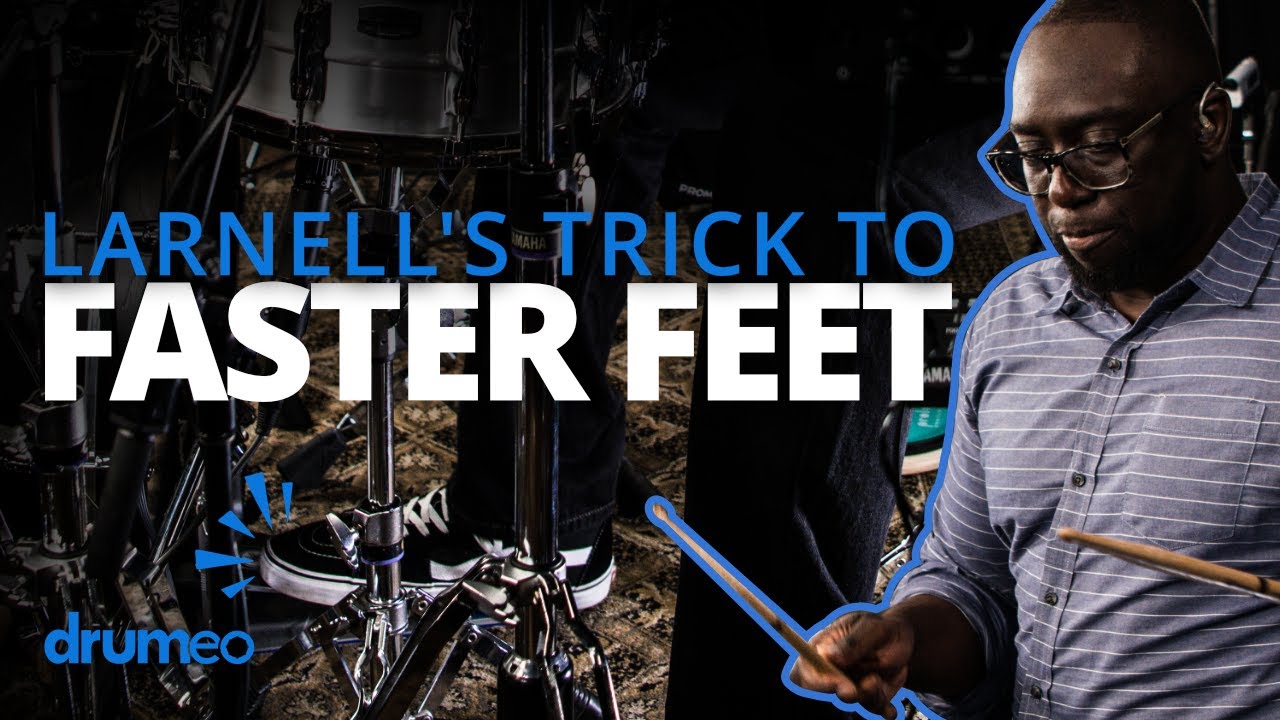
Larnell Lewis makes a single pedal sound like a double, and this Drumeo clip is a great entry point into figuring out how. Watch it once for the shock factor, then watch it again with your right foot on the pedal and your eyes on his ankle. The lesson here is heel-toe motion and relaxation under speed, not raw muscle.
The mechanics are simple to describe and brutal to execute. The foot rocks forward and back on the pedal so one stroke comes from the heel dropping and the next from the toe snapping down, giving you two notes per leg cycle instead of one. Larnell stays loose, lets the beater rebound, and never clamps the bass drum. Try this today. Pull up a metronome at 80 bpm and play steady sixteenth notes on the kick with heel-toe, four bars on, four bars rest, for five minutes. The common mistake is burying the beater and tensing your calf, which kills the rebound and your speed ceiling. Keep the beater coming off the head and keep your shin quiet. Once 80 feels easy, bump to 90, then 100. Apply it to something musical the same week: try the gallop figure in Metallica's "One," or sit on a straight sixteenth-note pattern under a half-time backbeat and feel how it transforms a groove.
Speed on one pedal is a technique problem, not a strength problem. Loosen up, let the beater bounce, and let the foot do less work than you think.
That's it for today! Thank you for carving out time to read! I'm grateful you're here. 🙏 If you'd like to support the newsletter, consider joining our premium tier.
If you have feedback, a story, or something you'd love to see in the newsletter, just reply to this email. I read every message and respond to each one.
Happy drumming,
Matteo