
Together with
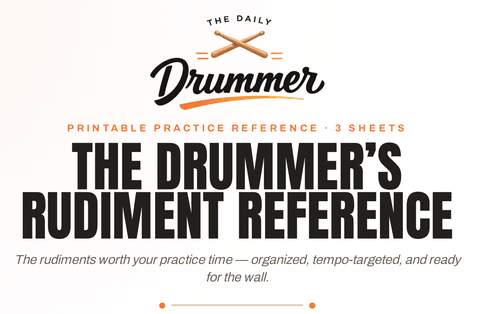
Quick self-plug today, because I actually use this thing on my own kit. We put together The Drummer's Rudiment Reference — a 4-page printable cheat sheet covering the 30 essential rudiments, with sticking patterns, BPM targets, and skill tags for each one. Get for the price of a (premium) coffee.

⚡ Quick Hits
🔊 the rev's double bass gallop, nailed note for note
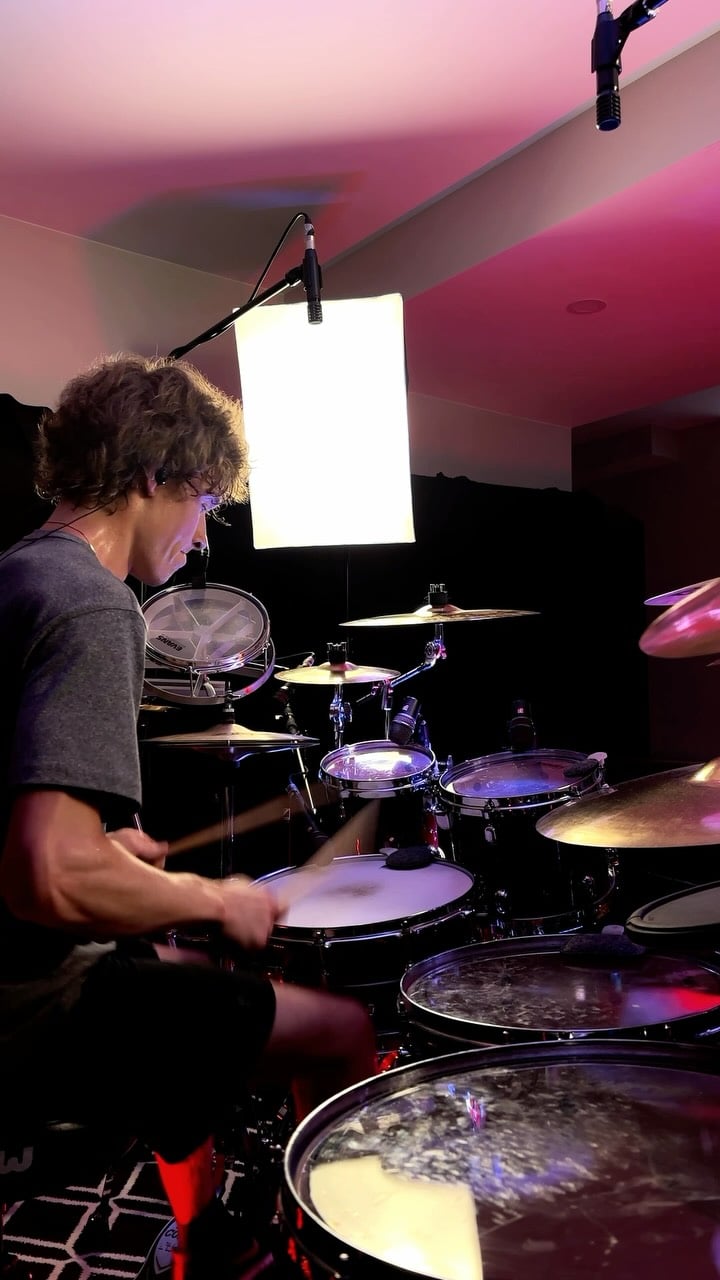
@Tyler Visser
Tyler Visser tears through Avenged Sevenfold's "Beast and the Harlot," channeling The Rev's double bass gallop and snare work with locked-in precision. The kick pattern under the main riff is the whole reason this track lives in drummer lore, and Visser nails it. Worth a watch if you want a reminder of why The Rev's writing still sets the bar for modern metal drumming.
🛒 Gear Picks
🎩 every zildjian hihat, same beat, side by side

Zildjian put every hihat in their catalog into one video, playing the same beat on each so you can hear the differences side by side. The teaser short runs about a minute, but the full comparison on their channel is timestamped so you can jump straight to the New Beat, K Custom, A Custom, or whichever pair you're weighing.
If you're shopping for hats or just curious how the lines actually stack up against each other, this is the reference you want bookmarked. Same room, same stick, same groove, only the cymbals change. That's the kind of A/B you rarely get from scattered demo clips across the internet.
🎒 the $20 stick bag that hooks onto your floor tom

ProMark's Every Day Drumstick Bag handles the unglamorous side of gigging: getting your sticks, keys, and cables to the kit intact. The shell is weatherproof ballistic nylon with a rigid spine so the bag closes cleanly even when packed full. Inside, you get room for roughly six pairs of sticks, a zippered inner pocket for keys and small tools, and a large front pocket that fits a mic or an in-ear pack.
The detail worth flagging is the floor tom hooks, which let you hang the bag off the side of your kit for fast access mid-set. Ergonomic handles and a heavy-duty outer zipper round it out. If your current bag is fraying at the seams or refusing to zip, this is the no-nonsense replacement.
🌊 Deep Dives
✋ dimitri fantini's 73-minute hand technique masterclass raw hand technique: grip, strokes, finger control
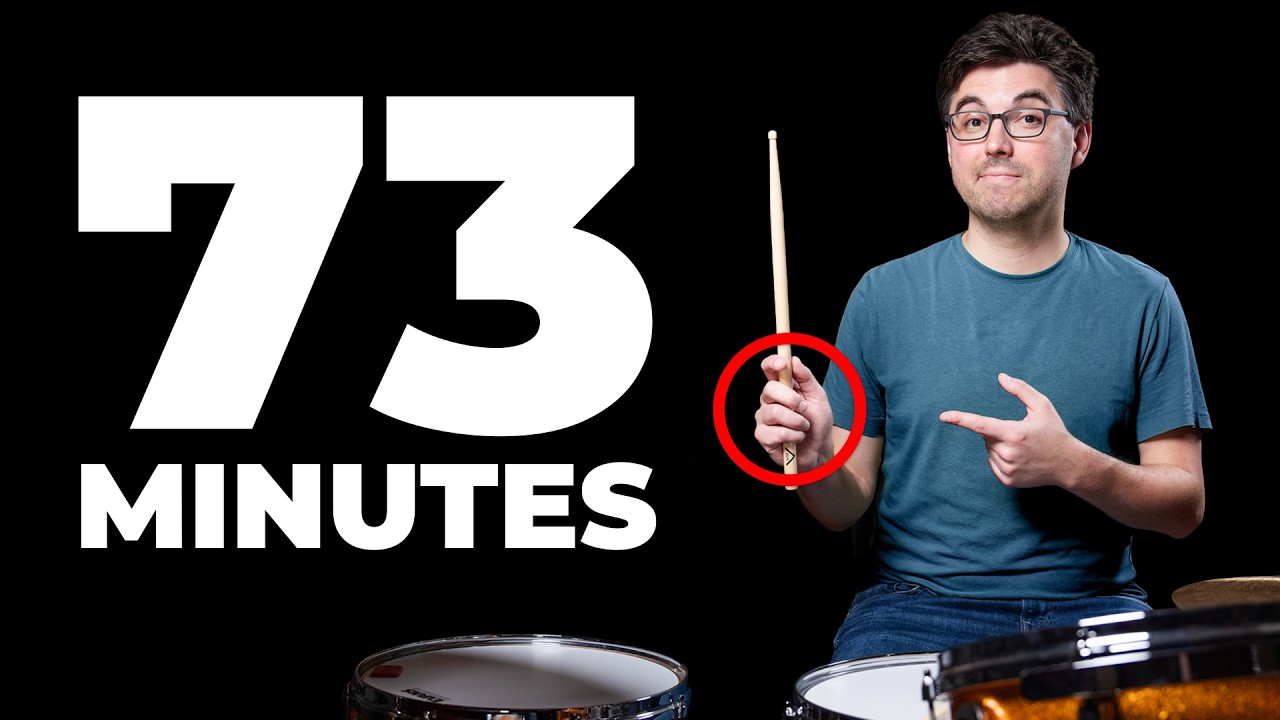
Dimitri Fantini condenses his entire approach to hand technique into a single sitting, filmed at Red Bridge Studios with Paiste, Vater, and Gretsch backing the production. Treat this as a course, not a tips video. Block off an evening, keep sticks and a pad within reach, and work through it section by section.
Expect Fantini to cover grip mechanics, stroke types, and the finger control that separates clean rolls from muddy ones. He also points viewers to the full lesson material and a companion Zoom workshop if you want to go deeper after the video. A worthwhile reset for anyone whose hands have plateaued.
🎓 Practice & Skills
🧠 the sticking puzzle that forces your weak hand awake
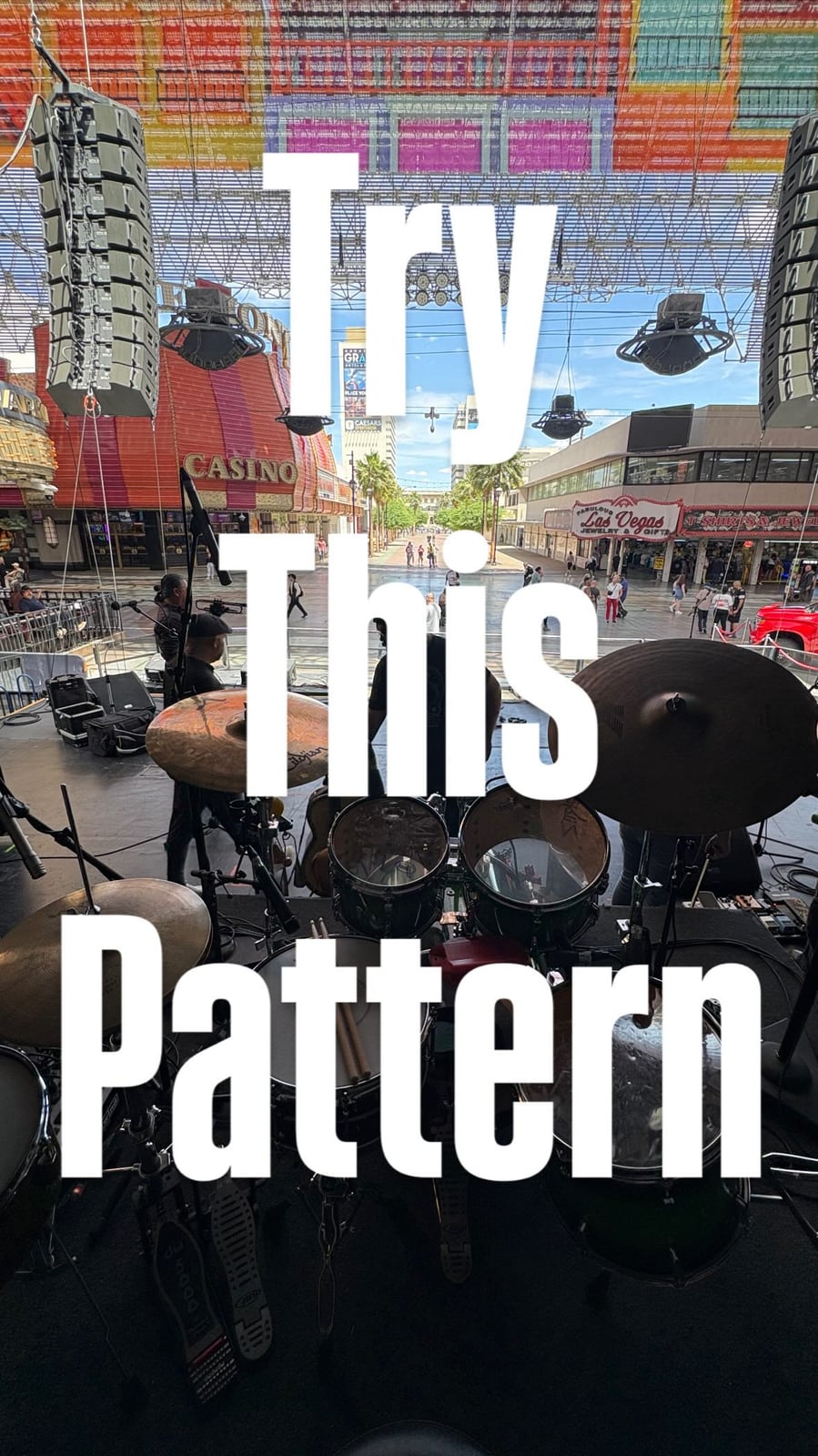
@Adan Alcalá | 🥁🌎
Adan Alcalá lays out a sticking puzzle worth stealing: KRLL KRLL KRLL RLRL. If you spend a few minutes with it today, you walk away with a fresh way to move around the kit and a hand pattern that forces your weaker side to keep up.
Read the sticking literally. K is your kick, R is right hand, L is left hand. So each "KRLL" cell is kick, right, left, left, then the phrase resolves with a straight RLRL single stroke run. The doubled lefts are the whole point. They train your left hand to lead into the next downbeat and set up your right for the singles at the end. Start slow, somewhere you have zero tension, and loop the four cells as one bar of sixteenth notes. Keep the kick even, do not let it rush when the lefts double up. Once it locks, move the R and L around the kit. Right on the floor tom, left on the snare. Or right on a cymbal, left ghosting the snare for a linear groove. The common mistake is flamming the double lefts because your left hand is tight. Drop the volume, let the stick rebound, match the height of the right.
Loop it, orchestrate it, then drop it into a fill on the next tune you play. Small sticking, big vocabulary.
👻 the stick height fix for lifeless ghost notes
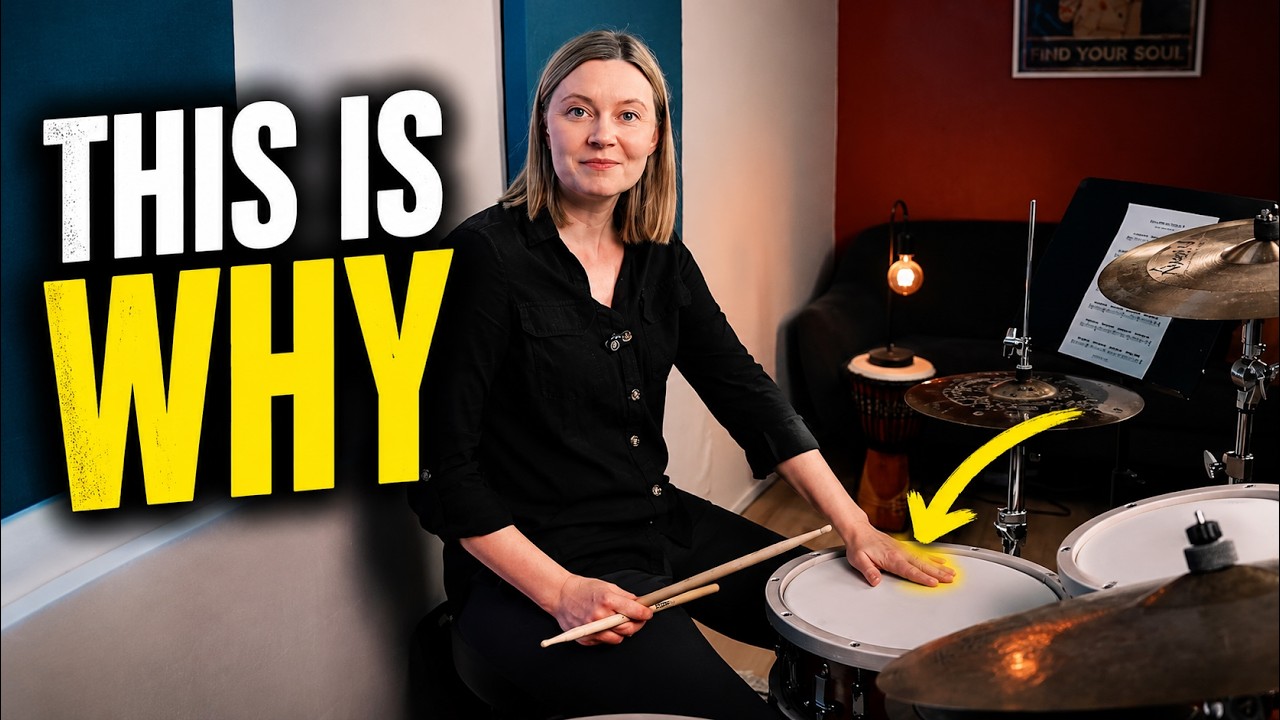
Sari Kujala argues most ghost notes sound lifeless for one reason: stick height. Get that right and the whole groove starts to breathe. Walk away from this lesson knowing how to place quiet notes with intention instead of hoping they land.
Kujala builds the groove around an RLRL hand pattern, then layers it in one quarter note at a time. The core idea is dynamic contrast. Ghost notes need to sit far below your accents, and the only reliable way to get there is keeping the stick low, close to the head, before the stroke. If your ghost notes are rising six inches off the snare, they will speak too loud no matter how softly you try to play. Try this today. Start with just the first quarter note of the pattern. Add the second, including the left hand accent. Combine those two before touching the rest. Once the hands feel locked, drop in the bass drum and protect it. A common failure point is letting the kick get quieter or shakier the moment your hands go delicate. Keep the foot solid and consistent while the hands whisper.
Practice at a tempo slow enough that you hear every dynamic layer clearly. If the ghosts blur into the accents, slow down further. Apply the same chunking method to any groove giving you trouble.
Stick height controls dynamics. Build the groove in pieces. Keep the kick planted.
🎷 swing the grid: same licks, totally new pocket
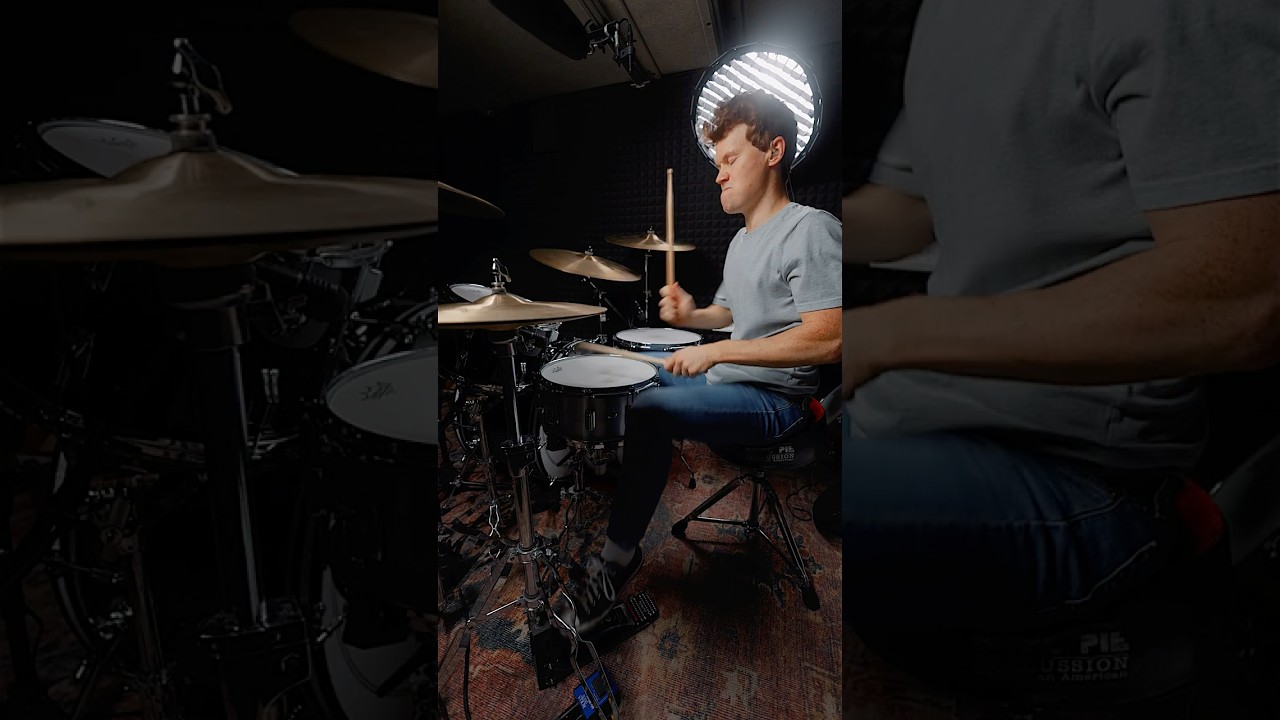
Jeff Randall shows what happens when you drop a swung feel into your solo phrasing, and the takeaway is simple: the same ideas you already play straight open up a different pocket the moment you triplet-ize the subdivision.
Try it today. Take a lick you know cold, whether it's a paradiddle around the toms or a six-stroke roll accent pattern, and shift the underlying grid from sixteenths to triplets. Keep your ride or hi-hat foot spelling out the swung pulse so the phrasing has something to lean against. Start slow, around 80 bpm, and let the long-short triplet feel breathe. The common mistake is rushing the second partial of each triplet and flattening the swing back into straight sixteenths. If your solo starts sounding stiff, your foot pattern is usually the tell. Lock the hi-hat on 2 and 4 first, then improvise over it. Apply the concept to a jazz standard at a medium tempo, or steal the approach for a shuffle groove and solo over the form without dropping the feel.
One line to hold onto: the notes matter less than the grid you place them on. Swing the grid, and even your straight-ahead vocabulary sounds like a different drummer played it.
That's it for today! Thank you for carving out time to read! I'm grateful you're here. 🙏 If you'd like to support the newsletter, consider joining our premium tier.
If you have feedback, a story, or something you'd love to see in the newsletter, just reply to this email. I read every message and respond to each one.
Happy drumming,
Matteo