
Sponsored by

Stop overpaying for wireless. Get a Tello plan for under $25

Unlimited everything. No contract. Just $25/mo. With Tello, you get reliable 5G coverage, zero hidden fees, and none of the bundles you never wanted.

⚡ Quick Hits
🎸 tackling neil peart's most punishing rush chart
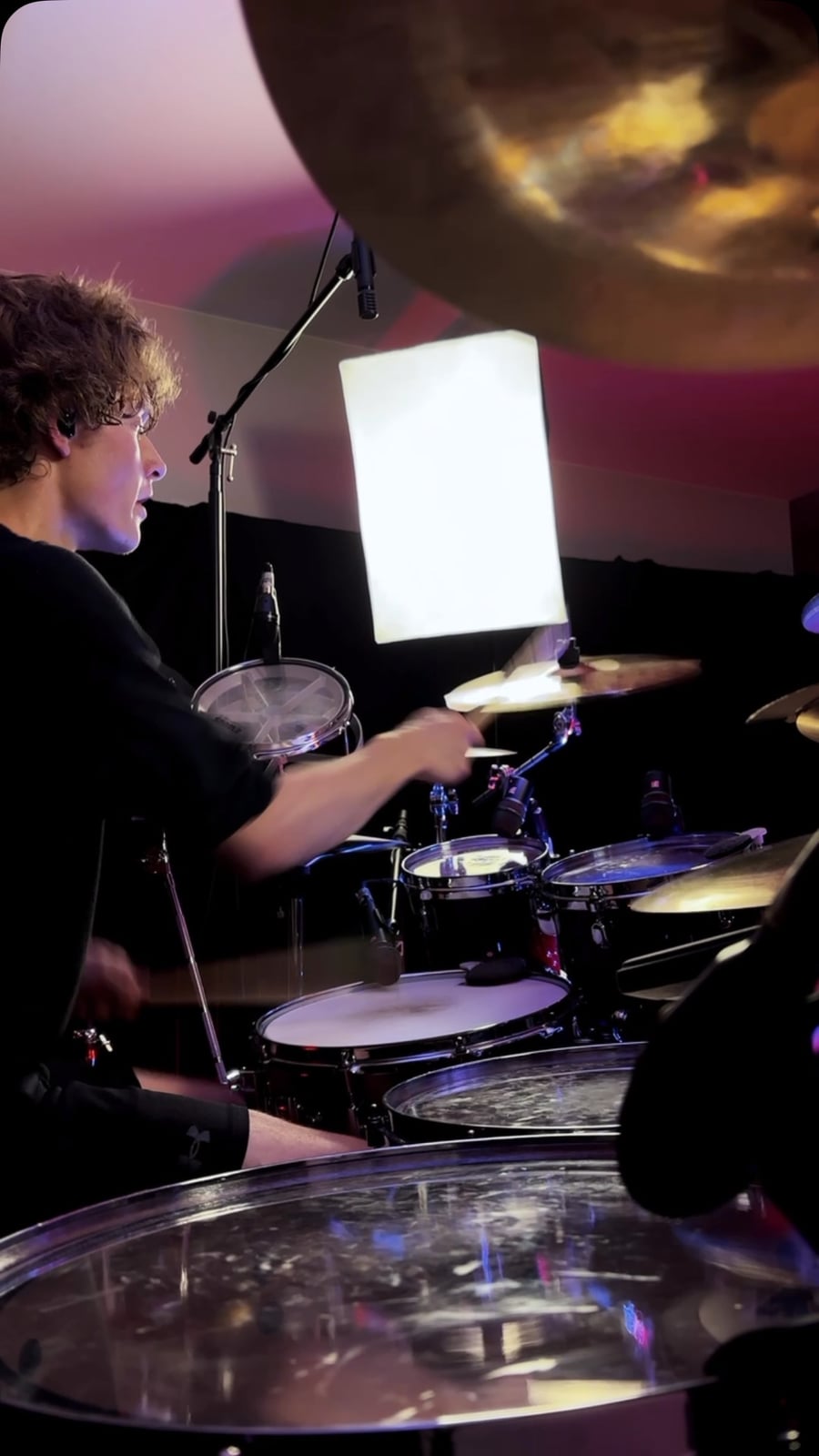
@Tyler Visser
Tyler Visser tackles Neil Peart's "La Villa Strangiato," one of the most demanding drum charts in the Rush catalog, and holds his own through every twist. The reel moves fast through the piece's shifting sections, capturing the polyrhythmic detail and cymbal work that made Peart's original a benchmark. Worth a watch for anyone who has ever tried to sit down with this chart.
✍🏻 stan bicknell turns notation sketches into stealable phrases

Stan Bicknell sketches ideas on the kit, turning quick notation studies into playable phrases you can steal for your own practice. The short format keeps the focus tight, one concept, one execution, no wasted motion. Worth a look if you want to see how a working drummer translates pen and paper into sound.
🛒 Gear Picks
📱 415 studios drops a free app for drummers

@Porter Bliquez
Porter Bliquez is pointing drummers toward 415 Studios, a free iPhone app built to clean up the audio on phone-shot clips. If you film practice sessions or performance reels on your phone, the built-in mic tends to flatten your kit into a wash of cymbal and room noise. 415 Studios processes the audio to give your snare, kick, and toms more presence, so what you post sounds closer to what you actually played.
For drummers building a social presence without a full mic setup, this is a low-friction fix. Shoot the clip, run it through the app, upload. Bliquez uses it on his own reels, which is a reasonable proof of concept before you install.
🔨 hand-hammered brass snare taken from gong-low to cutting crack

Noble & Cooley's 14x6.5 Ebenor Primitive Brass snare gets the Memphis Drum Shop treatment, with Christopher Bounds II working it through four tunings from very low to high. The Ebenor Primitive finish gives the brass shell a raw, hand hammered character, and paired with Remo Coated Ambassadors, Vic Firth 5As, and a set of Zildjian 14" A New Beat hats, you hear the drum honestly across the range.
The low tunings open up a fat, gong-like decay you'd expect from a deeper brass shell, while the medium and high settings tighten into a cutting crack with plenty of stick definition. If you're hunting for a single snare that covers ballad territory and backbeat duty without swapping heads or drums, this one earns the demo time.
🌊 Deep Dives
🎤 one mic to eight: what each one actually adds

Gideon Waxman builds a drum recording setup one mic at a time, starting with a single overhead and stacking up to a full eight-mic configuration. At each stage you hear the raw capture and the mixed version, so the contribution of each addition, kick, snare bottom, hats, toms, room, becomes obvious rather than theoretical.
The gear leans on Beyerdynamic (TG Drum-Set Pro L, M201, M160), but the real value is the reasoning behind placement and priority. Waxman walks through why he adds what he adds, and where the diminishing returns kick in for different budgets and styles. If you have ever wondered whether four mics would serve your recordings better than eight, this gives you an honest side-by-side to judge for yourself.
🌊 the flow grooves flooding 2026 productions, decoded

Brett Clur breaks down the flow grooves crowding modern productions in 2026, the flexible, ghost-note-laced patterns bridging pocket playing and linear phrasing. He walks through the feel that ties them together and why producers keep reaching for this vocabulary on current sessions.
Sit with this one if your grooves feel locked to a grid. Clur's phrasing choices show how small hand-to-foot orchestrations open up a beat without pushing the tempo around, and he offers a free PDF with five more grooves in the same family if you want to take the ideas to the kit.
🎓 Practice & Skills
🎧 phoenix's "lasso" intro hides the downbeat — hear it?
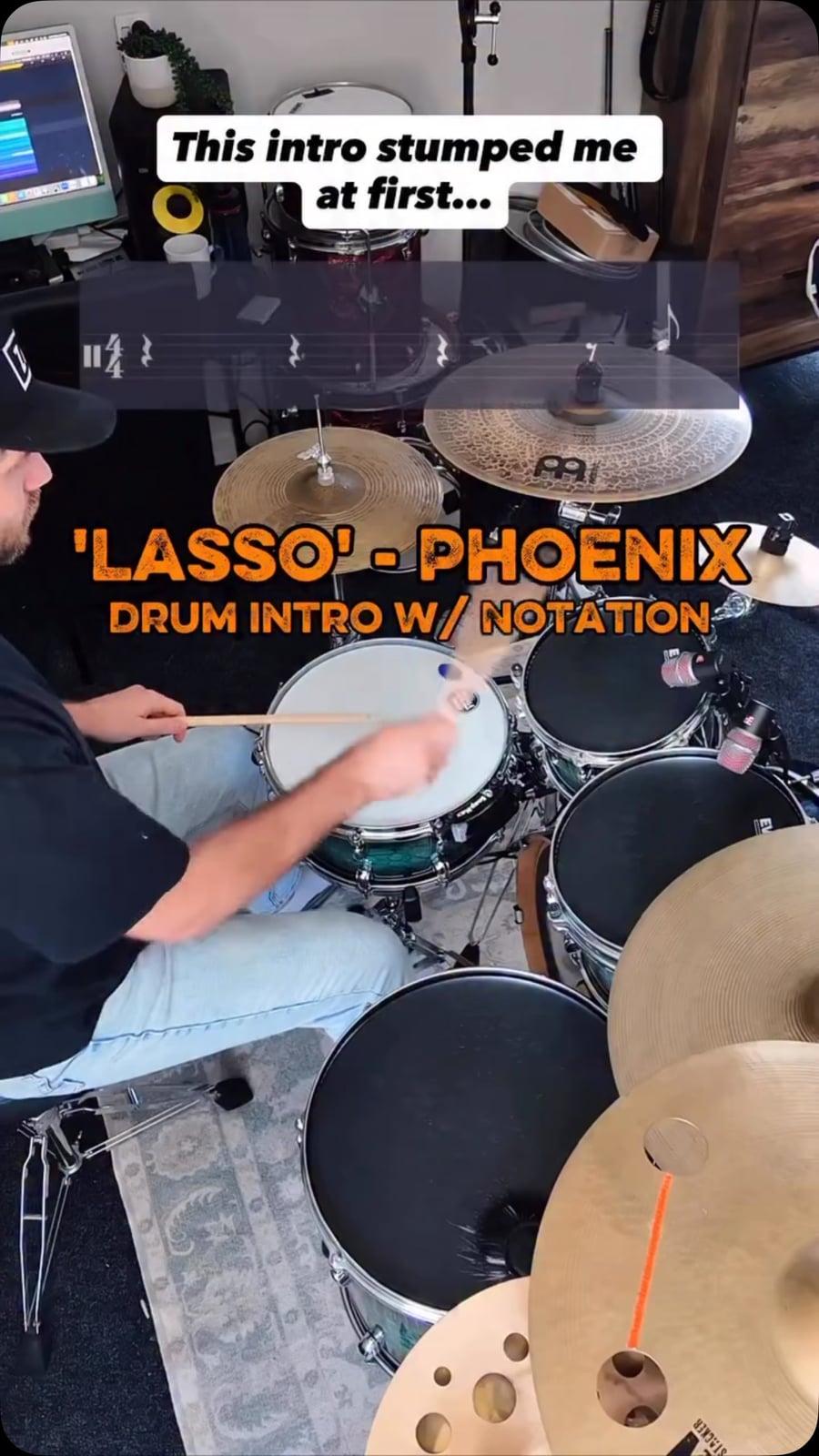
@Sam MacKenzie - Session Drummer 🥁
Sam MacKenzie breaks down the intro to Phoenix's "Lasso," and the lesson is all about deception. On first listen, the groove sounds like it lands one way. Once you sit down to play it, you realize the downbeat is somewhere else entirely.
This is a great study in phrasing against the listener's ear. The intro plays with where "one" feels like it should be, so the pattern reads as syncopated until the rest of the band enters and reorients everything. For drummers, that's the takeaway worth chasing: you don't have to write a busier part to make a groove interesting. You reframe where the pulse sits. Pull up "Lasso" by Phoenix and clap along on the first pass without looking anything up. Note where you thought the downbeat was. Then listen again once the full arrangement drops and hear where it actually is. That gap between assumed pulse and real pulse is the whole trick.
Try applying the concept to your own playing. Take a straight eighth-note pattern you already know, then shift your kick and snare so the backbeat implies a different "one." Loop it for a minute, then have the rest of the song enter in your head at the correct downbeat. Start slow so you don't lose your place. The goal isn't to trick people for its own sake. It's to make the moment the groove clicks feel earned.
🧠 steve smith turns one paradiddle into a full solo
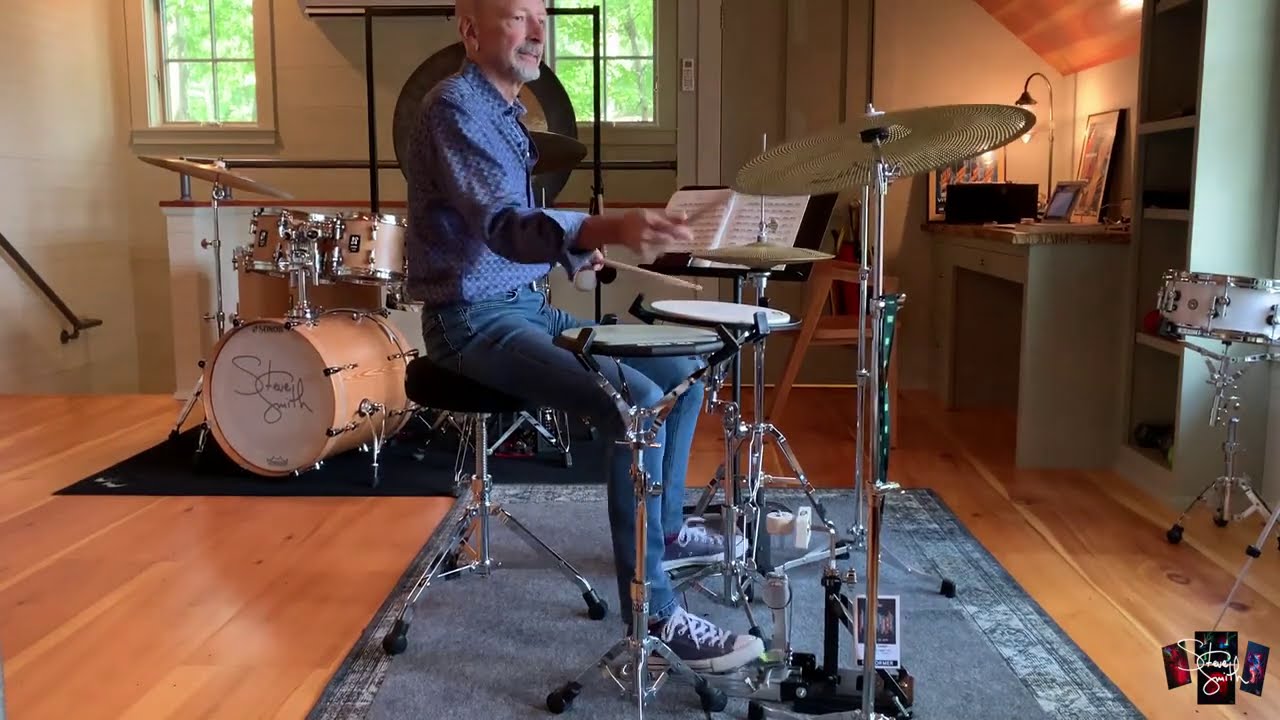
Steve Smith's "Paradiddle Johnnie" at 105 BPM shows what happens when a rudiment stops being an exercise and becomes a composition. Watch this one and you walk away with a new way to think about the single paradiddle: not as warmup filler, but as a phrasing engine you improvise from.
The single paradiddle is RLRR LRLL. Smith's approach opens up two ideas worth stealing today. First, orchestrate the sticking around the kit so accents fall on toms, cymbals, or the snare in shifting places. The pattern stays constant, the voicing changes, and suddenly you have a solo. Second, use the piece as a launch pad. Play the written figure, then improvise a bar or two using only paradiddle stickings, then return to the head. Set your metronome to 105 to match his tempo, or drop to 80 if the orchestration falls apart. Isolate the hands first on a pad before you move to the kit. The common mistake is rushing the inner doubles (the RR and LL); those need to sit at the same volume and spacing as the alternating strokes, otherwise the phrase collapses into mush.
Apply it to any tune with space for a drum break. The takeaway: one rudiment, moved around the drums with intent, is enough material for an entire solo.
That's it for today! Thank you for carving out time to read! I'm grateful you're here. 🙏 If you'd like to support the newsletter, consider joining our premium tier.
If you have feedback, a story, or something you'd love to see in the newsletter, just reply to this email. I read every message and respond to each one.
Happy drumming,
Matteo